Can Trump sway another Latin American election? Here’s what to know.
Voters will be choosing between the country’s governing leftist political movement and a President Donald Trump-endorsed right-wing outsider.
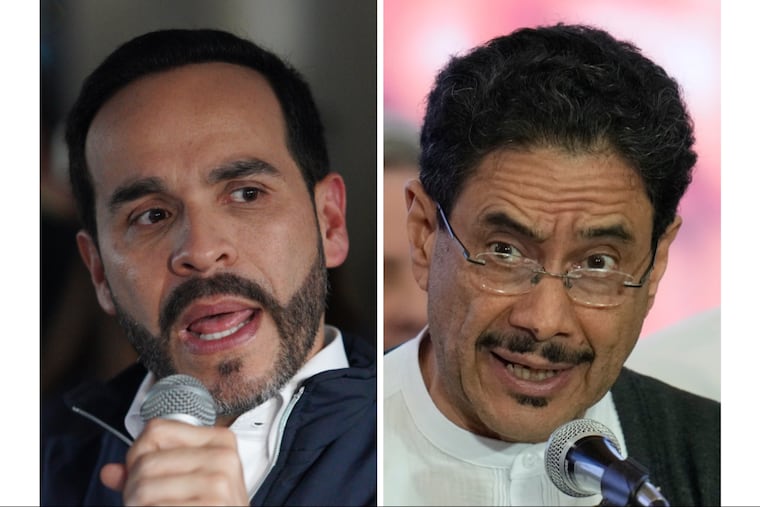
BOGOTÁ, Colombia — Colombians headed to the polls Sunday in the most polarized election in years, with voters choosing between the country’s governing leftist political movement and a President Donald Trump-endorsed right-wing outsider.
The vote pits Sen. Iván Cepeda, a longtime human rights activist and ally of President Gustavo Petro, the country’s first leftist president, against Abelardo De La Espriella, a former criminal defense lawyer who vows a sweeping crackdown on guerrilla groups and drug-trafficking gangs.
The high-stakes contest has drawn international attention following De La Espriella’s endorsement by Trump, who called Cepeda a “Radical Left Marxist.”
The move marks the latest instance of Trump endorsing right-wing candidates in Latin American elections as the region increasingly shifts toward the right, driven in part by concerns over rising insecurity.
Who are the candidates?
Cepeda, 63, is a senator and well-known advocate for victims of Colombia’s decades-long armed conflict. He was also part of the negotiations that led to Colombia’s landmark 2016 peace deal with the Revolutionary Armed Forces of Colombia that was meant to help end that conflict.
Running as the candidate of Petro’s party, he has pledged to preserve many of his policies, including anti-poverty programs, land redistribution efforts, and negotiations with armed groups.
De La Espriella, 47, is a former high-profile criminal defense lawyer and businessperson with no previous political experience and who spent years living in Florida.
Nicknamed “El Tigre,” or “the tiger,” he has campaigned as an antiestablishment outsider, though he has long been close to Colombia’s right-wing political power elites as a lawyer.
Why has the vote spurred controversy in the U. S.?
Some of De La Espriella’s campaign promises echo policies pursued by other Latin American right-wing leaders, such as Nayib Bukele of El Salvador and Javier Milei of Argentina. His platform includes building 10 megaprisons, shrinking the state, and collaborating with the United States to combat drug trafficking.
He has also been known to legally pursue his opponents — including journalists. After he received Trump’s endorsement and the support of some Republican lawmakers, De La Espriella, a naturalized U.S. citizen, began warning that he would go after anyone who challenged him, with the assistance of the United States.
Last week, Secretary of State Marco Rubio issued a memo saying that the presence of a progressive activist living in Arizona, Beto Coral, interfered with U.S. foreign policy after the activist criticized De La Espriella. Coral, 40, was detained by U.S. immigration authorities Tuesday, a move decried by Democrats in Congress and by rights groups.
What are voters focused on?
Along with complaints about Petro’s rocky four-year-term, voters cite concerns over crime and extortion and the growing power of armed groups in rural areas.
Violence surged even during the campaign, which saw a presidential hopeful assassinated, two De La Espriella campaign workers killed, and Cepeda’s running mate briefly kidnapped.
Critics say Petro’s flagship “Total Peace” strategy, which sought negotiated settlements with multiple armed groups, allowed those groups to grow stronger during ceasefires.
Humanitarian organizations say violence has reached its highest level since the 2016 peace accord, but Colombia remains far safer than it was during the height of the conflict in the 1980s and 1990s.
While De La Espriella says he will completely abandon peace talks and crush narcotrafficking groups within 90 days, Cepeda has said he will continue his own version of peace negotiations.
The election is also seen as a referendum on Petro’s presidency. Supporters credit his government with expanding social programs, and increasing the political visibility of historically marginalized groups.
But critics say his tenure has been marked not only by deteriorating security, but by a troubled state takeover of the health system and runaway spending that has left Colombia with a public debt that is at pandemic levels.
Why the first round of voting was a surprise
De La Espriella finished first in the opening round with 43.7% of the vote, compared with 40.9% for Cepeda.
The result surprised many analysts. Despite complaints, Petro has maintained approval ratings above 50% and has created a broad coalition of movements that support the left. Cepeda enjoyed a comfortable lead in the polls into last month.
Yet many voters instead turned to De La Espriella, a political newcomer who promised a clean break not only with the left, but with traditional parties and the “same ones as always.”
Since the first round, most polls have shown De La Espriella holding the lead. However, analysts note that the right-wing candidate’s increasingly strident language has worried more middle-of-the-road Colombians, making it harder to predict whom undecided voters will support.
After May’s first round, Petro claimed electoral fraud without evidence, raising concerns that he could refuse to accept the results of Sunday’s election or call for protests.
When are results expected?
Polls were open from 8 a.m. to 4 p.m. local time. Preliminary results were expected within hours of the polls closing.
This article originally appeared in The New York Times.