Ex-Fla. congressman and Rubio ally convicted of secretly lobbying for Venezuela
Prosecutors say David Rivera was paid $50 million to influence officials in Washington on behalf of the Venezuelan government.
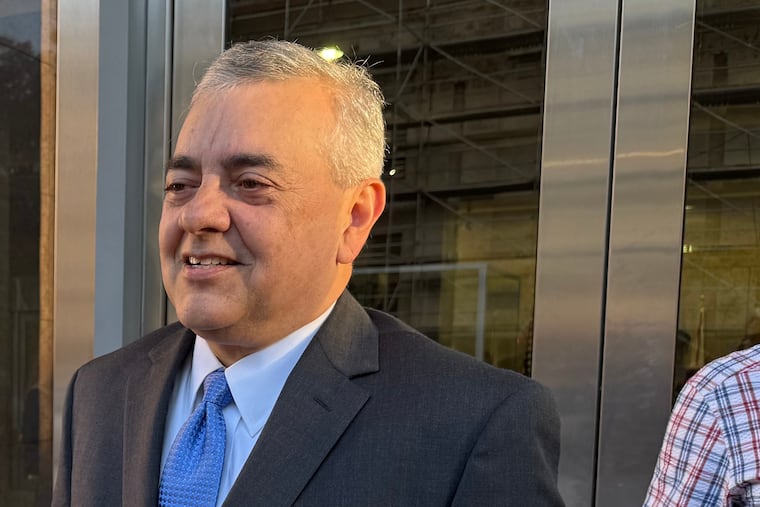
A former Florida congressman and political mentor to Secretary of State Marco Rubio was convicted Friday for his role in a secret $50 million campaign to lobby officials in Washington on behalf of the Venezuelan government.
A federal jury found David Rivera, a Republican from Miami who served one term in the House from 2011 to 2013, guilty on counts including failing to register as a foreign agent and conspiracy to commit money laundering. The jury also convicted an associate of Rivera’s, Esther Nuhfer, on related charges.
The weeks-long trial, which played out in federal court in Miami, drew attention for what it revealed about Rivera’s efforts to influence officials in President Donald Trump’s first administration on behalf of former Venezuelan president Nicolás Maduro. It drew interest for the number of bold-faced names appearing as witnesses.
Rubio testified before the jury early in the trial — the first time in more than four decades that a sitting cabinet secretary has served as a witness in a criminal trial. Jurors also heard from Rep. Pete Sessions (R., Texas) and Brian Ballard, a top lobbyist and fundraiser for Trump.
Federal prosecutors alleged Rivera received the $50 million, three-month contract to lobby Trump officials to soften their stance toward Maduro’s regime.
But throughout the trial, Rivera maintained that his deal was with the U.S. subsidiary of Venezuela’s state-owned oil company and focused only on persuading oil company ExxonMobil to execute a potentially lucrative return of assets to that South American country.
A consulting contract with a U.S. company would not require him or an associate to register as a foreign agent, his attorneys said. And Rivera’s lawyers maintained that any meetings he had over broader U.S. policy on Venezuela were meant to support Venezuelan opposition leaders pushing for Maduro’s ouster.
The defense lawyers did not immediately comment on the jury’s decision Friday.
Jason Reding Quiñones, the U.S. attorney in Miami whose office prosecuted the case, hailed the verdict.
“They took millions from the communist regime in Venezuela to secretly influence U.S. policy, and concealed it not just from the American government, but from their own close political allies and personal friends,” he said in a statement. “Foreign influence carried out in secret is corruption.”
In January, years after charges against Rivera were filed, U.S. military forces captured Maduro and brought him to New York on narco-terrorism charges. The former Venezuelan president rejected a request from Rivera’s attorneys to testify in the ex-congressman’s defense and remains in custody in New York awaiting his own trial.
For Rubio, the trial presented an awkward inconvenience. Though he was not accused of wrongdoing, the proceedings came as he is handling several international conflicts — including turmoil in Venezuela — as Trump’s top diplomat.
Rivera, 60, was instrumental in helping Rubio, 54, rise from a law school graduate to Capitol Hill. Three decades ago, he got Rubio one of his first jobs in politics working for Bob Dole’s 1996 presidential campaign.
As they continued their parallel climbs, Rivera later crafted the strategy that helped Rubio become speaker of the Florida House at age 34. The two became so close that Rivera was reportedly present for the births of each of Rubio’s four children.
During his testimony, Rubio recounted how he met with Rivera in 2017 and then delivered a speech on the Senate floor using some of Rivera’s talking points on Venezuela.
He said he did not know at the time that his old friend had received a $50 million contract to represent “an entity controlled by the Venezuelan government.”
“It would have been shocking to me,” the secretary of state said. He would not have engaged in the meetings had he known his former friend had made such a deal, he told the jury, and said the meeting resembled past bids from opportunists to oust Maduro that amounted to nothing.
“It was more of the same. I was frankly angry and frustrated,” Rubio testified. “Why would I waste my time with a stupid meeting?”
The testimony also touched on a 2017 assassination plot to kill Rubio launched by a top Maduro ally. Federal prosecutors sought to establish that Rubio learned of the plot from U.S. officials, while Rivera’s defense tried to make it clear that Rubio sought Rivera’s help in seeking more information on the threat.