What to know about the latest Ebola outbreak
An outbreak of the deadly Ebola virus in Congo and Uganda has prompted the World Health Organization to declare a global health emergency.
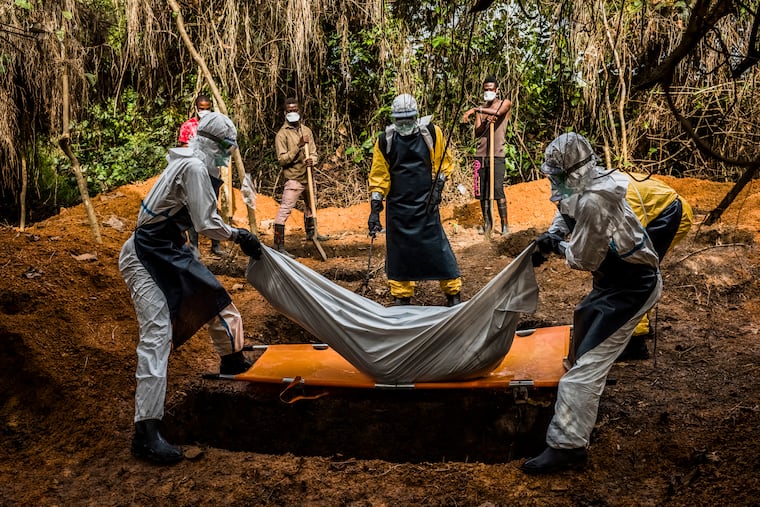
An outbreak of the deadly Ebola virus in Congo and Uganda has prompted the World Health Organization to declare a global health emergency.
About 80 deaths have been attributed to the disease in Ituri province of Congo, where the outbreak was first identified. There are believed to be nearly 250 cases in the province, but, so far, laboratory testing has definitively linked only eight cases to the virus. Cases have also been confirmed in neighboring Uganda.
The type of Ebola virus behind the latest outbreak, known as Bundibugyo, is rare and has no targeted vaccine or treatment, potentially compounding the difficulty of containing the outbreak.
Here’s what to know about Ebola.
What is Ebola?
Ebola is an illness caused by a group of viruses, known as orthoebolaviruses, first discovered in 1976 in the countries now known as South Sudan (formerly part of Sudan) and Congo (formerly known as Zaire) in a region near the Ebola River. The most common species is the Zaire Ebola virus.
Ebola outbreaks have mostly occurred in sub-Saharan Africa, according to the U.S. Centers for Disease Control and Prevention. Four of the six known species of Ebola viruses cause illness in humans and can be fatal. Among them is Orthoebolavirus bundibugyoense, leading to Bundibugyo virus disease, the form of Ebola that prompted the latest global health emergency declaration.
Ebola is among a group of illnesses characterized as viral hemorrhagic fevers. These can affect the work of organs, damage the cardiovascular system and broadly diminish the body’s ability to function.
People with Ebola may first experience so-called dry symptoms such as fever, aches, pains and fatigue before progressing to wet symptoms, including diarrhea, vomiting and bleeding, according to the CDC.
Ebola diseases can be contracted through contact with the body fluids of an infected, sick or dead person and with contaminated objects such as clothing, bedding, needles and medical equipment.
Healthcare providers and those caring for someone with Ebola face the highest risk of infection, but the viruses that cause Ebola pose little risk to travelers or the general public, according to the agency.
To control disease outbreaks, health authorities rely on clinical care, surveillance, contact tracing, quarantines for infection prevention, safety controls in health facilities and safe burials, among other public health protocols.
Are there vaccines?
There is no vaccine or specific treatment for the Bundibugyo species, as outbreaks have been rare.
The Bundibugyo species was first identified in 2007 after a mysterious illness broke out in Bundibugyo District in Uganda, which borders Congo. Diagnostic samples submitted to the CDC in the United States revealed the existence of a previously unknown type of Ebola virus. In 2012, another such outbreak was identified in Congo.
Fatality rates during the past two outbreaks of this form of Ebola have ranged from 30% to 50%, according to the WHO. While there is no licensed vaccine or specific treatment for the Bundibugyo species, early care can save lives, health experts say.
The incubation period for this species of Ebola virus ranges from two to 21 days, and individuals are usually not infectious until symptoms manifest. But because early symptoms — like fever and fatigue — resemble those of other illnesses, including malaria, early detection can be difficult.
Vaccines have been developed for the Zaire species, but they are not effective in preventing disease caused by other Ebola virus species.
In January, scientists at the University of Oxford announced an effort to develop and test vaccines to protect against multiple lethal viruses, including Bundibugyo. And the WHO says that “candidate products are in development” to address the species of Ebola without current vaccines, including Bundibugyo.
Have U.S. spending cuts impeded the response?
The U.S. Agency for International Development has played a major role in containing previous outbreaks, but last year it was shuttered by the Trump administration. It is unclear how that might have affected the response to this outbreak. Atul Gawande, who served as assistant administrator for global health at USAID during the Biden administration, suggested on social media on Sunday that the latest outbreak went undetected for weeks because U.S. agencies had withdrawn from work that had previously helped detect outbreaks sooner.
The CDC said in a statement that it had “mobilized response activities” upon receiving confirmation of the outbreak and has “been actively working to support” the needs of the health ministries in Congo and Uganda.
In 2014, when the WHO declared a public health emergency of international concern amid the world’s most severe Ebola outbreak, the CDC in the United States collaborated with other U.S. agencies, health ministries in the affected countries, and national and international agencies and partners to help end the epidemic.
The United States withdrew from the WHO in January, cutting off regular communication with that organization. The CDC learned of the outbreak on Thursday, according to officials.
This article originally appeared in The New York Times.