EPA wants to repeal limits on ‘forever chemicals’ in drinking water
One critic called the move 'a betrayal of public health,' and it is likely to run afoul of the MAHA movement.
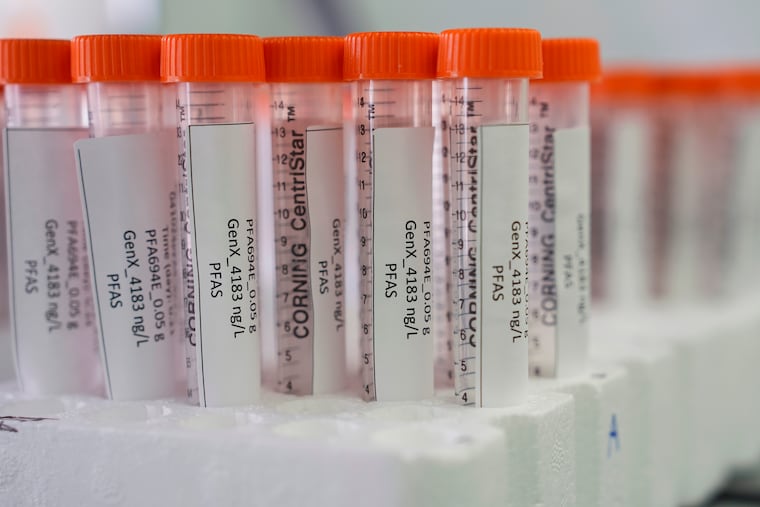
The Environmental Protection Agency on Monday proposed repealing limits on four types of “forever chemicals” in drinking water, while delaying regulations on two others.
Shortly after President Donald Trump took office, the EPA signaled its plans to rescind the 2024 protections against per- and polyfluoroalkyl substances, known as PFAS. But the agency waited more than a year to issue a formal proposal.
If finalized, the EPA’s proposal would end the Biden-era drinking water limits for four toxic PFAS compounds: GenX, PFHxS, PFNA, and PFBS. It also would give utilities two additional years to comply with limits on the amounts of two other prevalent compounds, known as PFOS and PFOA. The agency said in a statement that it would evaluate those PFAS and issue new regulations, while stating it “cannot predetermine the outcome” of that process.
The EPA said that, separate from drinking water standards, it will issue limits for discharge of PFAS by the chemical industry and other sources in coming months.
PFAS are used in a variety of products like nonstick pans and firefighting foam and have been linked to cancer, immune system problems, and infertility. They are called forever chemicals as they can take years to break down in the environment.
All 50 states have recorded levels of PFAS in drinking water above the EPA standards, according to the Natural Resources Defense Council. Numerous communities around the country, such as those in North Carolina along the Cape Fear River, have battled for years to clean up human-made chemicals in drinking water sources.
When the Biden administration finalized the first-ever national, legally enforceable drinking water standards for PFAS in 2024, the EPA estimated the regulations would reduce exposure for about 100 million people across the United States.
It marked the first time the agency had successfully set a drinking water standard for a new contaminant since 1996. Barely two years later, the Trump administration is seeking to unravel much of that effort.
“I don’t see how you put a positive light on this,” said David Andrews, chief science officer for the Environmental Working Group. “Ultimately, I see this as a betrayal of public health and the mission of making America healthier. Safe and clean drinking water should be a right for everyone in this country.”
The American Water Works Association, a nonprofit group whose members include water utilities and treatment plant operators, has expressed concern that the estimated cost to implement the Biden-era standards could be much higher than the EPA’s calculations and could strain utilities’ budgets.
“Because most water systems depend on revenue from water ratepayers,” the group warned in a recent legal filing, “the costs of regulation are largely borne by the systems’ customers.”
Andrews noted that scientific evidence for the potential harms posed by PFAS has continued to grow in recent years. Exposure to the chemicals has been linked to an increased risk of certain types of cancer, low birth weight, high cholesterol, and negative effects on the liver, thyroid, and immune system.
Given those realities, he said, the EPA should be speeding up implementation of the stricter drinking water standards rather than weakening them.
“Slow-walking this is really just going the wrong direction,” Andrews said.
The EWG and Natural Resources Defense Council say repealing the regulations is also on shaky legal ground. The EWG has said the rollback “almost certainly runs afoul of the anti-backsliding provision of the Safe Drinking Water Act,” which does not allow for weakening drinking water standards once in place.
Erik Olson, the NRDC’s senior strategic director for health, said delaying the limits on PFOS and PFOA until 2031 also appears to violate the law’s demand that standards be effective within five years.
While PFOS and PFOA have largely been phased out of U.S. manufacturing, they are still widely found in the environment. In the absence of federal standards before 2024, numerous states have taken actions to try to limit PFAS contamination in drinking water, but those guidelines and the chemicals they regulate vary.
Even if courts ultimately uphold the Biden-era regulations, it will not fully address the much larger problem of public exposure to PFAS, Olson said.
Beyond the six compounds in question, there are hundreds of PFAS being used in manufacturing today that are also toxic and demand to be regulated together as a chemical class, an idea the EPA has so far resisted, Olson said.
The Trump administration has taken smaller steps to address public concerns about PFAS. Last month, EPA Administrator Lee Zeldin and Heath and Human Services Secretary Robert F. Kennedy Jr. announced that PFAS as a group would be added to the list of known contaminants for further study and monitoring, without imposing limits.
The EPA has also launched an effort to give technical assistance and funding to communities and water systems seeking to remove PFAS from their water supply.
That hasn’t satisfied many in the Make America Healthy Again movement who are demanding swifter actions to limit chemicals. Kennedy has championed the MAHA movement, but it is a diffuse coalition of broadly anti-chemical and anti-vaccine mothers and other activists.
To avoid a rupture with that constituency, the agency has also been sitting on approvals of new PFAS chemicals, people familiar with the matter told the Post in April.
Kennedy, when questioned during a congressional hearing in April about EPA policies that seemed to contradict the MAHA movement, said it was not his department and to talk to Zeldin.
The proposal will be open for public comment for 60 days. That input will be considered before the proposal is revised and finalized.