Why the Federal Reserve has historically been independent of the White House
Economists and investors typically see an independent Fed as a stabilizing influence on the economy.
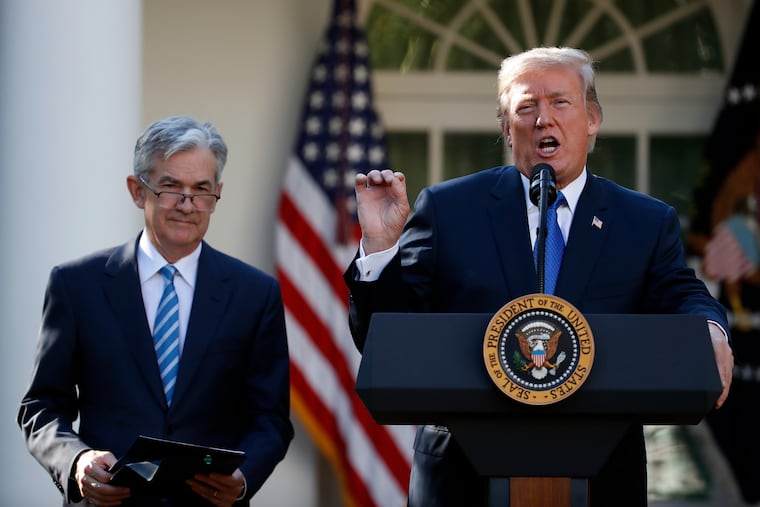
WASHINGTON — The Justice Department has threatened the Federal Reserve with a criminal indictment over the testimony of Fed Chair Jerome Powell this summer regarding its building renovations, Powell said over the weekend.
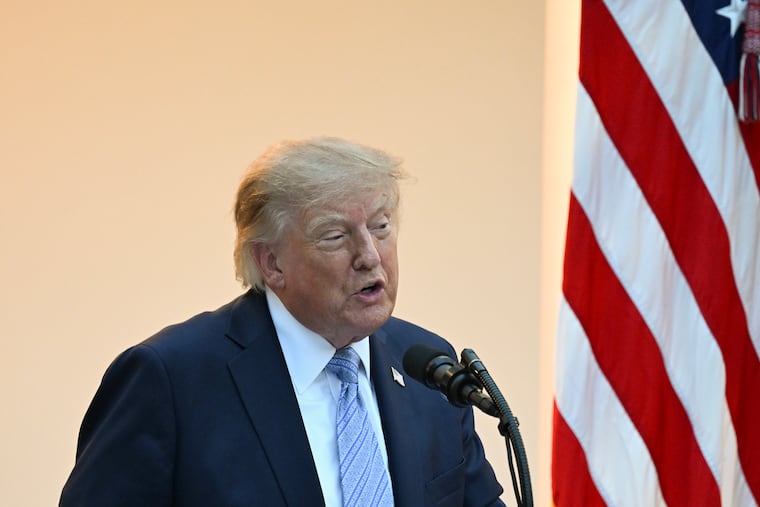
It is a major escalation by the administration after repeated attempts by President Donald Trump to exert greater control over the independent institution.
Trump has repeatedly attacked Powell for not cutting its short-term interest rate, and even threatened to fire him. Powell’s caution has infuriated Trump, who has demanded the Fed cut borrowing costs to spur the economy and reduce the interest rates the federal government pays on its debt. That anger has not subsided even after the Fed cut interest rates in three of the final four months of 2025.
Trump has also accused Powell of mismanaging the U.S. central bank’s $2.5 billion building renovation project. In a sharp departure from his previous responses to attacks by Trump, Powell described the threat of criminal charges as simple “pretexts” to undermine the Fed’s independence when it comes to setting interest rates.
Trump is already seeking to fire Federal Reserve Governor Lisa Cook over unproven allegations that she committed mortgage fraud. The allegation was made over the summer by Bill Pulte, a Trump appointee to the Federal Housing Administration.
Here are some reasons why the independence of the U.S. Federal Reserve is guarded so closely.
Why the Fed’s independence matters
The Fed wields extensive power over the U.S. economy. By cutting the short-term interest rate it controls — which it typically does when the economy falters — the Fed can make borrowing cheaper and encourage more spending, accelerating growth and hiring. When it raises the rate — which it does to cool the economy and combat inflation — it can weaken the economy and cause job losses.
Economists have long preferred independent central banks because they can more easily take unpopular steps to fight inflation, such as raise interest rates, which makes borrowing to buy a home, car, or appliances more expensive.
The importance of an independent Fed was cemented for most economists after the extended inflation spike of the 1970s and early 1980s. Former Fed Chair Arthur Burns has been widely blamed for allowing the painful inflation of that era to accelerate by succumbing to pressure from President Richard Nixon to keep rates low heading into the 1972 election. Nixon feared higher rates would cost him the election, which he won in a landslide.
Paul Volcker was eventually appointed chair of the Fed in 1979 by President Jimmy Carter, and he pushed the Fed’s short-term rate to the stunningly high level of nearly 20%. (It is currently 3.6%, the lowest it has been in nearly three years.) The eye-popping rates triggered a sharp recession, pushed unemployment to nearly 11%, and spurred widespread protests.
Yet Volcker didn’t flinch. By the mid-1980s, inflation had fallen back into the low single digits. Volcker’s willingness to inflict pain on the economy to throttle inflation is seen by most economists as a key example of the value of an independent Fed.
Investors are watching closely
An effort to fire Powell would almost certainly cause stock prices to fall and bond yields to spike higher, pushing up interest rates on government debt and raising borrowing costs for mortgages, auto loans, and credit card debt. The interest rate on the 10-year Treasury is a benchmark for mortgage rates.
All major U.S. markets slid Monday at the opening bell, bond yields edged higher, and the value of the U.S dollar declined.
Most investors prefer an independent Fed, partly because it typically manages inflation better without being influenced by politics, but also because its decisions are more predictable. Fed officials often publicly discuss how they would alter interest rate policies if economic conditions changed.
If the Fed was more swayed by politics, it would be harder for financial markets to anticipate — or understand — its decisions.
While the Fed controls a short-term rate, financial markets determine longer-term borrowing costs for mortgages and other loans. And if investors worry that inflation will stay high, they will demand higher yields on government bonds, pushing up borrowing costs across the economy.
In Turkey, for example, President Recep Tayyip Erdogan forced the central bank to keep interest rates low in the early 2020s, even as inflation spiked to 85%. In 2023, Erdogan allowed the central bank more independence, which has helped bring down inflation, but short-term interest rates rose to 50% to fight inflation, and remain high.
Fed’s independence doesn’t mean it’s unaccountable
Fed chairs like Powell are appointed by the president to serve four-year terms and have to be confirmed by the Senate. The president also appoints the six other members of the Fed’s governing board, who can serve staggered terms of up to 14 years.
Those appointments can allow a president over time to significantly alter the Fed’s policies. Former President Joe Biden appointed four of the current seven members: Powell, Cook, Philip Jefferson, and Michael Barr. A fifth Biden appointee, Adriana Kugler, stepped down unexpectedly on Aug. 1, about five months before the end of her term. Trump has already nominated his top economist, Stephen Miran, as a potential replacement, though he will require Senate approval. Cook’s term ends in 2038, so forcing her out would allow Trump to appoint a loyalist sooner.
Trump will be able to replace Powell as Fed chair in May, when Powell’s term expires. Yet 12 members of the Fed’s interest-rate setting committee have a vote on whether to raise or lower interest rates, so even replacing the chair doesn’t guarantee that Fed policy will shift the way Trump wants.
Congress, meanwhile, can set the Fed’s goals through legislation. In 1977, for example, Congress gave the Fed a “dual mandate” to keep prices stable and seek maximum employment. The Fed defines stable prices as inflation at 2%.
The 1977 law also requires the Fed chair to testify before the House and Senate twice every year about the economy and interest rate policy.
Could Trump fire Powell before his term ends?
The Supreme Court last year suggested in a ruling on other independent agencies that a president can’t fire the chair of the Fed just because he doesn’t like the chair’s policy choices. But he may be able to remove him “for cause,” typically interpreted to mean some kind of wrongdoing or negligence.
It’s a likely reason the Trump administration has zeroed in on the building renovation, in hopes it could provide a “for cause” pretext. Still, Powell would likely fight any attempt to remove him, and the case could wind up at the Supreme Court.