When will prices come down for gas, air travel and strawberries?
With President Donald Trump on Tuesday announcing a suspension of U.S. attacks on Iran for two weeks, the big question is: When will prices come down?
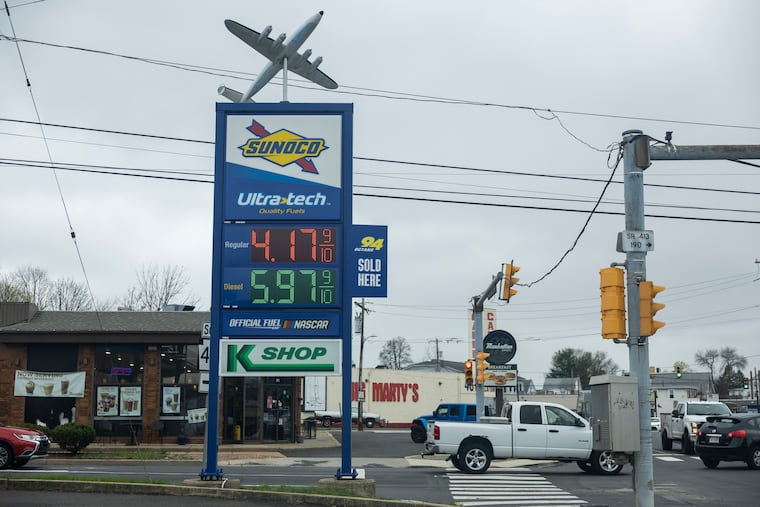
American consumers have started to feel their budgets squeezed beyond gas prices from the U.S.-Israeli war in Iran, as energy costs have begun to pressure shipping, transportation, agriculture, and airline prices.
With President Donald Trump on Tuesday announcing a suspension of U.S. attacks on Iran for two weeks, the big question is: When will prices come down?
The price of Brent crude oil, a global benchmark, plunged immediately after the announcement. Gas prices are expected to follow.
While gas prices — now $4.16 per gallon — have been the most visible impact of the conflict, energy prices are also sending jet fuel prices skyrocketing, leading airlines to find ways to make up those costs. Plus, the agricultural sector is under pressure from higher transportation fees and fertilizer prices.
Here’s what to know about price increases as a result of the war.
Gas prices could take months to fall significantly
On Wednesday, Brent crude, the international standard, fell 13.3% to $94.75 per barrel, which suggests relief at the pump could be coming.
Prices have been up over the past month because the critical Strait of Hormuz, a main thoroughfare for the world’s oil supply, has remained effectively closed to marine traffic. The Strait of Hormuz connects the Persian Gulf to the Gulf of Oman.
Gas prices could start to ease somewhat, influenced by falling global prices for crude oil, but significant energy price relief will depend on negotiations truly progressing and resumed shipping through the Strait of Hormuz.
Before the announcement, the U.S. Energy Information Administration had suggested that it could take months before the reopening of the strait leads to lower energy prices, according to a forecast out Tuesday.
The report suggested that if the strait opens by May, some capacity would return slowly as maritime traffic picks up again and Middle Eastern producers return to normal capacity. Oil supplies would return to “close to pre-conflict levels in late 2026.”
Even when the price of crude oil falls, pump prices often remain elevated for a while.
This pattern is so common, especially with gas prices, that economists have a name for it: rockets and feathers. When crude prices jump, pump prices tend to rise like a rocket. But when crude prices fall, pump prices tend to descend gently, like a feather.
Flights — and checking bags — are getting costlier
Until such relief takes hold, jet fuel prices are expected to remain elevated, after surging more than 87% since the day before the war began, according to Airlines for America’s Argus U.S. Jet Fuel Index. Airlines have been searching for ways to make up those rising costs. Higher fares are showing up in searches, and some global airlines are canceling flights.
Several airlines including Southwest, United, JetBlue, and Delta have raised their checked baggage fees in recent weeks in response to the spikes. Delta, Southwest, and United increased their fees by $10 for the first and second checked bag, and JetBlue bumped up its fee between $4 and $9.
Airlines try not to raise fares too much, so charging more for bags or other ancillary items is a way to keep sticker shock off ticket prices, said Robert Mann, president of the aviation consulting firm R.W. Mann & Co.
Still, the increased fees and volatile prices might give people second thoughts about flying for vacation, said Dan Bubb, a professor in residence at the University of Nevada at Las Vegas and a commercial aviation expert.
“This is where people are going to start having second thoughts,” he said. “Because they’re going to look at their budget and say, ‘Can I afford this?’”
Surcharges are hitting the shipping industry
As fuel, especially diesel, remains more expensive, the cost of transporting goods around the country has gone up. Shippers have added fuel surcharges to cover the costs. Amazon added a 3.5% fuel and logistics surcharge for third-party sellers, and the U.S. Postal Service said it would impose an 8% fee on some package shipments.
Diesel prices are up more than $2 per gallon from a year ago, hitting a national average of nearly $5.67 early Wednesday. UPS and FedEx have surcharges that adjust regularly in response to fuel costs, and prices have gone up, hitting a broad array of business clients who pass those costs along to consumers, as well as Americans shipping packages directly.
Meal delivery service Blue Apron recently sent a note to customers saying it would raise menu prices in response to transportation and shipping prices increasing.
“That’s affecting both how our ingredients get to us and how we get your meals to you,” the company wrote in the email. One Washington Post reporter saw a price quoted Tuesday for creamy roasted red pepper pasta of $18.98 for two servings, up 60 cents from an order placed last month.
In a statement, a Blue Apron spokesperson said the company remains focused on balancing affordability with the costs of running a sustainable business.
Berries, milk, and meat could get more expensive
As long as fuel prices remain elevated, grocery prices on shelves are also expected to increase in coming months, as the effects of rising energy and fertilizer costs filter down to consumers. The first items to see those upticks could be perishable foods, such as berries, dairy, and meat, which often require refrigeration during transportation.
The price of oil impacts transportation costs, as well as packaging costs for food. And though the U.S. is a major producer of fertilizer, the global price is still rising, which could eventually affect what farmers here pay.
“Food prices at the retail end are a little bit more buffered,” said David Ortega, a food economist and professor at Michigan State University. “That doesn’t mean we aren’t going to feel the effect; there’s just a lag.”
Still, the price increases shouldn’t be as bad as during the inflationary run-up of 2022, he said, when the Russian war in Ukraine caused prices to spike.
Shira Ovide contributed to this article.