Four men found guilty of Haiti president’s assassination
The four defendants were all linked to a small security firm based in Miami, Counter Terrorism Unit Federal Academy.
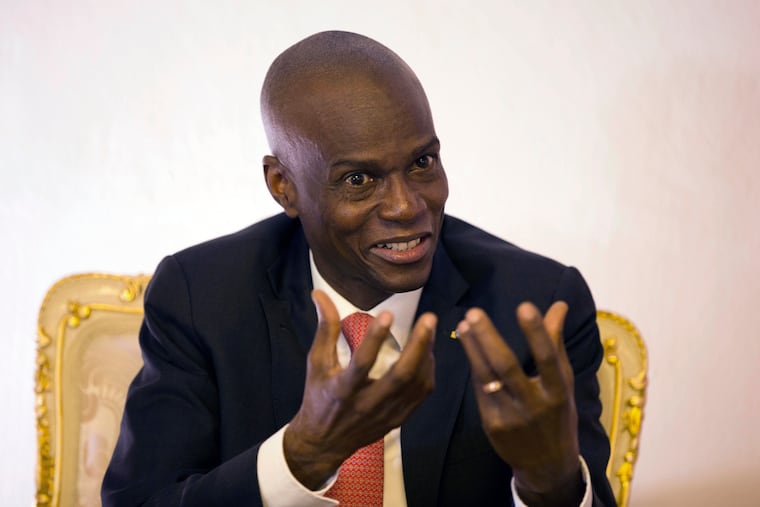
MIAMI — After an eight-week trial, a federal jury in Miami on Friday found four South Florida men guilty of plotting to assassinate President Jovenel Moïse of Haiti five years ago, in a case that has still left many people wondering who actually ordered the hit.
The four defendants were all linked to a small security firm based in Miami, Counter Terrorism Unit Federal Academy. The owners claimed they believed they were acting on a legitimate Haitian court order when they hired a team of more than two dozen Colombian former soldiers to overthrow, not kill, Moïse, who at the time was an unpopular president.
The defendants said that when the mercenaries arrived, Moïse was already dead.
Moïse, 53, was gunned down in his bedroom in the early hours of July 7, 2021.
His death unleashed a yearslong spiral of gang violence and mayhem in Haiti. More than 1 million people have fled their homes in recent years. And with large swaths of the capital, Port-au-Prince, too unsafe to transit, officials have not been able to hold elections to select Moïse’s replacement.
“Why this awful cruelty, this shocking brutality? So they could install a puppet as Haiti’s president,” Jason Wu, an assistant U.S. attorney who prosecuted the case, said during the government’s closing argument.
Wu said the defendants planned to cash in on future contracts with a new government as part of a multibillion-dollar plan to develop the impoverished country. They were motivated by their “greed, their arrogance, and their lust for power,” he said.
Defense lawyers said the Colombian commandos had been hired to provide security for Haitian authorities to arrest Moïse in connection with crimes against the state. Their plan was supposedly to detain Moïse and install a handpicked president in his place.
After two days of deliberation, all four defendants were found guilty of five counts relating to conspiring to kill or kidnap the president and providing material support for the plot, as well as violating the U.S. Neutrality Act by undertaking an unlawful foreign military expedition.
The charges carry potential life sentences.
The defendants included the security firm’s owners, Arcángel Pretel, 53, a Colombian-born former FBI informant, and Antonio Intriago, 63, a Venezuelan American.
The other two defendants were James Solages, 40, a Haitian American who worked in the maintenance department of a senior living center in South Florida before joining the security firm in Haiti, and Walter Veintemilla, 57, a wealthy Ecuadorian American mortgage and insurance broker who prosecutors said was the “money man” who helped finance the operation.
Intriago buried his forehead in his hands as the verdict was read. Some of the defense lawyers consoled their clients with hugs. David Howard, Pretel’s lawyer, patted his client’s back and walked around the defense table to offer his sympathy to each one of the defendants.
Six other people have already pleaded guilty for their roles in the plot, with all but one sentenced to life in prison.
While the trial cast a light on the murky circumstances behind Moïse’s death, it still left doubts about who was behind the assassination plot. Much of the evidence in Miami was shrouded in secrecy because it involved U.S. government informants and was filed under restrictive rules for classified national security matters.
A medical expert for the defense testified that two bullets retrieved from the president’s body did not match his injuries. Defense lawyers theorized they had been planted as part of a parallel Haitian conspiracy to frame the Colombians and the security firm.
“The bullet is pristine,” said Jonathan Friedman, Solages’ lawyer. “Something does not smell right.”
Because of an illness, a fifth defendant, Christian Sanon, a Haitian American pastor, is expected to be tried later this year.
This article originally appeared in The New York Times.