As Trump meets Xi, Iran lets Chinese ships through Strait of Hormuz
President Donald Trump's talks with China’s leader, Xi Jinping, were expected to focus heavily on the crisis over the strategic waterway.
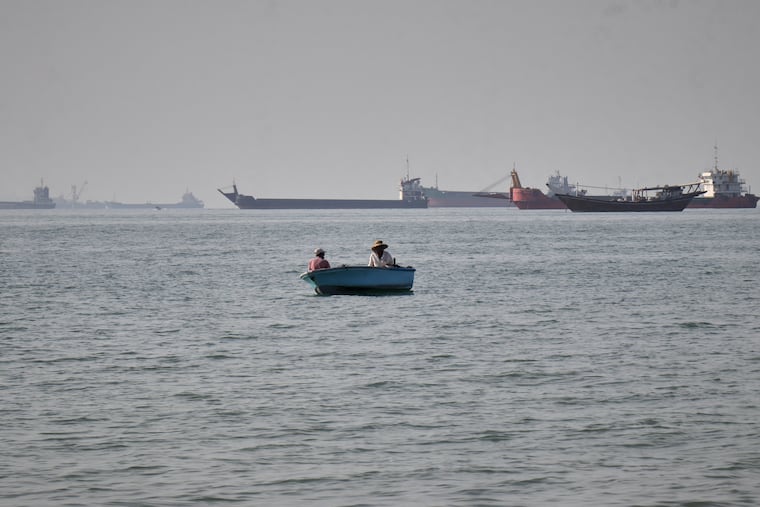
BEIRUT — Iran has allowed some Chinese vessels to pass through the Strait of Hormuz following diplomatic overtures from China’s government, semiofficial Iranian news agencies reported Thursday.
The reports coincided with a visit to Beijing by President Donald Trump, who held talks with China’s leader, Xi Jinping, on Thursday that were expected to focus heavily on the crisis over the strategic waterway. Dueling Iranian and U.S. attempts to control traffic in the strait have rattled global energy markets over the past few months.
The Trump administration has been pressing China to use its leverage with Iran to help reopen the strait, which is a main shipping route for oil from the Persian Gulf.
Fars and Tasnim, two semiofficial Iranian news agencies, said Iran had approved the passage of some Chinese vessels under rules set by Iran for managing traffic in the waterway.
Fars reported that the crossings began Wednesday night, following a diplomatic outreach by China’s foreign minister and its ambassador to Iran. It said the move was rooted in the two countries’ strategic partnership.
It was too early to say whether this move meant there would be an easing of restrictions by Iran through the Strait of Hormuz, said Tomer Raanan, a maritime risk analyst at Lloyd’s List, a shipping publication. The bigger issue is that Iran gets to dictate who goes through the strait, he said, and as long as that is the case, it is “not really open.”
China’s leverage in the Hormuz crisis has been growing. Trump and Xi discussed the Middle East during their talks, according to Chinese state media, while Secretary of State Marco Rubio said Thursday that the United States wanted China to play a more active role in getting Iran to reopen the strait.
Iran insists that the strait is open to commercial vessels that cooperate with its naval forces, and it blames any disruptions on the blockade of Iranian ports imposed by the U.S. military.
Abdolreza Rahmani Fazli, the Iranian ambassador to China, told IRNA, Iran’s state news agency, this week that Iran’s long-term cooperation with China showed that it had “real options” and “important partners” in the face of U.S. pressure.
There were signs Thursday that the crisis in the strait was not easing, despite the apparent opening for Chinese vessels.
United Kingdom Maritime Trade Operations, a British naval agency that monitors shipping in the region, said Thursday that an anchored vessel northeast of Fujairah — the United Arab Emirates’ primary port for oil exports just outside the Strait of Hormuz — had been taken by “unauthorized personnel” and was bound for Iranian territorial waters. The agency did not identify the vessel or say who was responsible.
This incident pointed to a widening crisis, with Windward, a maritime data company, saying Thursday that it added to a broader pattern of “coercive maritime activity, and heightened risk for commercial vessels operating around the Gulf of Oman.”
Fujairah is a major oil and bunkering hub on the Gulf of Oman, and many ships have been waiting there amid uncertainty over whether they can pass through the Strait of Hormuz.
India’s Foreign Ministry said Thursday that an Indian-flagged ship had been attacked off Oman a day earlier. In a statement, the ministry called the attack “unacceptable” but did not indicate who was responsible. It said the crew members had all been rescued by Omani authorities.
This article originally appeared in The New York Times.