Kuwait says Iranian drones hit airport and killed 1 as ceasefire is tested again
Kuwait briefly shut the country's main airport after Iranian drones heavily damaged a terminal building and killed one person.
DUBAI, United Arab Emirates — Kuwait said Iranian drones heavily damaged a passenger terminal at its main airport Wednesday, killing one person, wounding dozens, and briefly closing the airfield — the latest in back-and-forth attacks by Iran and the U.S. that test a fragile ceasefire.
The strike reinforced the risks to residents and travelers in Persian Gulf countries that had considered themselves relative havens before the war, now in its fourth month.
Talks have dragged on for weeks as mediators seek a more enduring truce in the U.S.-Israeli war with Iran. They are increasingly strained by Israel’s broadening war with Iran-backed Hezbollah fighters in Lebanon.
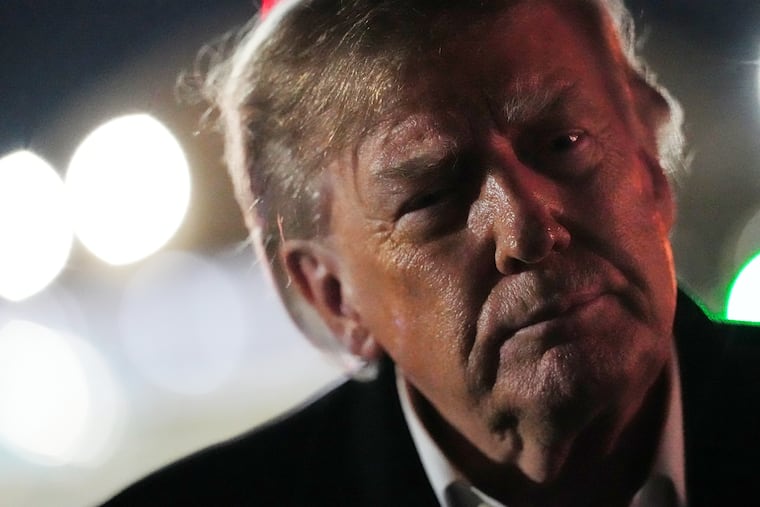
A regional official said Iran wanted a separate ceasefire in Lebanon enforced before returning to talks. President Donald Trump said negotiations continue to extend the Iran ceasefire, even as the U.S. launched strikes against military sites on an Iranian island.
“We’ve been hitting them pretty hard,” Trump said when asked by reporters on Wednesday if the ceasefire remains in place. “I’d say in that part of the world a ceasefire is when you’re shooting in a more moderate manner.”
The fighting in Lebanon has also exposed a rift between Israel and the U.S., which is pushing its ally for restraint. In a measure of the friction, Trump acknowledged that he had called Israeli Prime Minister Benjamin Netanyahu “crazy” during a phone call earlier this week. Nonetheless, both men say their rapport is solid.
Iran maintains its hold on the Strait of Hormuz — a crucial waterway for the world’s oil and natural gas and related products like fertilizer — and the U.S. continues its blockade of Iranian ports. Global fuel prices remain high, and the effects of the conflict are felt well beyond the region.
In Washington, House Speaker Mike Johnson (R., La.) said he, Trump, Vice President JD Vance, and Secretary of State Marco Rubio huddled for three hours at the White House on Monday as Trump worked on “that final piece” of getting commerce flowing. Rubio, meanwhile, faced grilling in Congress over the war and its economic fallout.
An Indian national is killed at Kuwait’s main airport
A spokesperson for the Kuwaiti Defense Ministry, Brig. Gen. Saud Abdulaziz Al-Otaibi, said “a number of hostile drones” targeted a passenger building at Kuwait International Airport. It had opened only Monday after a monthslong closure because of the war, which began Feb. 28 with U.S. and Israeli strikes on Iran.
Iran’s paramilitary Revolutionary Guard said it did not fire at the airport, instead claiming via state broadcaster IRIB that the terminal was damaged by a U.S.-made interceptor that failed to hit Iranian missiles. U.S. Central Command called the claim false and said on X that Iranian drones made a “deliberate, calculated and unjustified attack” on the airport. Neither side provided further information.
India’s embassy said the person killed was an Indian national. Authorities said 63 were wounded, including passengers and workers, and some suffered serious injuries.
The Kuwaiti Defense Ministry said it destroyed over a dozen missiles and a similar number of drones from Iran.
The airport partially reopened later, with Kuwait Airways flights resuming at a different terminal, according to civil aviation authorities. No other flights were operating.
The Kuwaiti Foreign Ministry said Kuwait will “neither accept nor tolerate” the attacks and was kicking out two Iranian diplomats. Such expulsions are an established means of communicating international ire.
U.S. and Iran say they are retaliating for earlier attacks
The U.S. military said that two Iranian missiles fell apart en route to Kuwait and that it “downed multiple drones” targeting American forces in the country.
The military also said U.S. and Bahraini forces intercepted missiles aimed at the Persian Gulf kingdom, home to the U.S. Navy’s 5th fleet. The Bahraini Defense Ministry said its military intercepted and destroyed three missiles and a number of drones fired by Iran.
Iran’s paramilitary Revolutionary Guard acknowledged that it targeted the headquarters of the 5th Fleet and U.S. military facilities in another country.
Both the U.S. and Iran said they were retaliating for earlier attacks or attempted ones.
Netanyahu told the American business-news channel CNBC that Iran was “playing with fire,” but he said any decision about whether to scale up a military response would rest with Trump. Iranian Foreign Minister Abbas Araghchi declared on X that “any hostile act will be met with an immediate, decisive response.”
The U.S. military said it launched strikes on an Iranian military ground control station on Qeshm Island in the Strait of Hormuz.
The Iranian Foreign Ministry condemned the U.S. strikes on the island, where it said a telecommunications tower was struck, and other previous strikes. It called them “acts of aggression” that it said violated the ceasefire.
Israel and Lebanon renew their ceasefire
Israel and Lebanon agreed Wednesday to renew their fragile ceasefire and create a number of “pilot” security zones inside Lebanon from which Hezbollah fighters would be banned.
In a joint statement released after a fourth round of U.S.-mediated talks at the State Department, the two sides said the ceasefire “is contingent on a complete cessation of Hezbollah fire and the evacuation of all Hezbollah operatives” from areas south of the Litani River. It was not immediately clear how the security zones would be established, but the agreement calls for the Lebanese army to take full control of those areas.
“These steps will enable progress towards a comprehensive peace and security agreement,” the statement said. “All countries reaffirmed that the future of the relationship between Israel and Lebanon must be decided by the two sovereign governments. They rejected any attempt, by any state or non-state actor, to hold Lebanon’s future hostage.”
Hezbollah is not part of the Israel-Lebanon talks, which have been held at the ambassadorial level in Washington since the beginning of last month.
“All parties condemned Iran’s attacks on countries in the region, and ongoing activities that undermine stability throughout the Middle East, whether through support for proxies and all other acts of aggression,” the statement said.
A new round of discussions will be held during the week of June 22 with an eye toward “reaching a comprehensive agreement.”
In a podcast interview released earlier Wednesday, Trump confirmed a report that he had called Netanyahu “crazy” Monday in a phone call peppered with an expletive. Trump told the New York Post’s Pod Force One that he was “a little bit perturbed” that Israel’s fight with Hezbollah was holding back talks with Iran.
Still, Trump said his relationship with Netanyahu was good, and “we’ve worked very well together.”
Netanyahu responded that he and Trump sometimes have “tactical disagreements” but have “common goals” and “agree on the main things.”
“He respects me. I respect him. We always find a way to work out our differences,” the prime minister said in an interview on the American business-news channel CNBC.