A draft U.S.-Iran plan is said to be on the table. Here’s what to know.
Officials involved in the talks say a new draft memorandum is under discussion that is closer to gaining approval from both sides, though they have differing accounts of some of the terms.
For weeks, mediators between Iran and the United States have been trying to hammer out a preliminary agreement that might ultimately end the war. Those efforts have been repeatedly foiled as the warring sides have accused each other of stalling or misrepresenting the terms.
Now, officials involved in the talks say a new draft memorandum is under discussion that is closer to gaining approval from both sides, though they have differing accounts of some of the terms. President Donald Trump has not yet signed off.
It would be an initial framework, paving the way for more substantive — and most likely more challenging and prolonged — negotiations to determine the future of Iran’s nuclear program, U.S. sanctions on the country and a formal end to the war.
In recent days, there have been brief exchanges of fire between U.S. and Iranian forces, adding to the pressure on negotiators to reach an agreement.
Diplomats involved in the talks said the longer the haggling went on, the more frustrated the two sides might get and exchanges of fire might increase — which risks further endangering the broader diplomatic effort.
Here are some of the details under discussion in the latest proposal, according to an Iranian official, U.S. officials and two diplomats involved in the latest talks, who all spoke on condition of anonymity in order to discuss the draft.
An end to the fighting, but for how long?
The agreement is likely to stipulate terms for a nonaggression pact between the U.S. and Iran.
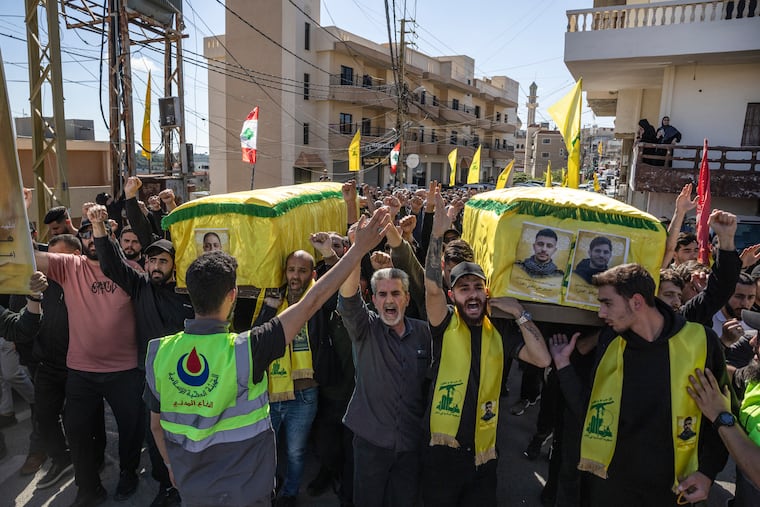
Mediators say it is expected to have a regional component, which Iranian officials and one of the diplomats said would include a halt to fighting in Lebanon. Despite a ceasefire there, both sides have continuously violated it. And Israel recently stepped up a military offensive against the Iran-backed militant group Hezbollah.
Yet, lingering vagaries remain. Because the negotiations have taken place through the Pakistanis and Qataris, it has never been clear whether the Americans and the Iranians have been working on the same version of the memorandum, or who exactly has the authority on the Iranian side to signal an agreement.
The two diplomats briefed on the latest terms said the preliminary agreement outlined an end to hostilities for an initial 60-day period, allowing for negotiations between the two sides, with the possibility for that to be extended.
The version of the draft described by the Iranian official, however, says the terms included a “declaration of the end of war” on all fronts, including Lebanon, for the duration of the negotiations. Two Iranian officials said the terms in the memorandum of understanding pertain only to the period of negotiations for a broader, more permanent deal.
The Strait of Hormuz is still a major sticking point
The agreement was expected to allow for a period of free navigation through the Strait of Hormuz, the vital waterway for commercial shipping through which about one-fifth of the world’s oil and gas passed before the war.
Iranian attacks effectively closed the strait soon after the U.S.-Israeli assault started in February, rattling the global economy. In response, the U.S. Navy imposed its own naval blockade of Iran’s ports and energy outposts in the Persian Gulf.
Under the U.S. understanding of the memorandum, the strait would reopen immediately, an official said, but the U.S. blockade would remain, but reduced in stages depending how much prewar ship traffic is restored by Iran. The idea is to incentivize Iran to demine the strait quickly.
The diplomat briefed on the latest framework said Iran had agreed to allow maritime traffic to return to prewar levels for 30 days, while the two sides negotiated a final deal. Despite that hope, the process of demining and opening the strait could take weeks. Iran is still debating with the U.S. what would happen after that, he said.
Some U.S. negotiators have suggested that the longer-term status of the strait be pushed into a second round of talks, the diplomat said.
A postwar ‘investment fund’ for Iran
Perhaps the most surprising, and apparently recent, addition to the agreement is a reference to an investment fund for Iran. The Iranian official and one diplomat put it at $300 billion, but other officials involved in mediation would not confirm the amount.
The Iranian official described it as a “reconstruction program” that would be promised to Iran in the event a final agreement was signed. Earlier in the negotiations, Iran had demanded reparations for bombardment damage that some Iranian officials estimate at $300 billion to $1 trillion.
Two diplomats briefed on the latest draft called it an international “investment fund,” which the United States would help facilitate in the event of a final deal. Plans for such a fund would be further discussed during the negotiations period, the diplomats said.
Nuclear talks would be deferred
The draft deal, both the Iranian official and the two diplomats said, includes a pledge that the two sides will commit to negotiating the fate of Iran’s enriched uranium.
Those talks would happen during the second phase of negotiations, they said, and will include how to dispose of Iran’s stockpile of about 970 pounds of uranium that could be quickly enriched to weapons grade. There’s another 10 tons of nuclear material enriched to lower levels that negotiators would have to deal with.
Trump initially said those stockpiles should be sent to the United States, while Iran wants to blend down part of the enriched uranium on its own soil under international inspectors and ship other parts of the stockpile to a third country. Trump signaled some flexibility in a social media post this week, saying that diluting the enrichment under international inspectors or sending it to a third country would also be acceptable. But on Wednesday, he said he was not comfortable with either Russia or China taking it.
According to the version of the draft deal described by the Iranian official, Iran will suspend its nuclear program in exchange for a pledge from the U.S. not to increase sanctions while the two sides negotiate a final deal.
According to the Iranian official, existing U.S. sanctions on Iran — which were imposed largely in response to Iran’s nuclear program — would be lifted over time should a final deal be reached.
Iran could ultimately get access to billions in frozen assets
The framework agreement is expected to allow for the eventual release of some of Iran’s frozen funds, the three officials familiar with the draft said. But what is on paper may not match what the two sides agree to verbally.
Iran has an estimated $24 billion of its own money frozen in banks abroad and insists that meaningful negotiations cannot begin without their release. The topic is particularly thorny for Trump because of how vocal he has been in his attacks on former President Barack Obama, after the latter’s administration sent $1.7 billion to Iran in exchange for the release of four detained Americans — which critics called the “Pallets of Cash” scandal.
Given that political reality, Trump’s team has been developing ideas that would involve other countries, including Qatar, releasing funds to the Iranians.
A written version of the draft is expected to pledge a gradual release of funds, the Iranian official and the two diplomats briefed on the plan said. Iran has said it wants access to up to $20 billion in assets frozen in the Middle East.
This article originally appeared in The New York Times.