U.S. sends thousands more troops to Mideast as Trump seeks to squeeze Iran
The infusion of firepower appears likely to coalesce with warships already in the Middle East just as the two-week ceasefire is set to expire April 22.
The Pentagon is sending thousands of additional troops into the Middle East in the coming days, as President Donald Trump attempts to pressure Iran into a deal that could end the weeks-long conflict there while considering the possibility of additional strikes or ground operations if a fragile ceasefire does not hold, U.S. officials said.
The forces moving into the region include about 6,000 troops aboard the aircraft carrier USS George H.W. Bush and several warships escorting it, said current and former officials, who like some others spoke on the condition of anonymity to discuss military movements. About 4,200 others with the Boxer Amphibious Ready Group and its embarked Marine Corps task force, the 11th Marine Expeditionary Unit, are expected to arrive near the end of the month.
The infusion of firepower appears likely to coalesce with warships already in the Middle East just as the two-week ceasefire is set to expire next Wednesday — and as the U.S. military enforces a naval blockade of the Strait of Hormuz. The troops will join the estimated 50,000 personnel that the Pentagon has said are involved globally in operations countering Iran.
The arrival of additional American warships will put even greater pressure on Iran and provide Adm. Brad Cooper, head of U.S. Central Command, and other senior military leaders with more options should negotiations with Tehran fail, said James Foggo, a retired Navy admiral and dean at the Center for Maritime Strategy in Virginia.
“The more tools you have got in your kit, the more diversity of options that you have,” Foggo said, calling the injection of additional forces “a reserve capacity, in the event that things go south.”
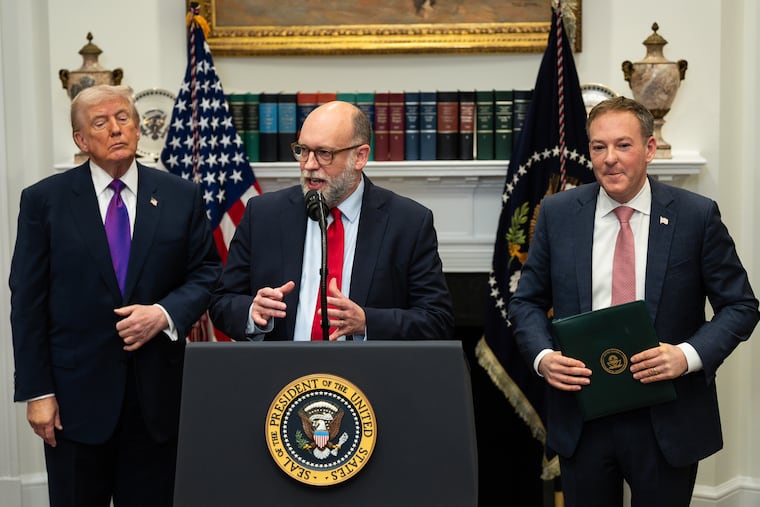
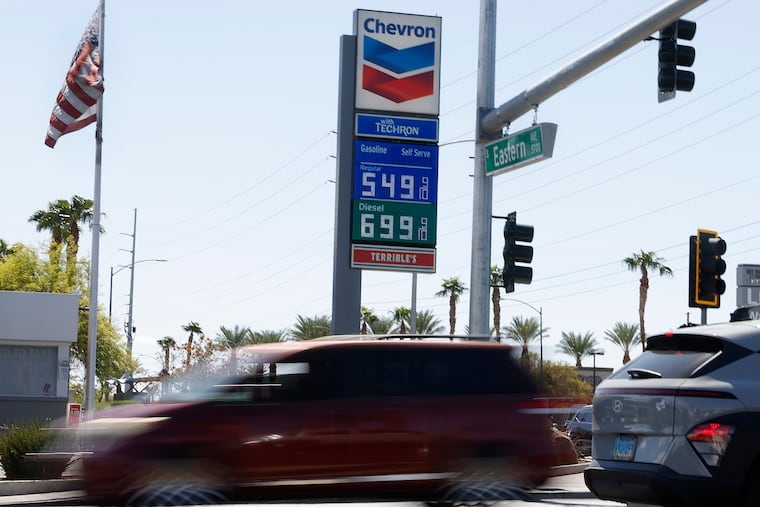
White House press secretary Karoline Leavitt told reporters Wednesday that it is “obviously in the best interest of Iran to meet the president’s demands,” which include ending its nuclear program and lifting its own lockdown on commercial shipping through the Strait of Hormuz. The narrow passage is vital for the movement of Middle Eastern oil through the Persian Gulf. Its closure has caused the global economy to convulse and triggered a rise in energy prices, including the cost of gasoline.
Pakistani mediators are pushing for an extension to the ceasefire to give the United States and Iran more time to bridge their differences and return to the negotiating table, according to a Pakistani official.
The president told Fox Business in an interview that aired Wednesday morning that he thought the war in Iran could be over “very soon” and that he expected gas prices to fall to prewar levels by the midterms “on the assumption” that the U.S. is able to stop Iran from obtaining a nuclear weapon. “When that’s settled, gas prices are going to go down tremendously,” he said.
Tehran, meanwhile, escalated its threats to choke off international trade, with military commander Ali Abdollahi saying Iran would block imports and exports from the Persian Gulf, Gulf of Oman, and Red Sea in response to the U.S. blockade. “Iran will take powerful action to defend its national sovereignty and interests,” he said in comments reported by Iran’s semiofficial Tasnim news agency.
Trump, in a bid to squeeze Tehran economically, announced on Sunday a military blockade of maritime traffic leaving from and arriving at Iranian ports. More than a dozen Navy warships are positioned in the Gulf of Oman and the Arabian Sea, confronting vessels as they exit the Strait of Hormuz. U.S. military officials said that no ships had made it through during the blockade’s first 48 hours and that nine ships had complied with directives to turn around and go back to an Iranian port or coastal area.
A radio transmission posted online Wednesday appeared to feature the voice of a U.S. service member warning ships in the region. “Do not attempt to breach the blockade,” the voice says. “Vessels will be boarded for interdiction and seizure transiting to or from an Iranian port. Turn around, or prepared to be boarded.”
This week, the administration also announced additional economic sanctions, warning countries whose financial institutions hold Iranian assets that it would impose secondary sanctions on them if they did not “immediately cease such activity.” The notice was sent to the United Arab Emirates, Oman, Hong Kong, and China.
Treasury Secretary Scott Bessent said at Wednesday’s White House briefing that China purchases up to 90% of Iran’s oil. “Two Chinese banks received letters from the U.S. Treasury,” he said, telling them that “if we can prove that there is Iranian money flowing through your accounts, then we are willing to apply secondary sanctions.” Bessent declined to name the banks.
Secondary sanctions are penalties imposed on foreign countries, individuals, or entities that do business with the target of primary sanctions and can lead to cutting off access to the U.S. financial system, among other measures.
The arrival of the additional U.S. forces in the Middle East will provide commanders with three aircraft carriers, each with dozens of fighter jets. The USS Abraham Lincoln has been in the Middle East since January, while the USS Gerald R. Ford arrived in the eastern Mediterranean Sea in February, extending a marathon deployment that included time last year in Europe and involvement in operations off Venezuela at the beginning of this year.
The USS George H.W. Bush was close to the Cape of Good Hope, near South Africa, on Tuesday and expected to make an unusual hook around the bottom of the continent on its way to the Middle East, two officials familiar with the matter said. The path to the region was first reported by USNI News.
The three-ship Boxer Amphibious Ready Group departed from Hawaii last week and is now a couple of weeks from the Middle East, officials said. The embarked 11th Marine Expeditionary Unit includes an infantry battalion of more than 800 personnel, plus helicopters and naval landing craft. A similar unit, the 31st Marine Expeditionary Unit, arrived in the Middle East from Okinawa, Japan, late in March.
A former senior defense official said that U.S. forces involved in Trump’s blockade are probably on the lookout for ships suspected of supporting Iran. Armed boarding teams from the Navy SEALs, Marine Corps, or Coast Guard are trained to seize vessels, whether their crews cooperate with U.S. forces or not, the official said.
Boarding a ship can be an exceedingly dangerous mission, though. Any U.S. personnel who may have to do so face the risk that embarked mariners will fight back or that Iranian forces will target the boarding teams with drones or speedboats, the former senior defense official said.
Trump has appeared to acknowledge the risks to U.S. personnel participating in the blockade, warning in a social media post Monday that Iran’s navy already is “laying at the bottom of the sea, completely obliterated,” and that any smaller vessels that approach U.S. personnel could face a similar fate.
“Warning: If any of these ships come anywhere close to our BLOCKADE, they will be immediately ELIMINATED, using the same system of kill that we use against the drug dealers on boats at Sea,” Trump wrote, referring to the Pentagon’s campaign of strikes in Latin American waters. “It is quick and brutal.”
Any ships that are seized are likely to be sent to another location to be held in quarantine, the former senior official said.
Foggo, the retired admiral, said he sees promise in the blockade, given how much Iran’s economy is underpinned by the export of oil through the Strait of Hormuz.
“It’s a lot of pressure, and if it’s sustained over a period of time, it’s going to really hurt the Iranian economy,” he said. “At the same time, you have to admit, gas prices are going to continue to go up. So that is a problem for us and our policymakers, as well, because people are not happy about it.”
As the blockade continues, military officials are planning for another potential escalation: U.S. ground operations on Iranian soil, two U.S. officials said.
Administration officials have discussed scenarios that include launching a complex Special Operations mission to extract Iranian nuclear material; landing Marines on coastal areas and islands to protect the strait; and seizing Kharg Island, an Iranian export facility in the Persian Gulf, officials have said.
Enforcing an extended blockade will be a “tall order” for U.S. forces, but any of those ground operations would be significantly riskier, said Mick Mulroy, a retired Marine and CIA officer who served in the Pentagon during the first Trump administration.
Mulroy said he hopes that the administration and Iran can find an agreement that is acceptable to both sides. If, for example, they can agree to a deal that pauses the Iranian nuclear program for 10 or 20 years, that must be balanced against the challenges Marines and soldiers could face while deployed on Iranian soil.
“It’s not going to be without consequences,” he said of such a mission. “There will likely be casualties.”