Poll: Trump’s Iran war reaches Iraq- and Vietnam-era disapproval levels
Sixty-one percent of Americans say that using military force against Iran was a mistake, with fewer than 2 in 10 Americans believing that the U.S. actions in Iran have been successful.
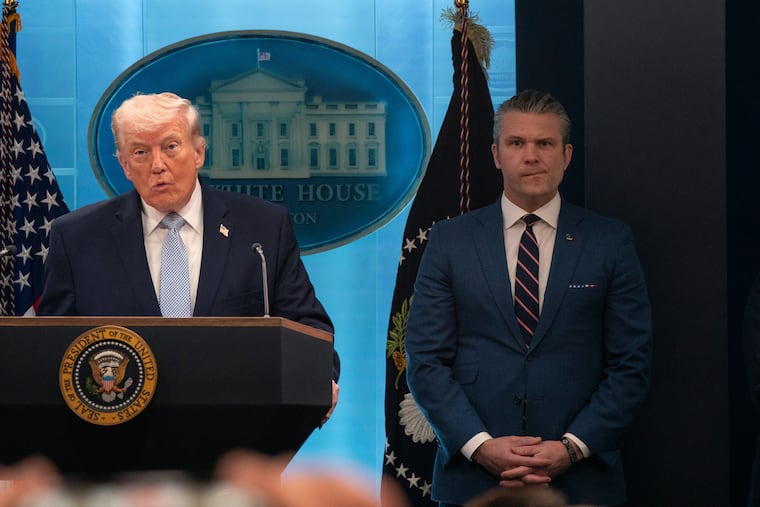
President Donald Trump’s war in Iran is as unpopular among Americans as the Iraq War during the year of peak violence in 2006 and the Vietnam War in the early 1970s, according to a Washington Post-ABC News-Ipsos poll, amid growing economic pain and fears of terrorism as a result of the military campaign.
Sixty-one percent of Americans say that using military force against Iran was a mistake, with fewer than 2 in 10 Americans believing that the U.S. actions in Iran have been successful. About 4 in 10 say it has been unsuccessful, while another 4 in 10 say it is “too soon to tell.” The polling numbers indicate a broadly unpopular war effort and growing economic fallout at a time when the White House has been trying to convince Americans that they are better off under Trump than under Democrats.
But support for the war among self-identified Republicans remains high: 79 percent say it was the right decision. Independents who lean toward the Republican Party are roughly split, with 52 percent saying it was the right decision and 46 percent saying it was a mistake.
Trump has indicated that the current impasse with Iran could last for an extended period, saying Wednesday that he planned to make Iranian leaders “cry uncle” and that there would “never be a deal unless they agree that there will be no nuclear weapons.” Iranian leaders — who have long denied they are seeking a nuclear weapon — say they want to reach an initial agreement to end the war and reopen a crucial global shipping chokepoint, the Strait of Hormuz, taking on nuclear talks only after that.
The president on Wednesday ruled out face-to-face negotiations for now, after an initial round in early April broke without a deal. He has paused the war indefinitely, but global oil inventory is diminishing with the near-total halt in shipping traffic through the strait. Brent crude futures, the global oil benchmark, were down 3.7 percent on Thursday, backing away from their highest level since 2022.
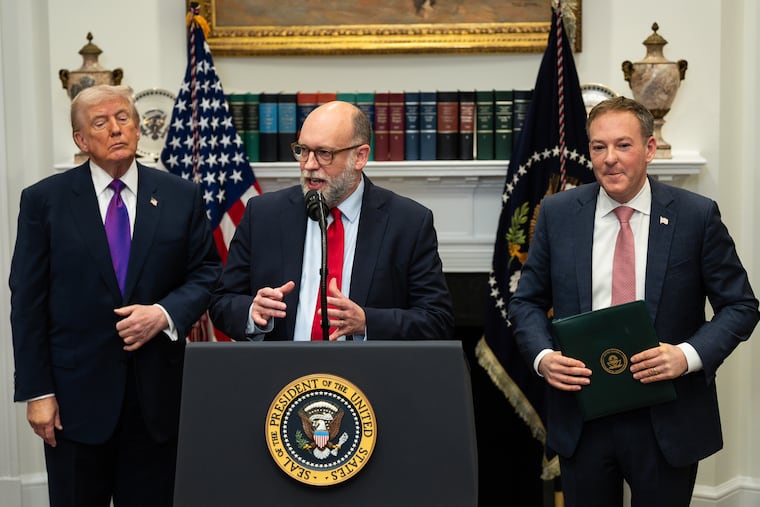
Trump on Thursday said he had decided to accept short-term economic consequences as the price of preventing a nuclear weapon in Iran.
“When we hit 50,000 on the Dow and 7,000 on the S&P, I said to myself, ‘We got to do something about Iran,’” Trump told reporters in the Oval Office. “And I hated to do it to my people … then I said to [National Economic Council Director Kevin Hassett], ‘Sorry about this, Kevin, but we have to, we have to put out a fire.’ And the fire is taking place in the lovely country of Iran, and they want to have a nuclear weapon.”
Despite the skepticism about the war, Americans also remain suspicious of Iran, with a close split about whether or not to accept a peace deal right now. Forty-eight percent prefer to “make a peace deal with Iran, even if it results in a worse deal for the U.S.,” while 46 percent want to “push Iran for a better deal, even if it means resuming U.S. military action against Iran.”
Political independents are willing to accept a peace deal that’s worse for the U.S. by 50 percent to 39 percent, as do 76 percent of Democrats. A 79 percent majority of Republicans want to push for a better deal, even if it means resuming military action against Iran.
Trump’s April 7 threat that “a whole civilization will die tonight, never to be brought back again,” if Iran did not make an agreement with the U.S., which preceded the ceasefire agreement, was broadly unpopular. Twenty-one percent had a positive reaction to the post, while 76 percent had a negative view. The statement split Republicans, with 57 percent of self-identified MAGA Republicans having a positive reaction, while 79 percent of non-MAGA Republicans reacted negatively.
The historical comparison to the wars in Iraq and Vietnam — conflicts that polarized Americans in the moment and ultimately came to be seen as failures — is especially notable. It took years for the Iraq War, which was launched in March 2003, to reach the level of disapproval that Trump’s war has in just two months. Fifty-nine percent of Americans in mid-2006 said the war in Iraq was a mistake, while similar numbers felt the same about the war in Vietnam in the early 1970s, according to Gallup polls.
Americans were dying and getting wounded in far higher numbers in those eras, making the current opinions all the more striking. More than 50,000 Americans had died in Vietnam by 1971, when Gallup found that 61 percent of Americans said sending troops to fight there was a mistake. And by April 2006, the month before a Washington Post-ABC News poll found that 59 percent of Americans said the Iraq War was a mistake, 2,402 U.S. troops had died there, and the U.S. military was embroiled in some of the bloodiest fighting of the conflict. The Pentagon has announced the deaths of 13 American service members so far in the war against Iran.
Nor do Americans have confidence that the war will succeed in preventing Iran from developing nuclear weapons, Trump’s main goal when launching the attack. A 65 percent majority of Americans are not confident that an agreement to end the war will prevent Iran from developing nuclear weapons, similar to 64 percent who said this about the Obama administration’s 2015 agreement that imposed limits on Iran’s nuclear program.
Trump said Thursday that a deal would be reached soon.
“Iran is dying to make a deal. I can only tell you that,” he said. “They cannot be nuclear.”
The decision to attack Iran surprised some Americans who think it is out of step with Trump’s pledges on the 2024 campaign trail to keep the United States out of foreign wars. Twenty-two percent of Americans say Trump’s actions against Iran are consistent with his 2024 campaign positions, while 46 percent say they are inconsistent and 30 percent are not sure. About half of Republicans say Trump’s actions are consistent with his campaign positions, while 2 in 10 say he has been inconsistent and about 3 in 10 are not sure.
The war has sparked concerns within the Trump administration, too. Vice President JD Vance, an Iraq veteran who has been especially critical of past U.S. deployments to the Middle East, acknowledged in a Fox News interview on Wednesday that he had been concerned about dwindling U.S. munitions stockpiles that are a result of the war, even as he downplayed broader divisions within the administration.
“Of course I’m concerned about readiness, because that’s my job to be concerned,” Vance said.
The economic consequences of the war, meanwhile, are driving Americans to change their behavior, as an increasing number feels the pinch.
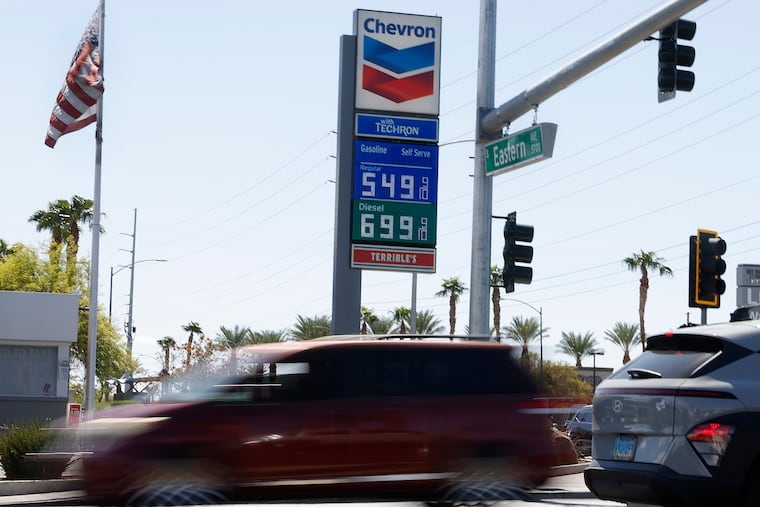
Sixty percent of Americans say the U.S. military action has increased the risk of the economy going into a recession. More than 4 in 10 say gas prices are causing them to drive less and cut household expenses, while more than 3 in 10 say they have changed travel or vacation plans. Six in 10 Americans report at least one of these impacts.
Few Americans expect gas prices will improve within the next year — potentially a warning sign for Republicans, who are hoping to move beyond the pain by the November midterm elections. Half of Americans think gas prices will get worse over the next year, while 21 percent think they will get better and 15 percent think they will stay about the same.
Since February, the share of people saying they are “falling behind financially” has grown from 17 percent to 23 percent, while the share saying they are “not as well off” as when Trump took office has jumped from 33 percent to 40 percent. The attack on Iran started on Feb. 28.
People who said they are not as well off grew by nine points among noncollege White respondents and by 13 points among Republican-leaning independents, groups that supported Trump’s election but express mixed support for his handling of the war.
Americans also worry that Trump’s actions may have made them less safe. Sixty-one percent think U.S. military action in Iran has increased the risk of terrorism against Americans, more than the 48 percent who said this after Trump’s assassination of Qasem Soleimani, a top Iranian general, in 2020. And 56 percent say U.S. actions increase the risk of weakening relationships with U.S. allies, as Trump has lashed out at European allies who have questioned the strategy behind the action against Iran, and as Persian Gulf allies have suffered from Iranian retaliation.