Painful commute hits New York as Long Island Rail Road strikes
The strike has shut down the entire service, which carries an average of more than 270,000 passengers a day between Long Island and New York City.
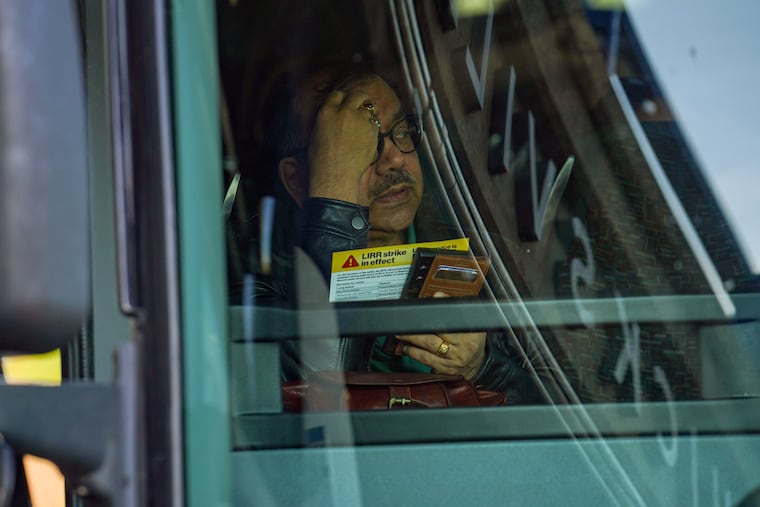
NEW YORK — A strike on the Long Island Rail Road, America’s busiest passenger rail service, upended the commutes of more than a quarter-million riders Monday who rely on the service to get to work.
Five unions representing more than 3,500 workers — including engineers, signal workers and machinists — walked off the job shortly after midnight Saturday, after yearslong negotiations over wages and other issues with the Metropolitan Transportation Authority fell apart. Monday was the first day that the strike affected weekday commuters.
The strike has shut down the entire service, which carries an average of more than 270,000 passengers a day between Long Island and New York City.
The MTA, the state agency that runs the railroad, is providing free bus service beginning Monday morning from six locations on Long Island to two subway stations in Queens, and in the opposite direction during the evening rush. Police officers and members of the LIRR workforce who are not on strike are expected to help direct passengers to buses at the stops.
But the MTA said the shuttles would not be able to accommodate all the riders who rely on the railroad and encouraged people to work from home if they can.
On Sunday, Gov. Kathy Hochul said that she had made major investments in the MTA to stabilize its finances and that she would not agree to a deal that could force the agency to raise fares.
“I worked hard to do that and don’t want that undone — I will not let that be undone,” she said.
A spokesperson for the unions said in a statement Sunday that their wage proposal was reasonable and that two federal review panels had sided with them.
“We remain ready to negotiate a fair agreement at any time and get back to work on behalf of Long Island commuters,” the statement said.
The National Mediation Board, a federal agency that oversees such disputes, summoned both sides to a meeting Sunday evening to continue negotiations. Negotiations continued past 1 a.m. with no resolution. Talks were set to pick up again Monday morning.
Here’s what to know:
Why workers are striking: The striking workers are seeking a higher percentage-based salary increase in 2026 than the MTA was willing to offer. The workers represented by the unions, who make up about half the railroad’s workforce, have not had a raise since 2022. Negotiations collapsed when the two sides could not agree on terms, like a proposal to change healthcare plans that could raise costs for new hires.
Previous stoppage: This strike is already longer than the last one on the Long Island Rail Road in 1994. That two-day strike ended after Gov. Mario Cuomo largely conceded to the unions’ terms.
Economic toll: The strike could cost the region $61 million a day in lost economic activity, according to the state comptroller’s office.
Driving costs: Congestion pricing, the toll on drivers entering the busiest parts of Manhattan, will not be suspended during the strike, Hochul said, noting that she has no legal mechanism to suspend the program.
This article originally appeared in The New York Times.