Maduro says ‘I was captured’ as he pleads not guilty to drug trafficking charges
Deposed Venezuelan leader declares himself “innocent” and a “decent man” in a New York courtroom.
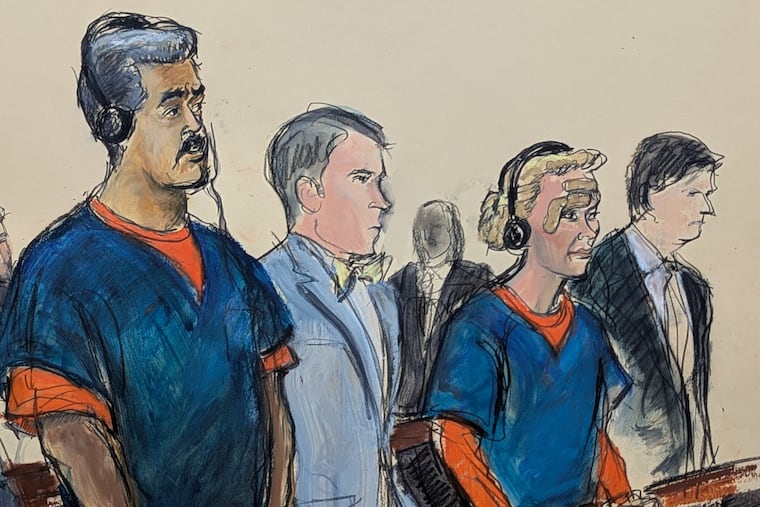
NEW YORK — A defiant Nicolás Maduro declared himself “the president of my country” as he protested his capture and pleaded not guilty Monday to federal drug trafficking charges that the Trump administration used to justify removing him from power in Venezuela.
“I was captured,” Maduro said in Spanish as translated by a courtroom reporter before being cut off by the judge. Asked later for his plea to the charges, he stated: “I’m innocent. I am not guilty. I am a decent man, the president of my country.”
The courtroom appearance, Maduro’s first since he and his wife were seized from their home in a stunning middle-of-the-night military operation, kicked off the U.S. government’s most consequential prosecution in decades of a foreign head of state. The criminal case in Manhattan is unfolding against a broader diplomatic backdrop of an audacious U.S.-engineered regime change that President Donald Trump has said will enable his administration to “run” the South American country.
Maduro was led into court along with his co-defendant wife just before noon for the brief legal proceeding. Both put on headsets to hear the English-language proceeding as it was translated into Spanish.
The couple was transported to the Manhattan courthouse under armed guard early Monday from the Brooklyn jail where they’ve been detained since arriving in the U.S. on Saturday.
A legal fight begins
As a criminal defendant in the U.S. legal system, Maduro will have the same rights as any other person accused of a crime — including the right to a trial by a jury of regular New Yorkers. But he’ll also be nearly — but not quite — unique.
The stakes were made clear from the outset as Maduro, who took copious notes throughout the proceedings and wished a Happy New Year to reporters in court, repeatedly pressed his case that he had been unlawfully abducted.
“I am here kidnapped,” Maduro said. “I was captured at my home in Caracas.”
U.S. District Judge Alvin Hellerstein, a 92-year-old jurist who was appointed to the federal bench in 1998 by Bill Clinton, interrupted him, saying: “There will be time and place to go through all of this.” Hellerstein added that Maduro’s attorney could do so later.
“At this time, I just want to know if you are Nicolás Maduro Moros,” which Maduro confirmed that he was.
Maduro’s lawyers are expected to contest the legality of his arrest, arguing that he is immune from prosecution as a head of state. Barry Pollack, a prominent Washington lawyer whose clients have included WikiLeaks founder Julian Assange, said Maduro is “head of a sovereign state and entitled to the privilege” that the status ensures. He also said the defense would raise “questions about the legality of his military abduction.”
Panamanian strongman Manuel Noriega unsuccessfully tried the same immunity defense after the U.S. captured him in a similar military invasion in 1990. But the U.S. doesn’t recognize Maduro as Venezuela’s legitimate head of state — particularly after a much-disputed 2024 reelection.
Maduro’s wife, Cilia Flores, also pleaded not guilty on Monday. She had bandages on her forehead and right temple, and her lawyer said had she suffered “significant injuries” during her capture.
A 25-page indictment accuses Maduro and others of working with drug cartels to facilitate the shipment of thousands of tons of cocaine into the U.S. They could face life in prison if convicted.
Among other things, the indictment accuses Maduro and his wife of ordering kidnappings, beatings, and murders of those who owed them drug money or undermined their drug trafficking operation. That included a local drug boss’ killing in Caracas, the indictment said.
Outside the courthouse, police separated protesters of the U.S. military action from prointervention demonstrators. Inside the courtroom, as Maduro stood to leave with federal officers, a man in the audience stood and began speaking forcefully at him in Spanish, calling him an “illegitimate” president.
The man, 33-year-old Pedro Rojas, said later that he had been imprisoned by the Venezuelan regime. As deputy U.S. marshals led Maduro from the courtroom, the deposed leader looked directly at the man and shot back in Spanish: “I am a kidnapped president. I am a prisoner of war.”
Trump reiterates U.S. will ‘run it’
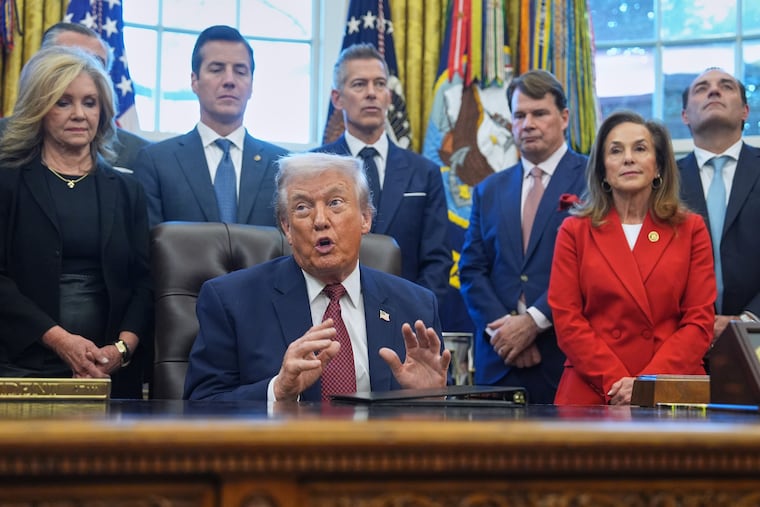
The U.S. seized Maduro and his wife in a military operation early Saturday, capturing them in their home on a military base. Trump said Saturday the U.S. would “run” Venezuela temporarily and reiterated Sunday night that “we’re in charge,” telling reporters aboard Air Force One that “we’re going to run it, fix it.”
Secretary of State Marco Rubio had tried to strike a more cautious tone on Sunday morning talk shows, saying the U.S. would not govern the country day to day other than enforcing an existing "oil quarantine."
But on Monday, NBC’s Kristen Welker reported that in a phone interview Trump insisted that top administration officials, including Rubio, Vice President JD Vance, Defense Secretary Pete Hegseth, and deputy chief of staff Stephen Miller would be in charge of Venezuela.
When Welker asked who the top person in charge would be, Trump responded, “Me.”
Before his capture, Maduro and his allies claimed U.S. hostility was motivated by lust for Venezuela’s rich oil and mineral resources.
Trump has suggested that removing Maduro would enable more oil to flow out of Venezuela, but oil prices rose a bit more than 1% in Monday morning trading to roughly $58 a barrel. There are uncertainties about how fast oil production can be ramped up in Venezuela after years of neglect of the industry, as well as questions about governance and oversight of the sector.
Venezuela’s new interim leader, Delcy Rodríguez, has demanded that the U.S. return Maduro, who long denied any involvement in drug trafficking — although late Sunday she also struck a more conciliatory tone in a social media post, inviting collaboration with Trump and “respectful relations” with the U.S.
Rodríguez was sworn in on Monday by her brother, National Assembly leader Jorge Rodríguez.
“I come with sorrow for the suffering inflicted upon the Venezuelan people following an illegitimate military aggression against our homeland,” she said with her right hand up. “I come with sorrow for the kidnapping of two heroes.”
Maduro’s son and Venezuelan congressman Nicolás Maduro Guerra warned on Monday that his father’s capture could set a dangerous precedent globally and demanded that his parents be returned.
“If we normalize the kidnapping of a head of state, no country is safe. Today it’s Venezuela. Tomorrow it could be any nation that refuses to submit. This is not a regional problem. It is a direct threat to global political stability,” Maduro Guerra said.
Hegseth, Rubio brief congressional leaders
Congressional leaders expected to hear more about the U.S. government’s plans for the future of Venezuela, as top officials from Trump’s administration headed to Capitol Hill to brief select lawmakers Monday evening.
Rubio, Hegseth, and other officials were to discuss Venezuela with House and Senate leadership, as well as top members of the intelligence committees and national security committees.
The top Republican and Democrat on the Senate Judiciary Committee say they should have been included.
The briefing Monday was for members of the “gang of eight,” which include the four congressional leaders and the heads of the House and Senate Intelligence Committees. It also included leaders from the various national security committees.
But the Judiciary Committee, which oversees the Justice Department, is not among those committees, said Sen. Chuck Grassley (R., Iowa) and Illinois Sen. Dick Durbin, the top Democrat on the committee. That is not all right, they say, because the administration has said this was a law enforcement operation involving key DOJ entities.
“There is no legitimate basis for excluding the Senate Judiciary Committee from this briefing,” Grassley and Durbin said in a joint statement. “The administration’s refusal to acknowledge our Committee’s indisputable jurisdiction in this matter is unacceptable and we are following up to ensure the Committee receives warranted information regarding Maduro’s arrest.”