Pentagon bans journalists from press office, designating it a classified space
The Defense Department has banned journalists from accessing it to meet with the public affairs officers who have traditionally answered their questions.
The Defense Department has designated its press office a classified space and banned journalists from accessing it to meet with the public affairs officers who have traditionally answered their questions.
The change in security status, which took effect in recent weeks, was confirmed by four people familiar with the matter, who spoke on the condition of anonymity to discuss the nonpublic matter.
While Pentagon reporters are still largely barred from the building, as litigation over the agency’s press rules continues, the change would have an outsize impact on them upon a possible return — restricting access to a space they have for years been able to walk freely.
People familiar with the change said it was driven in part by a shift that moved Pentagon speechwriters into the public affairs office. The office will be equipped with SIPRNet, the Secret Internet Protocol Router Network, so personnel can use the tool without decamping for a separate secured room.
“The Pentagon Press Office has been redesignated as a Sensitive Compartmented Information Facility due to speechwriters from the Office of the Secretary of War sharing the facility,” acting Pentagon press secretary Joel Valdez said in a statement to the Washington Post. “These speechwriters routinely handle classified material and require SIPRNet access,” he said.
“As a result, journalists will no longer be permitted to enter the office space,” he added. “Access to the office of the Assistant to the Secretary of War for Public Affairs and to the Press Secretary remains available by appointment only.”
The move comes amid a monthslong legal battle over whether journalists should have unescorted access to unclassified spaces in the Pentagon. Members of the media traditionally have been allowed to allowed access to public spaces in the Defense Department, talking to sources and attending regular briefings.
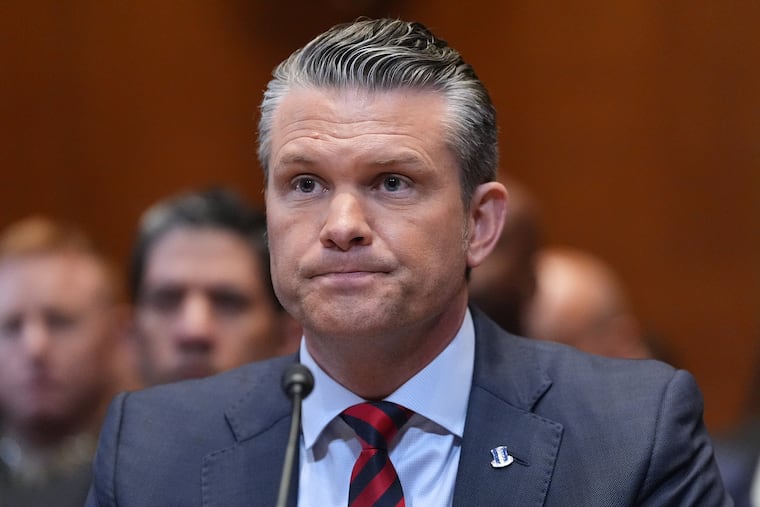
But under Defense Secretary Pete Hegseth, the Pentagon has sharply curtailed access for the media, imposing a restrictive set of press guidelines and barring access to most spaces in the facility.
The latest designation creates a scenario in which even if journalists are able to access the Pentagon, their ability to interact with the department’s spokespeople will be reduced.
The public affairs office used to be an open room where reporters could stop by the desks of military public affairs officials without escorts.
It was a meeting area, and in previous administrations the Pentagon press secretary or other officials would regularly hold off-camera gaggles and take questions from the news media, whose members would gather on couches in the room.
But neither Hegseth nor his staff have continued that dynamic.
Instead they have removed members of the media — including a new group from largely right-wing outlets — from the building. The estranged relationship stands in contrast to Secretary of State Marco Rubio and President Donald Trump’s press operations; both leaders continue to regularly talk with the reporters who cover them and allow them continued access to the State Department and White House.
Long-simmering tensions between the defense secretary and the Pentagon press corps boiled over in October, when hundreds of journalists turned in their media credentials rather than sign an updated press policy mandating that they agree not to solicit information the government has not authorized for their release.
In March, a federal judge struck down the controversial policy after the New York Times sued. The government is currently appealing that ruling. The Times also sued a second time in May, explicitly challenging a requirement that journalists have an escort to move about the Pentagon. That litigation is ongoing.