Olympian is indicted after arrest at Washington’s Reflecting Pool
A former Olympic canoeist who says he touched peeling paint is charged with “destruction of property $1,000 or more,” a felony.
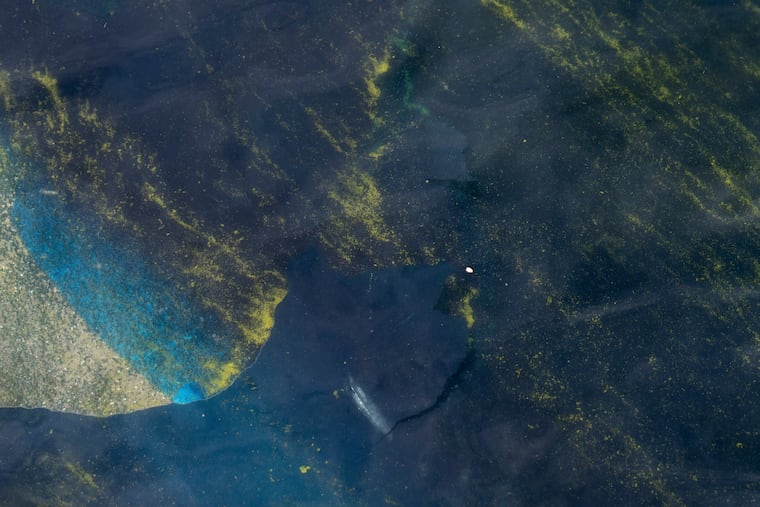
A former Olympic canoeist who had been arrested in June on charges that he had vandalized the Lincoln Memorial Reflecting Pool has been indicted, according to court documents. He is charged with “destruction of property $1,000 or more,” a felony.
President Donald Trump blamed vandals for the problems following a quick and costly makeover of the pool, and the canoeist, David Carter Hearn, 67, of Bethesda, Md., was among the first to be charged. The U.S. Park Police had arrested Hearn near the pool June 19, and accused him of destroying government property. At the time, Hearn denied the charge in an interview with the New York Times.
Jeanine Pirro, the U.S. attorney in Washington, said in a news briefing that prosecutors had “tremendous evidence” underpinning the indictment, and she condemned what she called “unchecked vandalism and civil disorder.”
“National Park Service employees observed Hearn actually forcefully and violently pulling up and removing the bottom liner with both hands,” she said. “According to witnesses, Hearn damaged approximately 2 square feet of sealant from the bottom of the pool.”
When a parks employee told him to stop, Pirro said, Hearn was “belligerent, rude, and disrespectful.”
Norm Eisen and Mary Dohrmann, lawyers representing Hearn, said in a statement that he is innocent.
“These charges are outrageous and should be alarming to every American,” they said. “This indictment reflects the administration’s effort to shift blame for their own failures. On the eve of our nation’s Independence Day, Americans should be deeply concerned by the misuse of government power against an ordinary citizen.”
Hearn has acknowledged putting his hand in the water and touching the peeling sealant during a pause in a bike ride but has said that is all he did. “I was just a curious, concerned citizen,” he said in an interview. “I guess I was there at the wrong place, wrong time.”
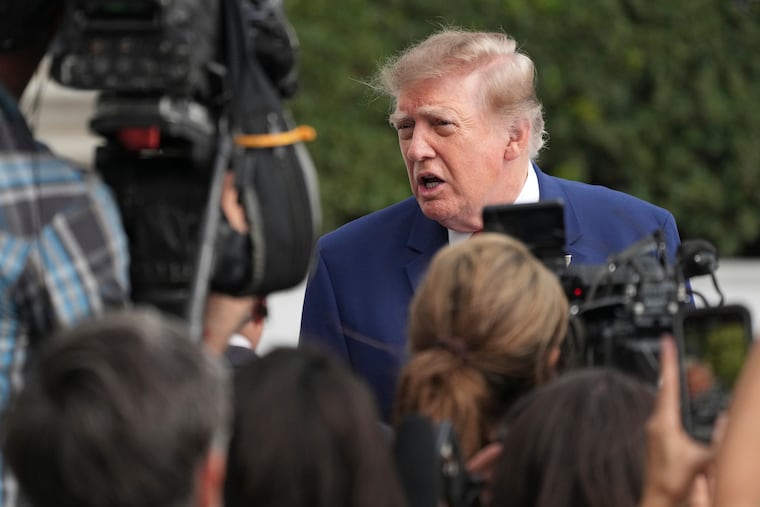
On Thursday, Pirro described the case in the context of Trump’s extensive efforts to refurbish Washington, D.C., which she said was amid “a renaissance like it has never experienced before, in both safety and in beauty.”
In April, Trump announced that he would be fixing “the once beautiful Reflecting Pool.”
The pool’s problems, including leakage and the routine algal blooms, had bedeviled previous administrations, including Barack Obama’s, but Trump declared that when he was done, the pool would be “much more beautiful than the day it was built!”
The administration awarded no-bid contracts to drain, resurface, and refill the pool at a cost of $16.4 million, but by mid-June — days before Hearn’s arrest — it was already clear that things were not going according to plan.
Chunks of the sealant, which had been recently applied to the pool’s concrete slabs, were spotted floating in the water. And the water was turning a lively shade of green, proof that the algae was still present.
Past administrations have wrestled with keeping the pool free of algae, but experts said some of the current problems were because of decisions made during the rushed makeover. But Trump blamed vandals, who he said, without citing evidence, had poured fertilizer into the water to nurture the algae.
The area, an eternal draw for tourists, was quickly surrounded by security officers. Federal officials have said that seven people, including Hearn, have been arrested on charges of vandalizing the pool.
Pirro said that her office was reviewing those other cases and that some would likely result in misdemeanor charges and others in violations.
The indictment of Hearn came at a fraught moment for Pirro’s office, which has had trouble obtaining — and sustaining — criminal cases against Washington residents who protested Trump’s anti-crime efforts involving the National Guard and federal law enforcement.
Under Pirro, prosecutors failed three times last summer to secure an indictment against a woman accused of assaulting an FBI agent during a protest against immigration officials, and ultimately lost the case at trial.
In a similar case, grand jurors in Washington rejected efforts to indict a man who was accused of hurling a submarine sandwich at a federal officer on the street. Prosecutors later lost that case at trial as well.
Gregory Rosen, a former prosecutor in Pirro’s office, raised questions about Thursday’s charges, especially given binding precedent from the court of appeals in Washington.
“Malicious destruction of property has never meant just touching things,” he said. “The court has consistently required either an actual intent to cause the harm or wanton conduct, and damage resulting from an accident or curiosity doesn’t qualify.”
This article originally appeared in the New York Times.