Before Reflecting Pool, algae contractor had troubled project on a trash-infested river
A year before Greenwater Services got a $1.7 million contract to clean the Reflecting Pool, it had received another no-bid government contract to deploy at the trash-plagued Tijuana River.
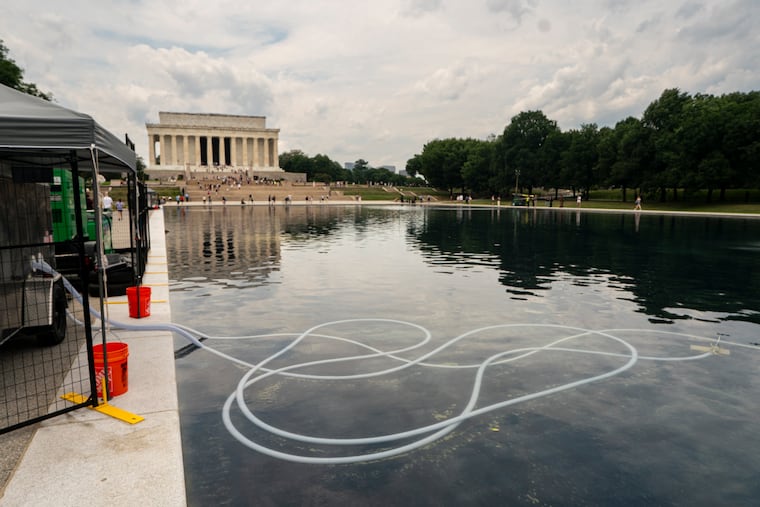
A year before Greenwater Services got a $1.7 million contract to clean the algae-infected Reflecting Pool, it had received another no-bid government contract to deploy at the trash-plagued Tijuana River.
Greenwater, which is owned by a Trump donor, was hired to treat sewage in the Tijuana River with its “nanobubble technology,” a system that injects ozone into water. But the monthlong water purification pilot to evaluate the technology was cut short last October when a storm flooded the river’s banks. The remnants of machinery were washed into the border river, with diesel leaking along the way, frustrating scientists and environmentalists at federal agencies who had questioned internally whether the company’s project would work in a flood-prone area.
Eight months later, the company brought its equipment to clean up a mess at the Reflecting Pool in Washington. In April, as part of his effort to remake the nation’s capital city ahead of America’s 250th birthday, President Donald Trump drained the pool at the base of the Lincoln Memorial to add a new coating to the bottom that would make the water shine “American flag blue.” But a week after the $14 million renovation was finished in June, an outbreak of algae floated along the water’s surface, hiding the new blue coating under a thick, mossy shade of green. Algae had long been a problem for the pool, but a Washington Post analysis of satellite data found that the post-renovation bloom was the worst outbreak dating back at least five years.
The Department of Interior gave Greenwater and its nanobubble technology an expedited, no-bid contract to clean up the muck, even though other companies had expressed interest in the work to the National Park Service. Administration officials cited an urgent need to solve the problem before the 250th celebrations, and said they didn’t have time to allow companies to compete for the bid, according to a federal contracting document.
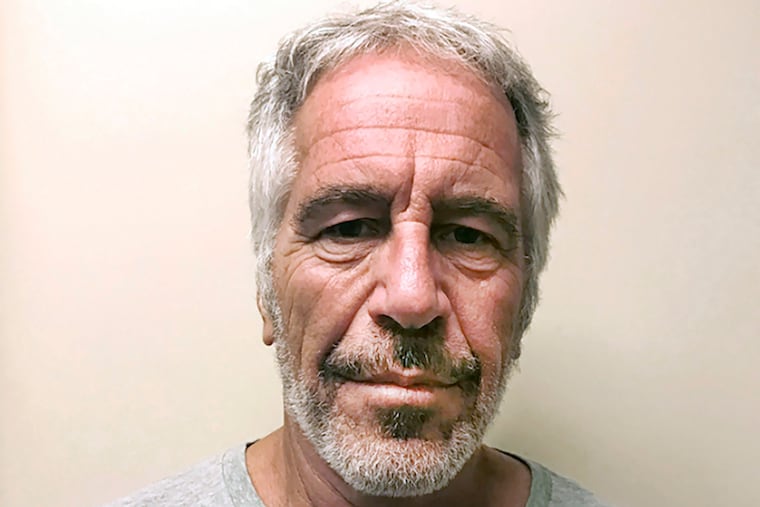
Greenwater, founded in 2019 in Ohio, is owned by J.J. Cafaro Investment, according to the contracting documents it filed with the government. J.J. Cafaro is an heir to an Ohio-based mall development company and a Republican donor who has given about $350,000 to Trump-related political committees and owns a $16 million mansion down the road from Mar-a-Lago. He said he considers the president “a friend,” and Trump once described Cafaro as “a man who made a lot of money in Cleveland, does a good job and a fantastic man.” Cafaro has denied his relationship with Trump played a role in securing Greenwater’s contract for the Reflecting Pool.
Chas Antinone Jr., Greenwater’s president and chief operating officer, has said the company has been expanding on the use of its technology, mostly in small bodies of water under 100 acres — such as a free demo to Trump’s Bedminster resort in 2024, Antinone told the San Diego Union-Tribune. The manager of Trump National Golf Club Bedminster brought Greenwater into conversations with the Interior Department about cleaning the Reflecting Pool, the New York Times reported.
In total, the federal government has paid Greenwater $2.8 million between the Tijuana River and Reflecting Pool contracts.
Company spokesperson Erin Kramer said Cafaro is not involved in the company’s day-to-day operations, and she shared research showing the technology has cleaned algae in studies. (Cafaro did not respond to requests for comment.)
“Private demonstrations, self-funded projects, research partnerships, and public-agency work are ways new environmental technology moves from research to adoption,” Kramer said in response to questions about the Bedminster demo.
Asked about the Bedminster connections, the Interior Department press office emailed a statement saying the White House was not involved in the selection process for any contract.
Since the Times reported last month on his company’s no-bid contract, Cafaro has become a sort of bogeyman for liberals online. On Monday, the Democratic National Committee’s rapid response X account shared a photo of Cafaro along with news that the Interior Department planned to use the same contractor that installed the liner to repair the pool, even though Cafaro doesn’t own or operate that company.
That photo featured Cafaro posing with former Real Housewives of Orange County star Kelly Dodd. But Dodd later posted a video clarifying that she merely posed with him because “he looked a little peculiar, and I liked his whole [get up]” but she only met him once at an event in Palm Beach, where she also saw Trump.
“This has gone viral. I don’t know why I got lumped in with this guy,” she said. “I can safely tell you I don’t know this man.”
‘Hope it doesn’t rain’
Flowing along the U.S.-Mexico border and discharging into the Pacific Ocean, the Tijuana River has been plagued by untreated wastewater, sewage, and debris dating back decades.
The U.S. International Boundary and Water Commission gave a no-bid contract for Greenwater last year, initially offering more than $2 million for a pilot that would encompass 120 days of work. Officials said there was an “urgent need to assess the effectiveness of this technology in addressing the public health threat” and that “the technology is proprietary and not in use by any other company.”
Until permanent infrastructure to address the pollution problems is in place, officials must “think creatively and evaluate every credible tool that can bring relief to affected Americans now,” Frank Fisher, an IBWC spokesperson, said in a statement to the Post.
After Greenwater secured the project but before work got underway, career scientists exchanged emails asking about the initial $2 million cost and the feasibility of the project. Environmental Protection Agency staff who were consulting IBWC questioned their plans.
“Wow. $2.4m for 90 days?” Thomas Konner, an environmental engineer for the EPA, wrote to IBWC and EPA officials on July 1.
“Hope it doesn’t rain on their parade!” he followed up on Aug. 25.
Months before, another scientist questioned the approach and called it a “Sisyphean task” — and forecast the storm. “I really don’t think the ozone will do any good unless you are able to ozonate the entire flow, but that’s based on my gut feeling and nothing else,” Douglas Liden, then an environmental engineer with the EPA, wrote to colleagues. “I also think the first storm will wash out any equipment you install, just as it did in Nogales, AZ.”
Phillip Musegaas, executive director of the nonprofit San Diego Coastkeeper, which obtained the emails through a Freedom of Information Act request, said local groups have long hoped for a solution to one of the nation’s worst environmental disasters, which has sickened residents, closed beaches, and contaminated the air and water. Greenwater was supposed to take the nanobubble technology to the noxious hot spot — Saturn Boulevard — where the pungent water foams, an IBWC official wrote in the emails planning the project. But the company’s pilot was cut short by the storm and it never went to Saturn.
Debris from the equipment washed into a barrier set up to collect trash along the river, according to photos shared with Voice of San Diego.
“We were skeptical about it, but we wanted to see if it would work properly,” Musegaas said. “The fact that the whole project ended early because they let the equipment get washed away was pretty frustrating.” The company later acknowledged that the nanobubble machines could not operate continuously as intended because trash floating in the river clogged the machines.
The company also said, in a report to the government about that pilot, that its machines hadn’t been affected by a previous rainstorm. The night of the next big storm, Greenwater said, it moved the machines to “a higher elevation” because of rising water levels, but “an unexpected flooding event occurred” that “carried large quantities of trash and debris that inundated and damaged” the machines. The company then said it shut the project down because of “safety concerns and site conditions.” The IBWC said in a December news release, citing the Greenwater report, that the project was “successfully completed” and the “technology has the capability to kill bacteria and eliminate odors associated with sewage.”
Heather Raymond, the water quality director for Ohio State University’s College of Food, Agricultural, and Environmental Sciences, has tested Greenwater Service’s technology for years. Raymond, who does not work for the company nor on the Reflecting Pool and the Tijuana River projects, said the technology showed promise in trials when her team tested it in large tanks in controlled settings where algae levels were reduced, and small lakes where they saw some improvements in the local advisories for toxin levels.
“There’s still a lot to learn in scaling this up in the water quality conditions and amount of treatment needed to be successful,” Raymond said.
In the case of the Reflecting Pool, workers from the National Park Service used hydrogen peroxide and vacuuming to clear the algae in addition to the temporary units. Greenwater also said it had temporary units running by June 7, but the units were taken offline on June 12. Within 24 hours, an algae bloom developed, and the units returned. The company has since installed a permanent system in the Reflecting Pool’s pipes and said the water has cleared even though green sediment remains at the bottom.
This week, the Reflecting Pool has been fenced off following the Fourth of July fireworks display, and Interior Secretary Doug Burgum said the workers will drain the pool and repair the peeling coating.
The nanobubble technology has been turned off ahead of the draining, a person familiar with the plan said, speaking on the condition of anonymity out of fear of retaliation. By the middle of the week, the pool appeared green and murky, its bottom invisible under the mossy shade.