Trump’s Religious Liberty Commission takes aim at church-state separation
Its draft report says the separation concept is a legal error and that Americans should always remember “the Creator who made us and bestows our rights.”
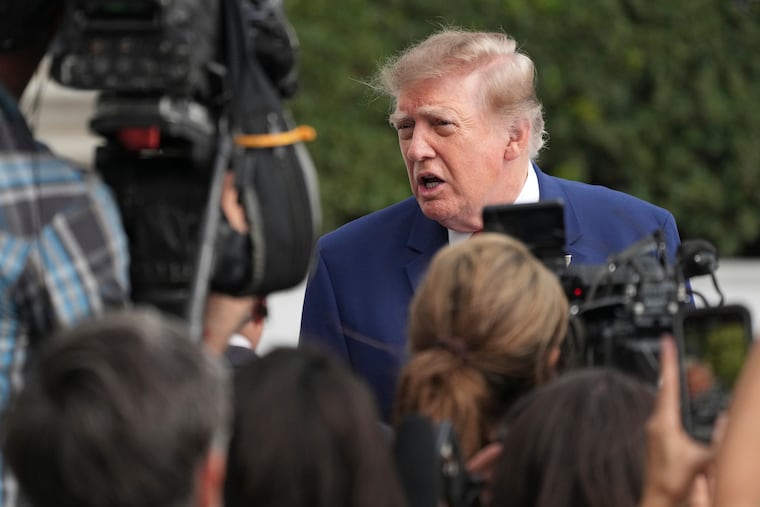
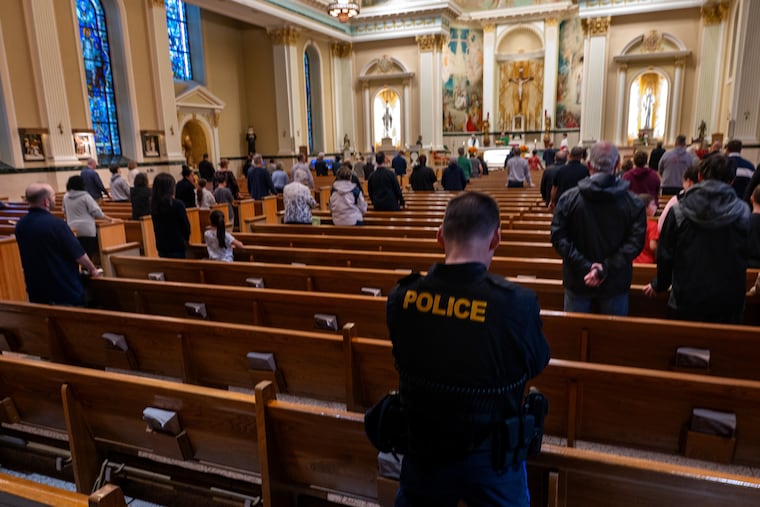
The Trump administration took aim at the separation of church and state Friday, issuing a draft report from the president’s Religious Liberty Commission that says the separation concept is a legal error and that Americans should view religion as an “essential support” and always remember “the Creator who made us and bestows our rights.”
The 224-page report recommended the Justice Department issue guidance to promote “an originalist understanding” of how the Constitution sees the relationship between religion and government. The founders had diverse views about the topic, but recent Supreme Court rulings have suggested a more narrow interpretation of what justices considered constraints on religious freedom.
Friday’s report also said faith-based groups working with the government shouldn’t have to accommodate civil rights laws or anything that conflicts with their religious beliefs; public schools should allow religious displays (it mentioned only the Ten Commandments); and soldiers who refused to be vaccinated and were punished should have their positions restored and be financially compensated. It called for the end to the Johnson Amendment, which bars nonprofits from making political endorsements.
At an Oval Office news conference announcing the report, commission chairperson Dan Patrick, the Republican lieutenant governor of Texas, said the commission recommends that any official — in government, a school, the military, a hospital, etc. — who alleges a violation of church-state separation must in writing “point out exactly where you have violated the Constitution, because you have not, and from this day forward, that phrase should have no power over people of all faiths ever again in America.”
While the phrase “church-state” separation is not in the Constitution, the concept of space between government and religion is in the First Amendment, which calls for no government “establishment of religion.” Americans have disagreed over the meaning of establishment since the founding.
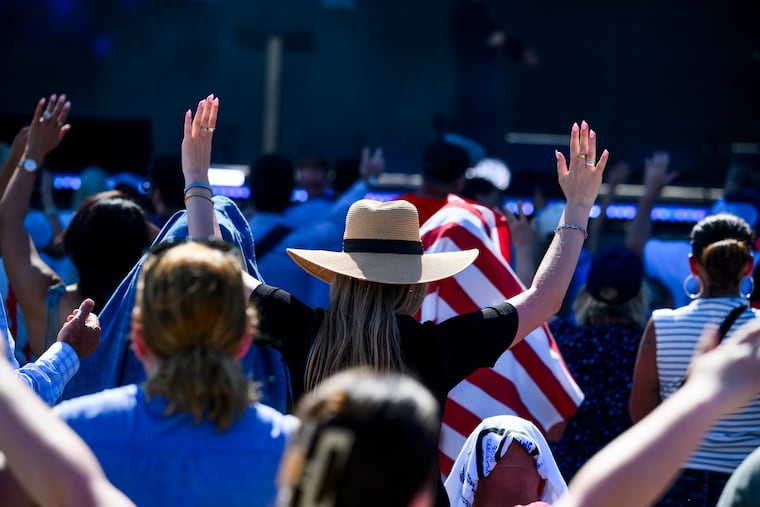
The report was issued at a time when many conservatives are aggressively working to elevate religion — particularly Christianity — into the public square, fueled by Supreme Court decisions saying that such expression is constitutional. Several states have mandated that the Ten Commandments be displayed in public school classrooms, and many are requiring schools to release students for Bible classes during the school day. Last month, the White House hosted a daylong evangelical prayer festival on the Mall for the country’s 250th birthday, featuring commission members and others preaching from the stage.
On Friday, the Texas education board approved a mandatory reading list for more than 5 million public school students in the state that includes Bible passages.
President Donald Trump’s Religious Liberty Commission, created last year, is made up of all conservative Christians and one Orthodox Jew, groups who experts say make up a minority of Americans. In February, a coalition of groups representing other religious groups, as well as nonreligious and interfaith Americans, sued the administration over the commission, saying it was put together without the transparency and diversity required of a federal commission.
The Rev. Paul Raushenbush, one of the plaintiffs in the lawsuit and head of the Interfaith Alliance, had applied unsuccessfully to be a member of the commission.
The draft report, he wrote in a statement, “reflects the narrow, Christian nationalist worldview of the illegitimate commission. … A betrayal of the original intention of the promise of religious freedom guaranteed in the First Amendment, the report and the commission behind it fail to represent and uplift the importance of religious diversity and tolerance for all faiths in our country — not just a special, chosen few. The report is a wish list of divisive, unpopular ideas far-right religious groups have pushed for years.”
Raushenbush also noted that while the report expresses concern about anti-Christian bias and antisemitism, it made no similar mention of growing Islamophobia around the country.
The report is a draft, and comments from the public are open until July 12.
The lawsuit against the commission had sought to stop the release of any report until the court ruled on whether the commission was illegally constituted. It also asked the court to mandate any commission recommendations include a disclaimer stating that the report was produced by a body that was not fairly balanced.
Asked about the lack of religious diversity on the commission, a Justice Department spokesperson said the group was a way for Trump to create “opportunities for Americans from all walks of life to share their testimonies, concerns, and recommendations to better support Civil Rights and religious freedom in the United States.”
“The Department of Justice’s mission is to uphold the rule of law and ensure fair and impartial justice for all Americans, which is an endeavor every American should support regardless of their political or religious beliefs,” the Justice Department statement said.
People called to testify before the commission included a worker at an Alaska women’s shelter who turned away a homeless man who later sued for gender discrimination, and foster parents in Vermont who said their religion kept them from affirming children who were undergoing gender transitions — even though the state required foster parents to do so.
Speaking at the White House, commission vice chairperson Ben Carson said Trump was doing more than anyone else in the country for religious liberty.
“Our founding document says that our rights come from our creator and not from government,” he said. “People who try to divorce us from that heritage? Do they realize that that’s our family document? Do they realize that our family just says we are one nation under God?”
Trump noted that he won the overwhelming majority of evangelicals in his elections.
The White House is facing other litigation over its religion-related actions. Americans United for Separation of Church and State, among other advocacy groups, has a total of seven lawsuits.
Some note that Trump’s Justice Department asked other federal agencies for examples of what it called “anti-Christian bias” and sought access to any complaints received as a result. Others note the proselytizing of some agency heads, including Defense Secretary Pete Hegseth and Agriculture Secretary Brooke Rollins.