Rubio says U.S., Europe ‘belong together,’ despite rifts over Trump policies
Secretary of State Marco Rubio took a more positive tone that was met with relief from European leaders.
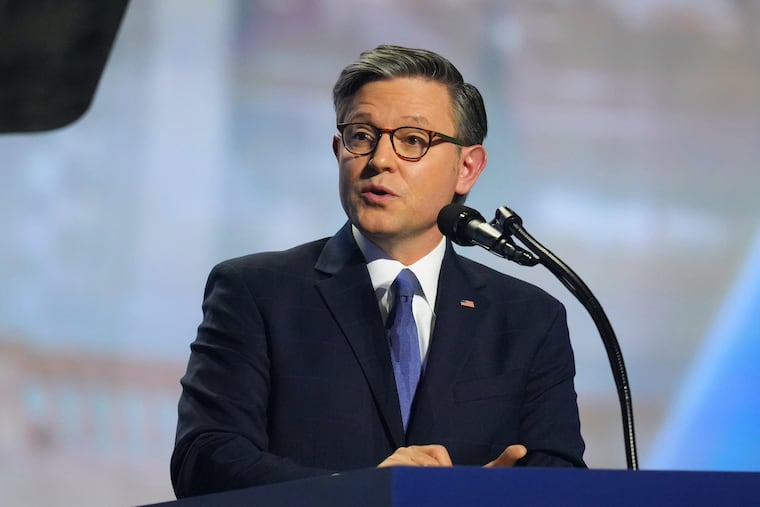
MUNICH — Secretary of State Marco Rubio declared that the United States and Europe “belong together” in a speech Saturday aimed at unifying the Western alliance, while condemning hallmarks of globalization, open borders, unfettered free trade, “deindustrialization,” and mass migration.
Rubio’s message, in a keynote address at the annual Munich Security Conference, received applause from a demoralized audience of European leaders who are deeply distressed about divisions with the United States stoked by President Donald Trump’s punitive tariffs, territorial ambitions for Greenland, and disagreements over how to end Russia’s war in Ukraine.
“We are bound to one another by the deepest bonds that nations could share, forged by centuries of shared history, Christian faith, culture, heritage, language, ancestry, and the sacrifices our forefathers made together,” Rubio said.
But even as he appealed to those ties, Rubio promoted several Trump administration positions that are deeply controversial among the United States’ closest traditional allies. He showed disdain for policies to reduce carbon emissions, staunchly criticized the United Nations — which many in Europe view as critical to protecting smaller states’ sovereignty — and lauded unilateral U.S. military action in Latin America and the Middle East.
“On the most pressing matters before us, [the U.N.] has no answers and has played virtually no role,” Rubio said.
Compared, however, to Vice President JD Vance’s blistering speech in Munich last year, which left the audience stunned by his seeming contempt for Europe, Rubio’s appeal to strengthen the alliance was received as more constructive.
“Our home may be in the Western Hemisphere, but we will always be a child of Europe,” Rubio said.
The moderator of the event, Wolfgang Ischinger, called the remarks a “sigh of relief” and a message of “reassurance” and “partnership.”
Europe’s top leaders descended on the Bavarian capital this weekend, proclaiming the need to overhaul the relationship with the U.S. that has spurred economic prosperity and guaranteed security since World War II.
European leaders promised to chart their own course and forge a version of the Western alliance in which they depend less on the United States.
“In today’s fractured world, Europe must become more independent — there is no other choice,” European Commission President Ursula von der Leyen said in a speech early Saturday, to applause.
As European and American politicians issue post-mortems for the world order in Munich, officials from each side of the Atlantic said it was high time for Europe to pay its own way for security. On that point, European and U.S. leaders appeared in sync.
For the Europeans, the call to take charge of the continent’s defense is about more than addressing U.S. demands: It could also provide the ability to stand up to Washington and an administration with which they concede they do not share some interests.
Rubio’s remarks about Europe were softer than Vance’s criticism of the suppression of far-right parties — and, in his characterization, free speech — or Trump’s threats to seize Greenland from NATO ally Denmark.
But European leaders know well that a crisis with the administration could still erupt on an array of issues, including Greenland, negotiations with Russia over Ukraine, and regulation of hate speech and Big Tech.
The leaders of Europe’s political and economic powerhouses, France and Germany, stressed that a more powerful Europe could shield itself from the whims of Washington and Moscow, and they delivered a stern rebuke of Trump’s foreign policy gyrations including on trade and climate.
French President Emmanuel Macron, speaking at the conference Friday night, said Europe had been unjustly “vilified” as a continent of unfettered immigration and repression — an apparent reference to Vance’s speech and to a recent U.S. National Security Strategy that said Europe was facing “civilizational erasure.”
“Everyone should take their cue from us, instead of criticizing us or trying to divide us,” Macron said. He called for “derisking vis-à-vis all the big powers,” not just in defense, but also in the economy and technology.
“Europe is rearming, but we must now go beyond,” he added. “Europe has to learn to become a geopolitical power.”
German Chancellor Friedrich Merz, in his welcoming remarks on Friday, said: “The culture wars of MAGA in the U.S. are not ours.”
Merz also said that the U.S. claim to global leadership was being “challenged” in an era of great power rivalry, including rising Chinese influence, and he warned that Washington will need allies.
“Even the United States will not be powerful enough to go it alone,” he said. “Dear friends, being a part of NATO is not only Europe’s competitive advantage. It is also the United States’ competitive advantage.”
British Prime Minister Keir Starmer said that “we shouldn’t get in the warm bath of complacency. He said the U.K. must reforge closer ties with Europe to help the continent “stand on our own two feet” in its own defense, and said there needs to be investment that “moves us from overdependence to interdependence.”
Hanno Pevkur, the defense minister of EU and NATO member Estonia, said it was “quite a bold statement to say that America is ‘a child of Europe’.”
“It was a good speech, needed here today, but that doesn’t mean that we can rest on pillows now,” he told The Associated Press. “So still a lot of work has to be done.”
A meeting on Greenland
Rubio didn’t mention Greenland. After last month’s escalation over Trump’s designs on the Arctic island, the U.S., Denmark, and Greenland started technical talks on an Arctic security deal.
The Secretary of State met briefly in Munich on Friday with the Danish and Greenlandic leaders, a meeting Danish Prime Minister Mette Frederiksen described as constructive.
But Frederiksen suggested Saturday that although the dispute has cooled, she remains wary. Asked whether the crisis has passed, she replied: “No, unfortunately not. I think the desire from the U.S. president is exactly the same. He is very serious about this theme.”
Asked whether she can put a price on Greenland, she responded “of course not,” adding that “we have to respect sovereign states ... and we have to respect people’s right for self-determination. And the Greenlandic people have been very clear, they don’t want to become Americans.”