Under Trump, sanctuary cities and states come under fire over immigration policies
Some towns are wrangling with supporting immigrant residents without saying the “s” word.

CRETE, Neb. — In a town tucked amid cornfields and industrial plants, residents lounge in front of their homes during lunch breaks — music and laughter the only sounds to break the silence along two-lane streets.
This community of 7,000 is 30 minutes southwest of the bustle of Nebraska’s capital, Lincoln, and it has always considered itself a welcoming place. But Crete’s reputation for open arms came to the fore as the town’s Hispanic population increased fourfold over two decades.
In February, Crete became the first town in the state to join a network of 28 “Certified Welcoming” cities and counties, tangible proof that the town supports its new residents.
It’s a story common around the country as newcomers look to establish lives in the U.S. Some towns are shifting resources toward their growing immigrant communities. Like Crete, some have established themselves as “welcoming.”
But don’t call Crete a sanctuary city — because it’s not. It doesn’t want to be one, either.
“We just offer assistance to anybody and everybody,” said City Administrator Tom Ourada.
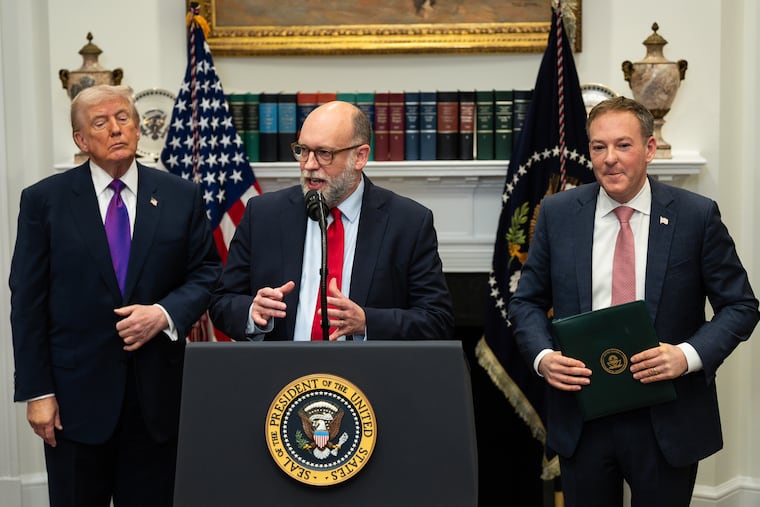
Under President Donald Trump’s second administration, “sanctuary” has never been more taboo — and being labeled as such could bring increased scrutiny or cuts in federal funding.
Trump’s immigration policies are targeting so-called sanctuary cities and states, but also hospitals, churches and schools — areas that were once off-limits to immigration agents.
“No more Sanctuary Cities!” Trump wrote on Truth Social in April. “They protect the Criminals, not the Victims. They are disgracing our Country, and are being mocked all over the World.”
There is no legal definition of sanctuary, but the term typically describes an area with laws limiting collaboration with federal immigration agencies. That often means local jails are not allowed to hold inmates for U.S. Immigration and Customs Enforcement (ICE).
Pressure to denounce sanctuary policies has mounted since Trump took office. Some jurisdictions are rejecting the label and vowing to do their part in accomplishing the president’s crackdown on immigration.
New Hampshire this year passed two laws banning sanctuary cities, and Utah passed a law making it easier for immigrants convicted of misdemeanors to be deported. Florida and Texas require most county sheriffs to enter agreements to increase collaborations with ICE.
Meantime, jurisdictions that embrace sanctuary status are facing political consequences. In July, the Trump administration sued New York and its mayor, arguing the city’s policies “impede the federal government’s ability” to enforce immigration laws.
At Trump’s request, the Department of Homeland Security in May published a list of hundreds of cities, counties, and states that it determined were sanctuaries. Philadelphia was on the list.
The list included states with laws limiting cooperation with ICE, like California and Illinois, but also such cities as Nashville, Tenn., and Boise, Idaho, where state laws prohibit sanctuary policies. DHS removed the list from its website just days after it went up.
Crete was not on the list. But under heightened political pressure, small towns like it are forced to decide what it means to support their immigrant residents without uttering the one prohibited word.
Central and South American immigrants started moving to Crete in the late 1990s, drawn by work at the meatpacking facility on the edge of town. Today, almost half its residents identify as Hispanic or Latino — and Crete has evolved.
In 2016, the town launched a Community Assistance Office to help residents with housing, education, and immigration services. Churches recruited Spanish-speaking pastors to lead Spanish-language services. Now the lone movie theater shows films in Spanish and English.
Resident Jennifer Cardoso Franco, 21, knows Crete as a town where “the community always comes together” for events and celebrations. But the town’s welcoming attitude does not always allay worries about immigration enforcement.
“There’s immigrants everywhere,” Cardoso said. “You just don’t know whose house they might target next.”
Ourada said that when he approached the mayor and City Council about becoming a “Certified Welcoming” city, they worried that welcoming would be misinterpreted as sanctuary and invite consequences.
Opponents of sanctuary policies argue they endanger cities by letting “criminals” walk free. “If you’re a sanctuary city, you’re not doing the right thing for your citizens,” U.S. Sen. Rick Scott, a Florida Republican, said in an interview with Fox News.
However, research shows that sanctuary status does not cause higher crime, said Charis Kubrin, a professor of criminology, law, and society at the University of California, Irvine, who has extensively studied the impact of immigration on crime and written a book on the issue.
“Immigrants actually have lower involvement than the native born on an array of crime measures,” she said.
What has been documented, she said, is a decrease in trust between residents and law enforcement in places where police collaborate with ICE.
“It minimizes trust, and it makes people concerned,” she said. “That, in fact, will harm public safety.”
“Hogwash,” countered Sheriff Gordon Smith of Bradford County, Fla., whose agency is among those that partner with ICE via its 287(g) program, which trains local officers to act as immigration agents.
Any assertion that such collaborations diminish community trust is “political banter,” Smith told News21.
Crete police are not a part of that program, Ourada said, but if ICE asks for help enforcing warrants, the town’s officers are required by law to comply. That type of assistance, he added, fundamentally distinguishes it from a sanctuary city.
The city wants the relationship between police and residents to remain strong, Ourada said.
“When ICE leaves, the police will be going back to giving warnings for speeding, and helping … with driving classes, and chasing after barking dogs, and telling people ‘you can’t park there’ and that kind of thing,” Ourada said, “because that’s what we do.”
The Community Assistance Office develops “welcoming” resources, such as helping students apply for financial aid and collaborating with an immigrant advocacy group to hold know-your-rights presentations.
Marilyn Schacht, the community assistance director since 2023, helmed the city’s push to become “Certified Welcoming,” a certificate awarded through the national nonprofit Welcoming America. The organization aims to “enable belonging for everyone, and explicitly immigrants,” its website says.
To become certified, cities must demonstrate that all residents can participate equally in civic life, education, and social services.
Ourada, who has led the city for 12 years, wholeheartedly believes that Crete’s “secret weapon” to success is its immigrant community.
“I won’t say we’re one big happy family. We have trials and tribulations, like anybody does,” Ourada said. “But people move here, and they don’t want to move away.”
News21 reporter Aaron Stigile contributed to this article. This report is part of “Upheaval Across America,” an examination of immigration enforcement under the second Trump administration produced by Carnegie-Knight News21. For more stories, visit https://upheaval.news21.com/.