On 61st anniversary of Bloody Sunday, worries about the future of voting rights and calls to action
Alabama marks the 61st anniversary of a key event in the Civil Rights Movement, when state troopers attacked voting rights marchers in Selma.
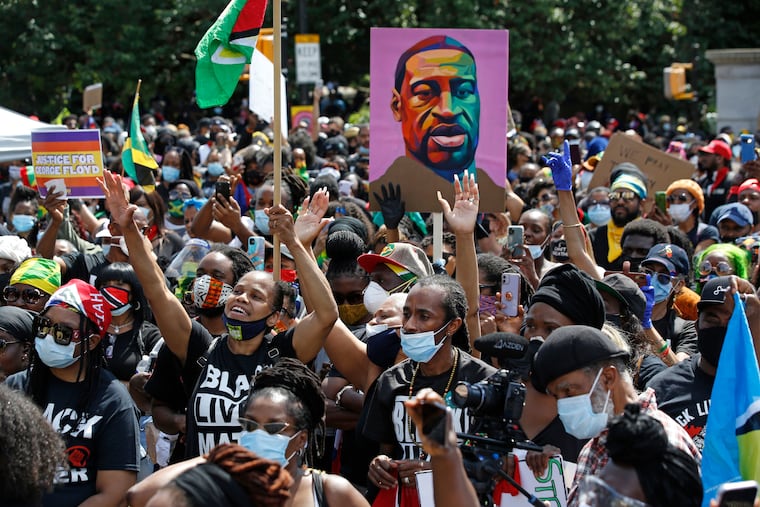
SELMA, Ala. — Sixty-one years after state troopers attacked Civil Rights marchers on the Edmund Pettus Bridge in Selma, thousands gathered in the Alabama city this weekend, amid new concerns about the future of the Voting Rights Act.
The March 7, 1965, violence that became known as Bloody Sunday shocked the nation and helped spur passage of the landmark legislation that dismantled barriers to voting for Black Americans in the Jim Crow South.
The anniversary was celebrated in this southern city with events through the weekend, ending with a commemorative march across the bridge Sunday. But the festivities came as the U.S. Supreme Court considers a case that could limit a provision of the Voting Rights Act that has helped ensure some congressional and local districts are drawn so minority voters have a chance to elect their candidate of choice.
“I’m concerned that all of the advances that we made for the last 61 years are going to be eradicated,” said Charles Mauldin, one of the marchers beaten on Bloody Sunday.
Democratic officeholders, civil rights leaders, and tourists descended on the city to pay homage to the pivotal moment of the Civil Rights Movement and to issue calls to action. Speakers warned of the looming court decision and criticized the Trump administration’s actions on immigration and efforts to roll back diversity, equity, and inclusion.
Standing at the pulpit of the city’s historic Tabernacle Baptist Church, Maryland Gov. Wes Moore said that like the marchers on Bloody Sunday, they must press forward.
“Those who marched across the Edmund Pettus Bridge deserve better than us cowering while the freedoms that we inherited, and they fought for, are being ripped away,” Moore said.
Illinois Gov. JB Pritzker, speaking at a rally at the foot of the bridge, said racism is on the rise in America and “Trump’s Supreme Court is gutting the Voting Rights Act.”
“Let’s march forward today with the knowledge that we are the inheritors of the faith that brought marchers to the bridge 61 years ago. It is now on us to bend the arc of the moral universe toward justice,” Pritzker said.
Justices are expected to rule soon on a Louisiana case regarding the role of race in drawing congressional districts. A ruling prohibiting or limiting that role could have sweeping consequences, potentially opening the door for Republican-controlled states to redistrict and roll back majority Black and Latino districts that tend to favor Democrats.
U.S. Rep. Shomari Figures won election in 2024 to an Alabama district that was redrawn by a federal court to give Black voters a greater voice. His district will likely be targeted if the state gets the opportunity to redraw lines.
He said what happened in Selma and the subsequent passage of the Voting Rights Act “was monumental in shaping what America looks like and how America is represented in Congress.”
A crowd of several thousand filed behind elected officials and marched across the bridge.
In 1965, the Bloody Sunday marchers led by John Lewis and Hosea Williams walked in pairs across the Selma bridge headed toward Montgomery. Mauldin, then 17, was part of the third pair behind Williams and Lewis.
At the apex of the bridge, they could see the sea of law enforcement officers, including some on horseback, waiting for them. But they kept going.
“It wasn’t that we didn’t have fear, it’s that we chose courage over fear,” Mauldin recalled.