What the Supreme Court’s ruling on Colorado’s conversion therapy ban could mean for Pa. and N.J.
“Conversion therapy” refers to a range of discredited practices that critics say are “dangerous.” The practice seeks to change someone’s sexual orientation or gender identity.
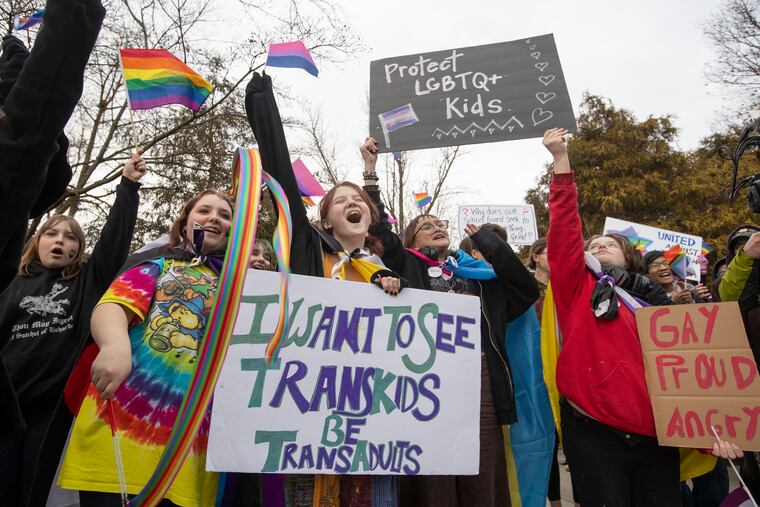
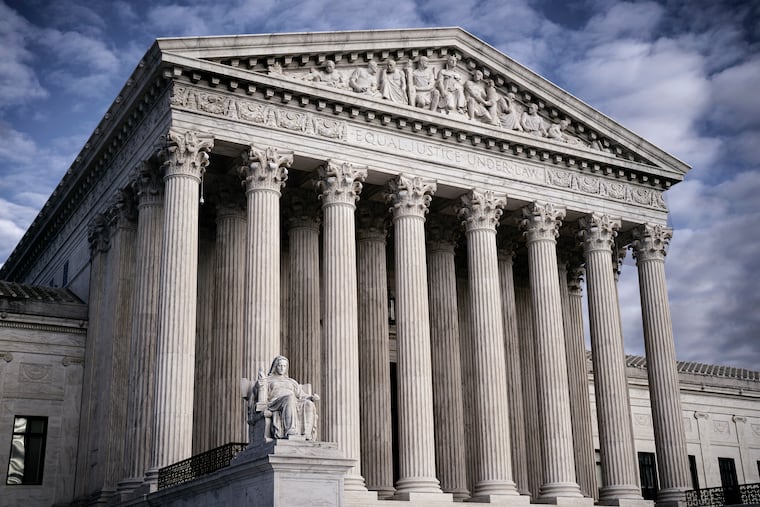
The Supreme Court ruled on Tuesday against a Colorado law banning conversion therapy for LGBTQ+ kids in the state.
An 8-1 high court majority sided with a Christian counselor who argued the state law violated the First Amendment free speech protections. The justices agreed with that interpretation and sent the case back to a lower court, signaling further scrutiny for the law.
The news dropped on International Transgender Day of Visibility, a day intended to celebrate the trans community while also acknowledging hardships and inequities the group faces.
Colorado is one of more than two dozen states that ban conversion therapy — including Pennsylvania and New Jersey.
“Conversion therapy” refers to a range of discredited practices that critics say are “dangerous.” The practice seeks to change someone’s sexual orientation or gender identity.
Experts say conversion therapy is weaponized against queer youth, with studies showing that those who have undergone the practice are statistically more likely to attempt suicide.
The new ruling could create new legal hurdles for states with similar laws.
It’s the latest decision in a series of recent cases that target LGBTQ+ rights.
Here’s what to know.
What was the Colorado case about?
Colorado has a law in place that protects youth under the age of 18 from being subjected to conversion therapy by licensed mental health professionals.
Kaley Chiles, a Christian talk therapist based out of Colorado, argued that the state’s ban violates her First Amendment rights.
Chiles says she offers talk therapy, according to the Colorado Sun, not aversion therapy (a controversial psychological therapy that sometimes uses shock treatments).
Chiles doesn’t try to “cure” people who don’t want to be LGBTQ+, but people come to her for struggles with gender dysphoria or sexual orientation that don’t align with their religious values, according to her attorney, James A. Campbell with the Alliance Defending Freedom, a conservative legal organization.
Campbell argued Colorado’s ban included what he and Chiles call “consensual conversions” from patients who believe their faith establishes their identity. President Donald Trump’s administration voiced support for Chiles, saying that Colorado’s law wrongly kept her from performing faith-based therapy.
But the state of Colorado disagreed, saying the law does allow wide-ranging conversations about gender identity and sexual orientation. The law also exempts religious ministries.
Colorado argued that the law doesn’t violate the First Amendment because therapy is different from other types of speech since it’s a form of healthcare the state has a responsibility to regulate.
The state says the ban simply bars using therapy to try to “convert” LGBTQ+ people to heterosexuality or traditional gender expectations, a practice that has been scientifically discredited and linked to harm.
While the law carries the possibility of fines and license suspension, no one has been sanctioned under it.
Which Supreme Court member dissented?
The court has a 6-3 conservative majority. An 8-1 high court majority sided with Chiles on Tuesday.
Justice Neil Gorsuch, formerly of the U.S. Court of Appeals for the Tenth Circuit based in Denver, wrote the majority opinion.
He said that the law “censors speech based on viewpoint” and that the First Amendment “stands as a shield against any effort to enforce orthodoxy in thought or speech in this country.”
Ketanji Brown Jackson was the lone dissent.
Jackson wrote that states should be free to regulate healthcare, even if that means incidental restrictions on speech. She added that Tuesday’s decision “opens a dangerous can of worms” that “threatens to impair states’ ability to regulate the provision of medical care in any respect.”
What other states ban conversion therapy?
About two dozen states nationwide have laws protecting LGBTQ+ youth from conversion therapy, according to an analysis by the Trevor Project and the Movement Advancement Project, two prominent LGBTQ+ advocacy groups.
California codified its law first, in 2012, three years before the Supreme Court established same-sex marriage as a protected right.
Colorado’s law — which is now in jeopardy following the Supreme Court’s ruling — was enacted in 2019.
What about New Jersey and Pennsylvania?
New Jersey and Pennsylvania have laws in place banning youth conversion therapy.
New Jersey was the second state to establish a law against the practice. That happened in 2013 under Republican Gov. Chris Christie.
According to the Trevor Project and Movement Advancement Project, one-third of state laws protecting LGBTQ+ youth from conversion therapy have been approved by Republican governors.
Some states’ bans have faced court challenges over the years. New Jersey’s ban faced scrutiny three times: in 2015, 2016, and 2019. But the Supreme Court rejected all three challenges.
In Pennsylvania, Gov. Josh Shapiro’s administration announced it was banning minor conversion therapy. Pennsylvania’s law was enacted by regulation, while the majority of other states with bans in place were put in place by legislation.
What does the Supreme Court’s Colorado ruling mean nationwide?
Until now, all but one federal court to consider the issue had ruled in favor of laws against youth conversion therapy.
The ruling is expected to eventually make similar laws in other states unenforceable.
It doesn’t automatically negate other states’ laws, but it does provide a potential road map for opponents to strike them down.
Experts anticipate a domino effect, with critics of the bans challenging them in other states, using the Supreme Court ruling as precedent.
Some states, like Florida, are already facing court challenges. In New Jersey and Washington, where bans were previously challenged but upheld, the new ruling makes the laws vulnerable.
“Today’s reckless decision means more American kids will suffer. The Court has weaponized free speech in order to prioritize anti-LGBTQ+ bias over the safety, health and well-being of children,” Human Rights Campaign president Kelley Robinson said. “So-called ‘conversion therapy’ is pseudoscience, not real therapy … It is cruel and should never be offered under the guise of legitimate mental healthcare.”
The Associated Press contributed to this article.