Reflecting pool contract has ‘inflated’ profit margin, government analysis finds
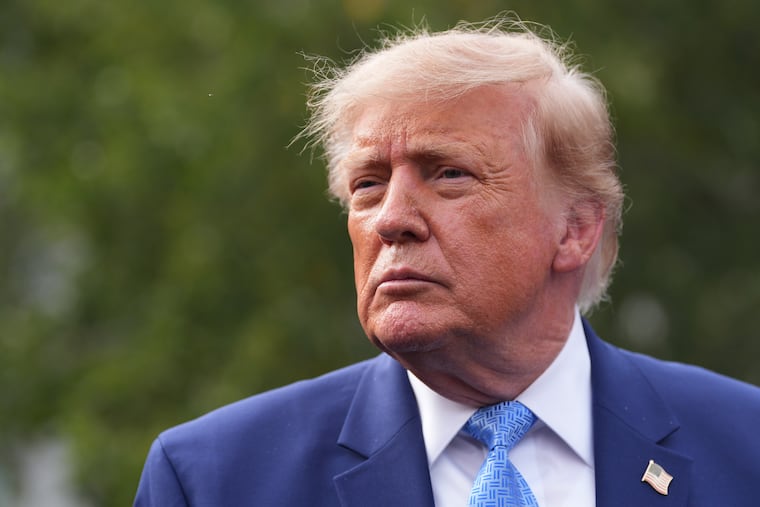
The government eventually agreed to pay the firm $13.1 million, which is seven times the amount that President Donald Trump initially said the work would cost.
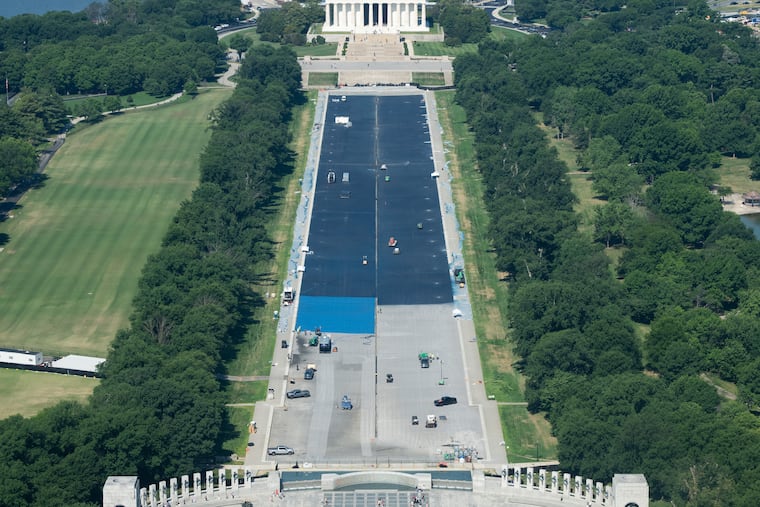
WASHINGTON — A National Park Service analysis found that the contractor given a no-bid contract to repair the Lincoln Memorial Reflecting Pool is being paid an inflated and excessive profit margin, according to federal documents obtained by the New York Times.
That analysis, prepared by a park service contracting specialist, found that the typical profit margin of federal construction contracts like this one is 6% to 12%. But the firm fixing the reflecting pool, Virginia-based Atlantic Industrial Coatings, submitted a bid that charged 20%, adding at least $850,000 to what a more typical contract would have cost.
The park service accepted that bid after a contracting official reasoned that the company deserved it for accepting a difficult job on a tight deadline. The government eventually agreed to pay the firm $13.1 million, which is seven times the amount that President Donald Trump initially said the work would cost.
Now that the repair work is underway, however, other documents indicate that the same contractor had — at least initially — not been able to perform one of the most critical parts of its repair job: sealing the gaps between the concrete slabs at the pool’s floor.
Water has leaked out of those gaps for decades, creating a costly problem that Trump has vowed to fix. But the contractor’s attempts to seal those gaps failed in two trials earlier this month, forcing the company and the park service to brainstorm new ideas, the documents show.
Trump has embarked on an ambitious effort to repair Washington landmarks as part of preparations for the country’s 250th birthday this summer. In several cases, his administration has used the forthcoming celebrations as an excuse to bypass the usual process of seeking multiple bids for the same job.
Instead, it has given lucrative contracts directly to handpicked vendors.
The revelations about the profit margin built into the reflecting pool contract — and the contractor’s struggles — have not been previously reported. They illustrate the risks of the Trump administration’s turn toward no-bid contracts.
John Hart, CEO of the conservative watchdog group Open the Books, said that the government seemed to be flying blind, embarking on an expensive project without knowing for sure what it would cost or how well it would work.
“The first thing any rational homeowner, family, or business does is they solicit competitive bids,” Hart said. “Because when you rely on sole-source contracting, it opens the door to extraordinary waste.”
Hart said his group had supported Trump’s campaign-trail calls for more efficient government. But now, he said, the Trump administration was moving in the opposite direction, and wrongly invoking the forthcoming celebrations as an emergency, to justify bypassing legally required competition.
“We’ve known that this is going to be America’s 250th anniversary for 250 years,” Hart said. “It’s not like we didn’t have time to plan.”
An Interior Department spokesperson, Katie Martin, defended the contract’s cost in a written statement. The National Park Service is part of the Interior Department.
“The contract price reflects the effort necessary to expedite the timeline of completing the leak prevention coating project — more people, more materials, more equipment and longer hours ahead of our 250th,” Martin said.
Though the government did not solicit other bids, Martin said the Interior Department believed this was the only company with the people, expertise, and materials to do the job.
To help pay for the project, the Interior Department is using the fees that people pay to visit national parks across the country, according to government documents reviewed by the Times.
To cover nearly half of the project’s cost, the agency is using $7 million worth of national park entrance fees, the documents show. It is using an additional, undisclosed amount of money from sales of “senior passes” to visitors age 62 and older, the documents show.
Trump defended the spending on the reflecting pool during a cabinet meeting Wednesday, saying: “The Biden administration and the Obama administration spent hundreds of millions of dollars trying to get it to work, and they failed. And we’ll be spending — you’ll give me a number — but I think it’s very low numbers.”
The government contract said the pool work should be completed by May 22. Trump has recently said it will be finished by July 4. It is still unclear how the government chose to give this company a no-bid contract.
Atlantic Industrial Coatings, based in New Canton, Va., has declined to comment. It had never had a federal contract before it was chosen to repair one of Washington’s most famous — and troublesome — landmarks. Despite previous repair projects, the reflecting pool has been plagued for decades by leaks and algae blooms. The Obama administration spent more than $35 million to overhaul the pool, only to have the algae return in a month and the leaks reappear the next year.
Trump initially said that he had chosen this firm himself, because it had worked on the swimming pool at his golf club in Sterling, Va. But later, the president reversed himself and said he did not know the firm.
What is clear, from the documents obtained by the Times, is that this spring the Trump administration was in a rush to give Atlantic Industrial Coatings a contract. So much of a rush, in fact, that it was even willing to hire the company without knowing how much its work would actually cost.
To do that, the government chose a rarely used mechanism called a “letter contract,” which reverses the usual order of federal contracting. The contractor starts work first, and haggles over the price later. Contracting experts say they are designed for desperate cases where work must start immediately to protect lives or property, like to shore up a dam that risks breaking, or to reopen roads blocked by fallen trees after a tornado.
“I’ve never even seen one of these,” said Lisa Shea Mundt, the cofounder of the Pulse of GovCon, a research and advisory firm that helps government contractors find business.
She said such contracts have a downside: When the haggling over price commences, the government is left without much leverage. If the contractor asks for too much, would an agency really be willing to stop the work and fire the company in midstream?
“These levers are supposed to be pulled in states of emergency,” Mundt said. “It’s not meant to be abused to circumvent competition.”
In this case, Atlantic Industrial Coatings eventually asked for $13.1 million, according to park service documents. That price included itemized costs for laborers, clerks, supervisors, supplies, and equipment — plus 20% for “overhead” and another 20% for profit.
The park service analysis, written by a contracting specialist, said the combined total of profit and overhead “appears excessive.” It said other contractors typically charged 10% to 15% for overhead.
That was hardly the moment to drive a hard bargain. By the time the analysis of the pricing was done, on May 7, Atlantic Industrial Coatings had been working at the reflecting pool for about a month. Trump had already touted its work to reporters in the Oval Office, and in a video that the White House posted on YouTube.
A higher-up official in the park service’s contracting office approved the full $13.1 million bid, including the 20% margins for overhead and profit, the documents show. The official, who is a civil servant and not a political appointee, reasoned that the contractor should be rewarded for taking on a difficult project that might cost more than expected, according to the documents.
“The contracting officer determined that due to the risk of the project, the inflated overhead and profit percentages of 20% were reasonable,” the analysis said.
The contracting specialist and the higher-up official who approved the bid did not respond to questions from the Times.
This article originally appeared in The New York Times.