Nursing homes, factory owners, and immigrants brace for fallout from Supreme Court ruling
Nursing home leaders warned they would have fewer beds to offer if thousands of Haitian health aides are forced to leave the country.
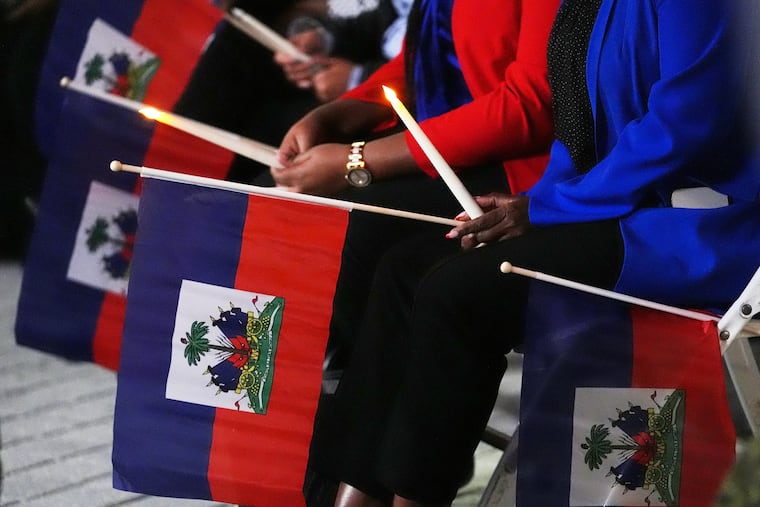
Immigrants began making plans to sell or rent their homes, secure bank accounts, and figure out thorny issues like child custody arrangements. Business owners started calculating how many days they can continue to employ workers whose legal status is set to expire. And nursing home leaders warned they would have fewer beds to offer if health aides are forced to leave the country.
Panic rippled through communities from Florida to Ohio and beyond in the hours after the Supreme Court cleared the Trump administration Thursday to strip humanitarian protections from Haitians and Syrians — and potentially all 1.3 million immigrants from over a dozen countries who had been previously shielded from deportation.
“The residents will be losing caregivers that they really have become attached to,” said Colin O’Leary, executive director at Laurel Ridge Rehabilitation & Skilled Care Center in Boston. Managers at the facility were racing to figure out how much longer staff members from Haiti with temporary protected status could continue taking care of patients. “That’s a lot for our residents to handle.”
Attorneys said Haitians and Syrians could lose work permits in little more than a month, but the deadline remained unclear because lower court judges must issue orders to implement the decision. Stephen Miller, the White House deputy chief of staff, told reporters Thursday that Haitians and others with temporary protected status should be detained and deported once they lose the benefit.
“If you no longer have status in this country, then you’re supposed to be deported,” Miller said.
Some of those immigrants have lived in the United States for decades and said they feared being sent back to conflict-ridden homelands that they barely know and whose languages some do not speak.
Temporary protected status, a program created in 1990, grants work permits and deportation reprieves to immigrants for up to 18 months if their nations are engulfed in war, natural disasters, or other emergencies. Applicants cannot have serious criminal records and the government can, and has, renewed the protections multiple times.
President Donald Trump and his allies have alleged that the temporary protections have lasted long after the emergencies have passed and have allowed undocumented immigrants and visa overstayers to live and work in the United States.
But the program also has become a political wedge. When he was a senator representing Florida, home to thousands of Haitians, Venezuelans, and others with the protections, Secretary of State Marco Rubio favored the protections.
Approximately 350,000 Haitians and roughly 6,000 Syrians have TPS, but the Supreme Court ruling ultimately could affect immigrants from 17 countries whose citizens were safeguarded under the program when Trump took office. His administration has sought to terminate protections for 13 of those countries.
Harlaine, 38, a registered nurse in Florida, said she hasn’t been to Haiti since she left for the U.S. at age 7 and had never visited because everyone told her it was too dangerous. She spoke on the condition that only her first name be used because she fears being targeted by immigration authorities.
“To tell me to go back to a country that I know nothing of is the sickest and most evil thing I think that somebody could do,” she said.
News of the ruling devastated residents and staff at healthcare and elder care facilities across the country, since a large share of the Haitian immigrant population works in those industries. Nursing homes, labor unions, and governors condemned the decision and called for an emergency resolution. Advocates called the decision one of the largest “de-legalization” efforts in U.S. history.
Ohio Gov. Mike DeWine, a Republican, characterized the decision as “a mistake” and said it is too dangerous to deport people to Haiti, including the more than 10,000 Haitians living and working legally in his state. New York Gov. Kathy Hochul (D) vowed to fight the ruling, even as the path to challenging it is unclear.
“I’m telling you it’s going to cripple our healthcare system,” Hochul told reporters. “Who’s going to show up tomorrow to take care of Grandma? Who’s doing that? Who’s stepping up?”
Miami Jewish Health, a senior living community and healthcare provider in Florida, cut 120 nursing home beds a few months ago, in part due to staffing issues, including those stemming from the pending cancellation of TPS for Haitians. About 40 healthcare employees and contracted food and housekeeping workers were affected by the Supreme Court ruling, said Jason Pincus, a vice president at the center.
Goodwin Living, a senior living nonprofit that serves thousands of older adults in Northern Virginia and Washington, D.C., braced for staff cuts, and at Laurel Ridge Rehabilitation & Skilled Care Center in Boston, managers prepared for having to say goodbye to dietary aides and certified nursing assistants who care for about 115 elderly residents.
Rita Siebenaler, a resident of Goodwin House Bailey’s Crossroads in Virginia, called the decision “sad, dreadful, and very upsetting for the seniors that I know.”
“We are now threatened with the loss of valuable, trained, vetted, very, very reliable caretakers,” she said.
The decision is expected to hit hard in Springfield, Ohio, where about one in four residents is Haitian. Trump falsely claimed on the 2024 campaign trail that Haitian immigrants there were eating cats and dogs. The loss of hardworking employees, homeowners, and renters who became trusted members of the community will be painful, residents said.
Ross McGregor, a fifth-generation Springfield resident and the president of a heavy machinery factory in town, has employed dozens of Haitians with temporary protections in the past, and worried that he will not be able to find workers in the future.
“If anything, right now our business is starting to pick up and grow,” said McGregor, 61. “I might have trouble hiring because the workforce is already challenging in Springfield.”
Harlaine, the nurse from Florida, obtained temporary protected status after Haiti’s catastrophic earthquake in 2010. She said she paid her way through college to earn a bachelor’s degree, taking years longer than most students to finish because she had to pay for it herself. She went on to work in emergency rooms, including during the deadly COVID pandemic that killed her sister.
Now she is facing the loss of her life in the U.S. She lives with her elderly mother, a retired factory worker who also has the temporary status, and her 17-month-old son, who is a U.S. citizen. Her mother paid off the home with her wages, she said.
Starting over in Haiti, she said, is unimaginable.
“You’re basically sending me to stick out like a sore thumb,” she said. “I barely know the language. That’s crazy.”
Fissures have emerged in recent weeks among some Republicans over Trump’s immigration enforcement policies.
Some House Republicans broke ranks in April to help Democrats pass legislation that would have extended Haitians’ TPS protections through April 2029. This month, the U.S. Chamber of Commerce and other business leaders pressured Trump to back off a plan to require green-card applicants to leave the United States for processing, fearing they’d get stuck abroad and it would harm their workforces.
Advocates for immigrants say it is inhumane to deport so many residents to struggling countries. Some are trying to find alternate ways to stay legally, but attorneys say they could be detained pending an asylum hearing if they lose TPS.
“People haven’t been here in this country in some artificial limbo like in a waiting room. People have married, people have had children, people who have started businesses, people have made this country their home,” said Jessica Bansal, an attorney involved in the case. “Are half a million people going to be torn from their communities in 32 days? Or will Congress and the people do something to stop it?”
Mustafa Doe, a Syrian immigrant in his 20s with TPS, was among the plaintiffs named using a pseudonym in the case the Supreme Court decided Thursday. In an interview, he said he fears persecution in his homeland because he is gay and not a practicing Muslim. He works for a Fortune 500 company in New York, helping manage its philanthropic programs. But he said he also recently bought a co-op and sits on the board, and now fears he will have to sell it.
He is among the younger residents in a building of older residents who rely on him to help lug heavy bags of groceries upstairs and even paint the building.
“It is like a family,” he said.
His parents are legal U.S. residents and most of his relatives are scattered across the U.S. Nobody is left in Syria to receive him if he is forced to go back. He said he came to America with a student visa in 2021 to attend college.
“There’s no one in Syria,” he said. “It’s literally just going to be me.”