Trump administration’s action in Venezuela and threats for Cuba could echo the 1954 coup in Guatemala
Regime change can have unintended consequences that last for decades and reverberate widely. Consider what happened when the U.S. ousted Guatemala's leader over 70 years ago.
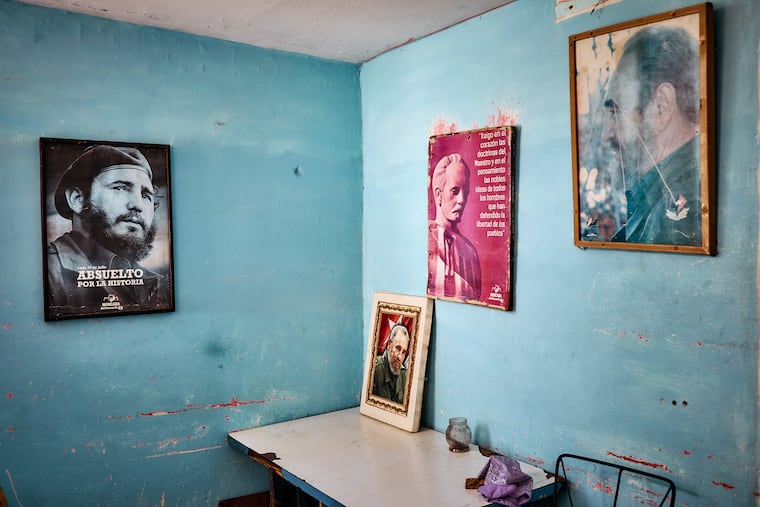
U.S. military leaders have touted Operation Absolute Resolve, which removed Venezuelan leader Nicolás Maduro as head of state, as the most sophisticated joint special operation in history. Now the Trump administration is escalating its rhetoric and actions against Cuba, signaling its wishes to see regime change there as well.
These dangerous times make it an opportune moment to revisit the Guatemalan coup of 1954. The CIA-backed covert operation that toppled Guatemalan president Jacobo Arbenz was once considered a triumph of U.S. foreign policy, especially by the Dwight D. Eisenhower administration and the intelligence community. The long-term consequences of this apparently successful regime change, however, undermined hemispheric stability and security in ways its authors did not anticipate.
Arbenz was a democratically elected president seeking to deepen the progressive reforms of his predecessor, Juan José Arévalo. Arbenz had been a member of the junta that briefly ruled Guatemala during the 1944 “October revolution” that forced the resignation of dictator Jorge Ubico until the election of Arévalo, under whom Arbenz served as defense minister. As president, Arbenz sought to transform Guatemala from its largely feudal economy into a modern capitalist state while reducing the influence of foreign companies like the United Fruit Company, the single largest landowner in the country. Because land reform was fundamental to Arbenz’s program, United Fruit officials, politically well-connected in the Truman and Eisenhower administrations, lobbied the U.S. government to intervene.
Fierce anticommunism was one of the motivations for removing Arbenz. Although Senator Joseph McCarthy’s name became synonymous with the Second Red Scare, the movement was broad-based, bipartisan, and permeated nearly every aspect of U.S. politics, culture, and society. Domestic political pressure to eliminate communists from influential positions at home and elsewhere in what many considered the U.S. sphere of influence combined with the financial interests of powerful players in Washington to render the prospect of regime change all but irresistible.
Even though Arbenz was not a member of the Guatemalan communist party, he had legalized it and invited several communists into his cabinet. One of them designed the land reform that antagonized the United Fruit Company. Arbenz’s opponents in the United States argued that because all communists were controlled from Moscow, this posed an intolerable threat to hemispheric security. To reconcile their opposition to a democratically elected leader with the principle of self-determination, U.S. officials claimed that because all communists fundamentally sought to thwart self-determination, U.S. anticommunist intervention was necessary to protect self-determination and was therefore morally justified.
The removal of Arbenz was achieved with minimal bloodshed— largely through a potent disinformation campaign that convinced him a sizeable invasion force including U.S. soldiers was on the way. This created chaos and confusion in the Guatemalan armed forces, and unlike Venezuelan president Nicolás Maduro in 2026, Arbenz chose to flee into exile. He died in 1971 in Mexico.
But the story didn’t end there. The 1954 coup radicalized the political left in Latin America and the Caribbean. Popular protests broke out in nearly every Latin American capital. A fierce propaganda battle between the United States and the Soviet Union ensued. The Soviets took up Guatemala’s cause in the United Nations, and the outpouring of anti-American sentiment from Bolivia to Uruguay signaled to Moscow that Latin America was ripe for revolution. Washington policymakers focused more on the perceived threat of Soviet influence than on the underlying causes of instability in the hemisphere, which were more to do with oligarchical rule, political repression, and extreme inequalities of wealth.
The coup in Guatemala even sparked anti-American protests in Great Britain, where officials feared losing their carefully managed position in the United Nations and other international venues in the face of decolonization. To secure British support for its position, U.S. officials threatened to support anticolonial criticism of the U.K. Fearful of losing its influence in Egypt and elsewhere, British officials then torpedoed efforts to investigate what happened in Guatemala and helped cover up the entire affair. Merely to pay off the interest accrued with the intervention’s backlash, U.S. officials went so far as to jeopardize the historical U.S.-U.K. “special” relationship.
The architects of the operation failed to foresee the lessons that Fidel Castro and his comrades in Cuba and throughout other parts of Latin America and the Caribbean would derive from it. Argentine doctor-turned-revolutionary Ernesto “Che” Guevara was in Guatemala during the coup and concluded that the primary task of any revolution was to arm the peasants and workers. He believed that if Arbenz had done so, they would have defended him against the invasion forces even as army discipline collapsed. This disarray in the Guatemalan armed forces convinced Guevara that the revolution must disband the military and rebuild it anew to ensure loyalty. Finally, drawing on what they witnessed in Guatemala, Guevara and others came to see armed violence as inevitable—because the reactionary forces of neo-imperialism would seek to strangle the revolution in its cradle.
After Castro came to power in 1959, he embraced Moscow, though cautiously so as not to gift the Americans a ready pretext for intervening in Cuba. The Eisenhower administration, ever alert to the Soviet threat, authorized plans for a covert exile-led invasion to overthrow Castro. Those plans were operationalized under his successor, John F. Kennedy, and involved several changes to enhance plausible deniability of the U.S. role, albeit at the expense of military effectiveness.
The disaster at Playa Girón, or the Bay of Pigs, convinced Soviet leader Nikita Khrushchev that Washington would simply not tolerate the existence of the Cuban revolution. This realization was the proximate cause of the Cuban missile crisis, the most dangerous flashpoint of the entire Cold War. One of the concessions that Khrushchev obtained from Kennedy was a verbal promise to not support another invasion of Cuba. The coup in Guatemala thus ultimately led to the exact thing it was designed to prevent: a Soviet beachhead in the Americas.
Moreover, Arbenz’s successor in Guatemala, Castillo Armas, had no meaningful governing philosophy apart from a fierce anticommunism. He rolled back land reform, terrorized the labor unions and peasant organizations, and increased Guatemala’s economic dependence on the United States. Official corruption flourished, and state-led repression provoked the rise of insurgent groups, leading to over 30 years of civil war and a genocide of Indigenous people that intensified in the 1980s. Over the subsequent decades, the U.S. government spent millions to prop up Guatemala’s once-stable economy, now inextricably linked to U.S. prestige. The protracted violence of the country’s civil war proved Kennedy’s assertion that “those who make peaceful revolution impossible will make violent revolution inevitable.”
Aaron Coy Moulton is Associate Professor of Latin American History at Stephen F. Austin State University in Texas. He is the author of Caribbean Blood Pacts: Guatemala and the Cold War Struggle for Freedom (Cornell, 2026) and his award-winning scholarship has appeared in numerous outlets.
Michelle Paranzino is T.C. Sass Chair in Maritime Irregular Warfare and Special Operations at the US Naval War College and the author of The Cuban Missile Crisis and the Cold War: A Short History with Documents (Hackett, 2018). All opinions are the author(s) alone and do not represent those of the US government, the Department of the Navy, or the US Naval War College.
Made by History takes readers beyond the headlines with articles written and edited by professional historians. Opinions expressed do not necessarily reflect the views of The Inquirer.