Scientists now say this worst-case climate scenario is ‘implausible.’ Here’s what it means.
Some on the right, including President Donald Trump, are now suggesting the move shows that global warming does not pose a significant threat. Many climate scientists say the reality is more nuanced.
For more than a decade, as scientists tried to evaluate just how much the planet might warm by the end of the century, the most extreme scenario they considered in models was one in which humanity doubled down on burning of fossil fuels, took no action to limit emissions and suffered profound consequences as the world grew hotter.
Now, as time as passed and the world has changed, the U.N. Intergovernmental Panel on Climate Change seems poised to retire its most extreme future emissions scenario, commonly known as RCP 8.5, after scientists found that those projections “have become implausible.”
Some on the right, including President Donald Trump, are now suggesting the move shows that global warming does not pose a significant threat. Many climate scientists, however, say the reality is more nuanced. They note that the deployment of renewable energy and other factors has helped avert the kind of runaway warming that once seemed more conceivable, even as climate change still poses serious risks around the globe.
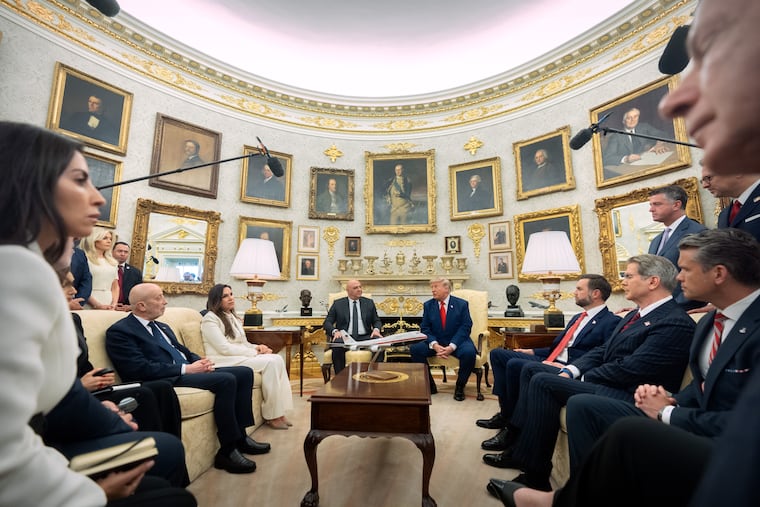
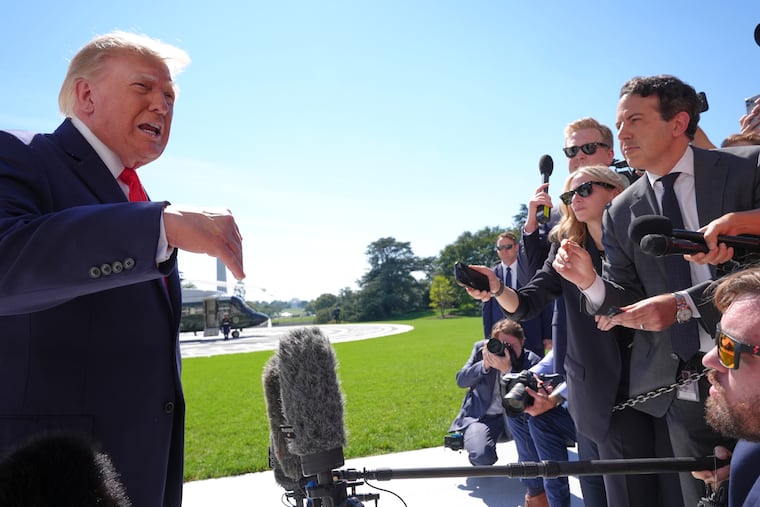
“GOOD RIDDANCE!” President Trump wrote on Truth Social this past weekend, in a post amplified Saturday by the White House. “After 15 years of Dumocrats promising that ‘Climate Change’ is going to destroy the Planet, the United Nations TOP Climate Committee just admitted that its own projections (RCP8.5) were WRONG! WRONG! WRONG!”
Trump, who has withdrawn the nation from international climate agreements and called global warming a hoax, appeared to relish the notion that scientists had finally abandoned their most alarmist, doomsday projections for the end of this century.
But scientists have been debating for years how to decipher the complex factors behind the world’s climate trajectory, publishing a range of potential scenarios to capture the future shift in greenhouse gas emissions around the planet — and the devastating impacts that could result.
On one end of the spectrum, if the world clings to fossil fuels and does little to address the warming atmosphere, humanity can expect more suffering in the form of stronger storms, deeper droughts and other catastrophes. If nations quickly transition to clean energy and sharply cut emissions, they have repeatedly written, the impacts will likely be far milder.
The “RCP 8.5″ scenario that Trump referenced has long been used by IPCC scientists as a shorthand for a worst-case scenario — a world in which countries continue to burn oil, gas and coal unabated, with little thought toward the atmospheric consequences.
Scientists have pointed out for nearly a decade that the worst-case path was becoming less and less likely.
In 2017, scientists Justin Ritchie and Hadi Dowlatabadi published a paper arguing that the assumption of the vast, continued use of coal into the future were not realistic, and that RCP 8.5 and scenarios like it “are exceptionally unlikely.”
In a commentary published in the journal Nature in 2020, scientists Zeke Hausfather and Glen Peters argued the scenario ought to be discarded.
“Happily — and that’s a word we climatologists rarely get to use — the world imagined in RCP 8.5 is one that, in our view, becomes increasingly implausible with every passing year,” they wrote.
Even so, the use of RCP 8.5 in climate modeling has remained, in part as a way to study what might happen under a “baseline” scenario in which the world does nothing to tackle climate change.
But that has also provided fodder for attacks and proven a magnet for criticism from skeptics, who have used it to argue that scientists, activists and the media have overstated the risks that actually exist and given outsized attention to the most extreme scenario.
In 2018, for instance, the White House dismissed a climate report produced by 13 federal agencies and outside experts in part because it included the scenario.
“We think this is the most extreme version, and it’s not based on facts,” said then-press secretary Sarah Huckabee Sanders. Andrew Wheeler, then administrator of the Environmental Protection Agency, told The Washington Post, “Going forward, I think we need to take a look at the modeling that’s used for the next assessment.”
The Trump administration’s own report last year on the state of climate science argued that while the IPCC doesn’t claim its emissions scenarios are forecasts, “they are often treated as such.”
Its authors wrote that even though RCP 8.5 was intended as “low-probability high emissions scenario,” it came to be widely referred to as a “business-as-usual” pathway in both academic literature and in media coverage, leading to a misleading impression that was where the world was actually headed.
“Widespread use of RCP 8.5 as a no-policy baseline has created a bias towards alarm in the climate impacts literature,” the report stated.
Both in federal climate assessments and in those produced by the IPCC, scientists have regularly paired the RCP 8.5 scenario with others that are less dire and involve more aggressive climate action.
The most recent IPCC assessment, for instance, included a range of possible futures. The most optimistic forecast planetary warming of roughly 1.5 degrees Celsius by 2100, compared to preindustrial levels. The worst-case foresaw cataclysmic warming of more than 4 degrees Celsius over the same period.
In a paper published last month, a group of scientists assembled to evaluate emissions scenarios wrote that the use of such simulations “serve as a critical tool in climate change analysis, enabling the exploration of future evolution of the climate system, climate impacts, and the human system.”
The high-end scenario of the past, they wrote, has “become implausible, based on trends in the costs of renewables, the emergence of climate policy and recent emission trends.” At the same time, many of the low-emissions trajectories also “have become inconsistent with observed trends during the 2020-2030 period.”
Hausfather called it “a reasonable criticism” that too often over the years RCP 8.5 had been interpreted as a “business as usual” scenario, which it never was intended to be. And he said it’s a positive thing that the climate scenarios scientists are now proposing better reflect the range of possible outcomes over coming decades.
“We have seen a flattening of global emissions” in recent years, said Hausfather, a research scientist at Berkeley Earth. “The scenarios we create today are different than the scenarios we created 15 years ago, because the world is different today than 15 years ago.”
In an online post Monday, Hausfather, Peters and fellow climate scientist Piers Forster wrote that the death of RCP 8.5 and similar scenarios were designed to envision the worst-case futures, “not the most likely outcome even in a world that did nothing to address climate change.”
At the same time, they wrote, there was a tinge of good news in RCP 8.5’s demise. “Rapid declines in clean energy costs have bent the curve of future emissions downward, with new scenarios designed to reflect current policies notably lower than most baseline scenarios in the literature,” they wrote.
Still, they and others have repeatedly made the point that while the world might avoid the most detrimental climate scenarios previously envisioned, the next-worst ones could still be pretty bad for humanity, especially over time.
“The brutal math of climate change is this,” they wrote. “As long as CO2 emissions remain above zero, the world will continue to warm.”