House passes Ukraine security aid bill over objections of GOP leaders
The bipartisan bill is the most robust aid package for Ukraine to advance in Congress in more than a year.
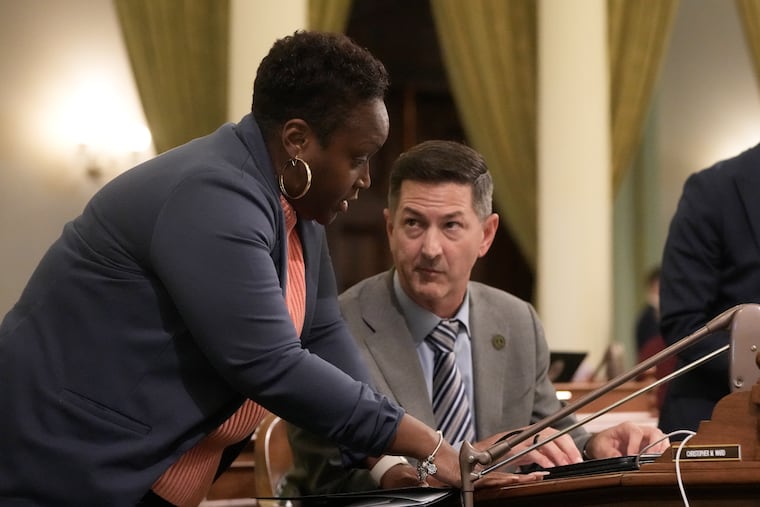
The House passed a bipartisan bill Thursday with more than $8 billion in security assistance to Ukraine — the most robust aid package to advance in Congress in more than a year — over the objections of the chamber’s GOP leadership.
The measure advanced by a vote of 226 to 195, with 18 Republicans joining Democrats in support. It now heads to the Senate, where the legislation faces an uncertain future.
Led by Rep. Gregory W. Meeks (N.Y.), the top Democrat on the House Foreign Affairs Committee, the bill would provide $8 billion in loans that Ukraine could use to purchase U.S. military equipment or other security assistance, such as training. It also includes another $300 million in long-term U.S. military aid and provisions to impose sanctions on Russia’s energy and finance industries.
“It’s absolutely [important] to the people of Ukraine to know that the United States of America is not going to turn its back” on the conflict, Meeks told reporters Wednesday. “The United States Congress will stand and fight and work with you.”
The vote marks a show of bipartisan support for Ukraine in the fifth year of Russia’s full-scale invasion. To reach the floor, it required the support of six Republicans who joined all Democrats in signing a discharge petition — which allows a majority of lawmakers to trigger floor votes on legislation.
The parliamentary tool has become more common over the past year as GOP members have broken with the House leadership to force votes on issues including releasing government files on convicted sex offender Jeffrey Epstein and protected legal status for immigrants.
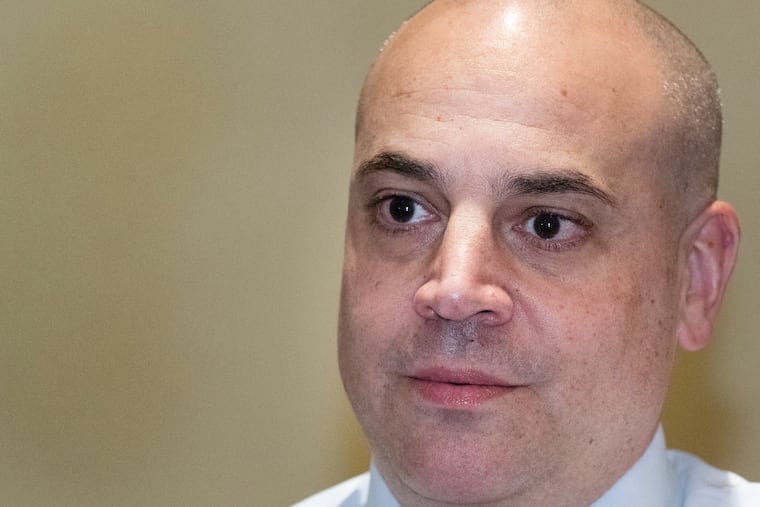
Rep. Michael McCaul (R., Texas), the former chairperson of the House Foreign Affairs Committee, supported the bill, calling it a “stand against Russian tyranny.”
The vote marked the second time this week that GOP lawmakers helped Democrats advance foreign policy measures in the GOP-led chamber. On Wednesday, four Republicans sided with Democrats in supporting a largely symbolic resolution to halt the war in Iran, the first such measure to pass either chamber in Congress during the second Trump administration.
Before returning to office, President Donald Trump repeatedly promised to resolve the Ukraine conflict in a day. But after a year of negotiations, his administration’s diplomatic effort has failed to end the fighting and mostly shifted the burden for supporting Kyiv onto NATO allies.
While testifying before the House Foreign Affairs Committee on Wednesday, Secretary of State Marco Rubio said that the Trump administration had “clearly taken a side” in support of Ukraine during the conflict but acknowledged that the odds of negotiating an end to the war “don’t look great.”
In recent weeks, lawmakers from both parties have also pressed the Pentagon to explain its plan to spend $400 million in Ukraine security aid that Congress passed earlier this year.
Sen. Mitch McConnell (Ky.), the Republican chairman of a Senate panel on defense spending, in April accused the Defense Department of stalling the assistance. Defense Secretary Pete Hegseth later testified before lawmakers that the Pentagon was moving forward with the package, while arguing that the administration’s policy was for Europe to shoulder support for Ukraine.
The Pentagon has since sent Congress its plan to spend the funds, according to a document dated May 22 and reviewed by the Washington Post.
Most of the assistance will go toward military equipment — including munitions, vehicles, and spare parts — but the Defense Department estimated that $100 million would go toward transporting the aid to Ukraine, according to the document.
Two congressional aides, speaking on the condition of anonymity to describe the private correspondence, expressed dismay at the high cost to move the aid. They also voiced concern that the Pentagon projected it may take until 2029 to deliver all of the assistance, though they said the timeline may be a result of the legislative authority lawmakers used to fund the program.
The Pentagon did not immediately respond to a request for comment.