China rebukes Trump’s economic pressure campaign seeking to isolate Iran
Analysts say the rebuke is a warning sign that further actions could derail the fragile truce built between Washington and Beijing.
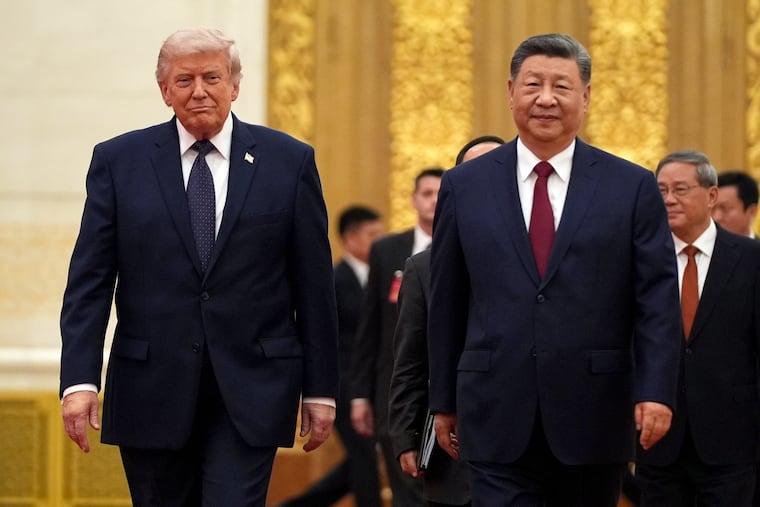
China sharply condemned the sweeping new sanctions campaign against Iran and its trading partners announced by the United States, vowing retaliation against measures that would target countries doing business with Tehran.
Treasury Secretary Scott Bessent said Monday he is contacting unspecified world leaders as part of an effort to “economically asphyxiate” Iran’s economy and force an “endgame” to the drawn-out conflict in the Middle East.
China is Iran’s top trading partner and the newly announced U.S. economic pressure campaign risks a flare-up in relations just as President Donald Trump has sought to ease tensions and secure a broader economic deal with Beijing.
A Treasury list released Monday includes more than a dozen small Chinese and Hong Kong firms, most linked to shipping and supply chains, suggesting Washington’s opening salvo includes targeting illicit shipments to Iran without directly hitting major Chinese refineries or banks.
Still, the move rankled Beijing, which in recent months has sent envoys to Washington to lay the groundwork for a meeting between Trump and Chinese leader Xi Jinping at the White House in late September.
“China will do everything necessary to firmly safeguard its rights and interests,” said Chinese Foreign Ministry spokesperson Lin Jian on Tuesday, criticizing what he described as “illicit unilateral sanctions that have no basis in international law.”
Analysts say the rebuke is a warning sign that further actions could derail the fragile truce built between Washington and Beijing.
“Washington has a difficult needle to thread: isolating Iran economically while trying to keep U.S.-China relations stable,” said Wendy Cutler, a former U.S. trade negotiator and now senior vice president at the Asia Society Policy Institute.
“Depending on how far the U.S. goes, it’s not out of the question that Beijing would threaten to cancel or postpone Xi’s planned U.S. visit next month,” she said.
China is the primary buyer of Iran’s oil, importing an estimated 1.4 million barrels a day before the war, largely through an unreported shadow network of hundreds of tankers operating outside normal legal channels.
Economically isolating Iran from that support would be difficult, requiring far-reaching sanctions on Chinese banks and refineries, and perhaps including military and investigative resources to disrupt an ever-shifting network of hundreds of Chinese-linked shipping firms and shell companies spread across Asia and the Middle East.
Bessent on Monday said the “economic D-Day”sanctions will be “the single greatest financial offensive ever” against Iran and will target countries that support Iran’s economy to sever the “economic lifeline that sustains Tehran.”
He suggested China would not be exempt from the penalties.
“If they facilitate transactions and are part of the ecosystem that turns Iranian oil into money, into repression, they will be targeted. … We want to make clear here today that no one is above the reach of U.S. sanctions.”
Without naming Beijing, Bessent said the U.S. Treasury is prepared to engage in “frank discussions” with relevant countries to shut down Iran’s oil sector.
Foreign Ministry spokesperson Lin defended China’s cooperation with Tehran on Tuesday, saying it is “conducted within the framework of international law” and “should not be disrupted.”
Washington has already attempted this year to crack down on the shadow trade in oil and chemicals between China and Iran, imposing sanctions on hundreds of vessels and entities, and seizing sanctioned ships carrying Iranian oil. But analysts say those efforts represent a game of maritime whack-a-mole, as targeted networks adapt quickly.
In one such raid in April, when U.S. forces commandeered the Tehran-bound ship Touska, which had docked at a Chinese port known as a loading point for chemicals used as rocket-fuel precursors, Trump said U.S. authorities found “a gift from China” on the ship, “which wasn’t very nice.”
That seizure temporarily spiked oil prices but did little to upset relations between Beijing and Washington, as the two leaders met with friendly fanfare the following month.
But Bessent’s new maximum pressure sanctions campaign could have deeper impacts, analysts say, beyond just a canceled summit.
“In light of the retaliatory toolbox Beijing has been building in recent years, it has many levers to pull to harm U.S. interests, including export restrictions, sanctions on U.S. companies, and slowing down or even halting U.S. agricultural purchases,” Cutler said.