Iranian school was on U.S. target list, may have been mistaken as military site
The deadly attack occurred in the first few hours of the U.S.-Israeli war against Iran and killed at least 175 people, many of them children, according to Iranian state media.
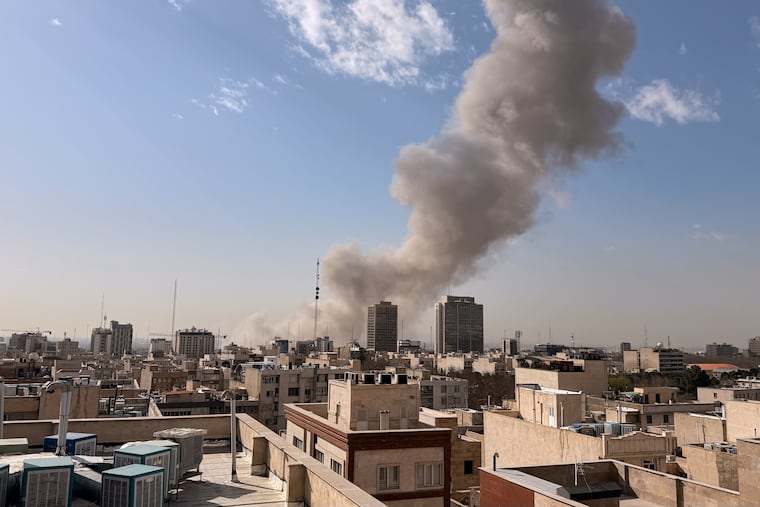
The Iranian elementary school building where scores of children were killed as the U.S. and Israel began their massive aerial campaign was on a U.S. target list and may have been mistaken for a military site, multiple people familiar with the strike told the Washington Post.
The deadly attack occurred in the first few hours of the U.S.-Israeli war against Iran — just as parents were hurrying to the two-story schoolhouse to take their kids home to safety — and killed at least 175 people, many of them children, according to Iranian state media.
It is still not clear why the building was hit, but one person familiar with the school strike said the building had been identified as a factory and had been an approved strike target. A second person familiar said an arms depot target was located in the same area and did not know if the United States hit the school by mistake, or if U.S. officials had the wrong intelligence and thought the building was the arms depot.
“Initially there was some confusion on why it was on the target list,” said a third person familiar with the strike. The individual would not go into further detail, citing the military’s ongoing investigation into the strike.
Israel has said it did not have a role in the strike, and two Israeli officials told the Washington Post that this specific targeting was not cross-checked or discussed with the Israel Defense Forces before it took place.
The Post spoke to more than a dozen people to report this story in the United States and Israel, including those familiar with the incident and the role of artificial intelligence in the Iran operations, all of whom spoke on the condition of anonymity due to the sensitivity of the issue.
On Wednesday, the New York Times reported that a preliminary Pentagon investigation into the strike found that the United States was at fault and that the incident may have been the result of using outdated targeting data. A U.S. official and a person familiar with the targeting confirmed to the Post that the initial investigation appeared to indicate that the school strike was conducted by the U.S. military. The mistaken strike was probably due to an intelligence error on the target location, the official said.
The school used to be part of an Iranian naval base and may still be affiliated with the Islamic Revolutionary Guard Corps Navy, but it had been walled off since 2015, and separate entrances were also added between mid-2015 and early 2016, according to a Post and expert analysis of satellite imagery. There is an outdoor play area that appears on Google Earth as early as 2017.
The complex’s layout changed again in 2022, when additional walls separated what is now a medical clinic from the other surrounding buildings, satellite imagery shows. The locations of the school and clinic adjacent to — or even within — the larger IRGC compound do not make them legitimate targets, experts have said. Human Rights Watch has called for a war crime investigation on the attack.
It is unclear whether there were casualties at the medical clinic.
At a Pentagon news briefing Tuesday, Defense Secretary Pete Hegseth alleged that schools in Iran were being used to launch attacks.
“The mullahs are desperate and scrambling,” Hegseth said. “Like the terrorist cowards they are, they fire missiles from schools and hospitals, deliberately targeting innocents.”
In a follow-up request for comment on Hegseth’s claim that Iranians are firing missiles from schools, his office referred the Post back to the secretary’s briefing remarks.
On Sunday, new video of the strikes posted to social media appeared to show a Tomahawk cruise missile — a munition fired by the U.S. Navy — strike a building near the school, according to eight munitions experts who reviewed the footage.
President Donald Trump suggested Monday without evidence that Iran itself may have attacked the school with Tomahawks. “But whether it’s Iran or somebody else, the fact that a Tomahawk — a Tomahawk is very generic. It’s sold to other countries,” Trump said.
Only a handful of allied nations have Tomahawk cruise missiles; Iran is not among them. Israel also does not have Tomahawks in its arsenal.
The attack has drawn international condemnation and is raising questions as to how the school ended up being struck — and whether the United States’ and Israel’s use of AI in this conflict had a role. Both countries have leveraged the technology to mass process intelligence and identify potential targets, enabling their militaries to destroy thousands of sites in just days of the ongoing operations.
Israel has conducted more than 6,000 strikes on 3,400 targets, an IDF official told the Post. U.S. Central Command, which oversees U.S. military operations in the Middle East, had hit 5,500 targets as of Wednesday.
According to five people familiar with the issue, both the Israeli and U.S. militaries are using Palantir’s Maven to conduct operations. Maven is a battlefield intelligence platform. The U.S. version is powered in part by Anthropic’s AI, Claude.
The head of Centcom, Adm. Brad Cooper, said Wednesday the United States is “leveraging a variety of advanced AI tools” to conduct the strikes.
“These systems help us sift through vast amounts of data in seconds, so our leaders can cut through the noise and make smarter decisions faster than the enemy can react. Humans will always make final decisions on what to shoot and what not to shoot, and when to shoot,” Cooper said. “But advanced AI tools can turn processes that used to take hours and sometimes even days into seconds.”
Hegseth was asked about the strike on 60 Minutes on Sunday.
“Well, we’re still investigating, and that’s where I’ll leave it today,” he said. “But what I will emphasize to you and to the world is that, unlike our adversaries, the Iranians, we never target civilians.”
Hegseth’s office referred questions about the school strike and whether AI had a role to U.S. Central Command. Centcom declined to comment, citing the pending investigation.
‘A terrifying sound’
At least 175 people, including scores of elementary-school-age children, were killed in the attack on the Shajarah Tayyiba elementary school in Minab, Iran, on Feb. 28, the day the United States and Israel began war operations across the country.
The strike took place around 10:45 a.m. local time, the governor of Hormozgan province told the semiofficial Iranian news agency Tasnim — around an hour after the U.S. and Israel commenced bombing and missile strikes.
Satellite imagery taken around 15 minutes earlier shows no damage to the complex. Videos showing multiple columns of smoke billowing near a military base in Minab, in Iran’s south, began to circulate on social media by noon.
Abdollah Karyanipak, 41, had arrived at the school around 11:20 a.m. after receiving a call 10 minutes earlier asking parents to come pick up their children. He said he was waiting outside the front door for his two young children, watching one of the teachers call other parents, when the attack began.
“We heard a terrifying sound. It was the sound of a missile, I don’t know exactly what it was, and it hit the school,” Karyanipak said in a phone interview conducted in the presence of a local media organization with government ties.
Karyanipak, who identified himself as a government worker in a municipal office, said the force of the blast knocked him off his feet and sent him flying back through the air. Five or 10 seconds later, there were two more blasts, he said. In all, Karyanipak said he heard three or four large explosions. At least four plumes of smoke are visible in a video of the immediate aftermath filmed near the school’s entrance and verified by the Post.
As he stood up, dazed, Karyanipak noticed he could not hear anything and his forehead was covered in blood. “I went back toward the school entrance, but it wasn’t there anymore. It had collapsed.”
Karyanipak said he climbed through rubble to try to reach students trapped on the second floor but could not help them down. “There were three of the girls up there crying, covered in blood. There was also fire,” he said.
Parents and rescuers dug for hours through the rubble of the first floor. “Not a single one of the kids we pulled out was alive. Their bodies were torn apart and burned,” he said.
Karyanipak was unable to find his sons, ages 7 and 8, in the debris. He was later called in to a morgue, where his older son’s body was intact, but he identified the younger boy only by the shoes he had been wearing. His body was unrecognizable.
AI-generated targets
As both militaries prepared for the start of operations, the United States and Israel spent “thousands of hours” identifying sites to strike and building massive target lists, the IDF has said. Many of those locations were generated from Israeli intelligence, two people familiar with the planning — one Israeli and one American — told the Post.
On the U.S. side, the Defense Intelligence Agency maintains a target database, containing thousands of potential enemy locations, each of which is assigned a “basic encyclopedia,” or BE, number. Each target is assigned an agency that is responsible for maintaining and updating information and intelligence for that specific BE number. In this case, it was probably either the responsibility of Centcom’s intelligence staff, known as J2, or the DIA to make updates, said another person familiar with the military’s targeting process.
Centcom has many DIA analysts embedded within it to support operations, but the sheer volume of data and targets that were moving through the database could have overwhelmed that staff, the person familiar said.
Teams of intelligence analysts work from large datasets of potential military targets that go back years, and conditions that change on the ground may not be noticed or documented, a U.S. defense official said.
Hundreds of additional locations were added to the target set in the weeks right before the attack, but it is not clear if the school was among those, said another person familiar with the planning.
While Israel has said it did not conduct the strike, it is not clear whether intelligence Israel provided to the United States to identify targets had a role.
“We’ve checked multiple times and have found no connection between the IDF and whatever happen[ed] in that school [in Minab],” IDF spokesperson Lt. Col. Nadav Shoshani told reporters in Israel on Sunday.
On the U.S. side, targets for Operation Epic Fury were identified by Palantir’s Maven Smart System — a sophisticated military planning tool that takes in data from surveillance, logistics, sensors, and intelligence, and can create a dashboard for commanders to inform their decisions.
As planning for a potential strike in Iran was underway, Maven suggested targets, issued precise location coordinates, and prioritized those targets according to importance. The pairing of Maven and Claude has created a tool that is speeding the pace of the campaign, reducing Iran’s ability to counterstrike and turning weeks-long battle planning into real-time operations, two people familiar with its use told the Post. The AI tools also evaluate a strike after it is initiated.
It is unclear to what extent this system is being used to conduct U.S.-Israeli joint operations, however, or whether the primary system being used is the U.S. version, which uses Claude to process classified information and is currently the subject of a lawsuit between Anthropic and the Trump administration.
Anthropic has insisted that it must maintain guardrails over Claude’s use, forbidding the technology from being used in fully autonomous weapons or domestic mass surveillance. The administration has said that Anthropic’s objections constitute a “supply chain risk” and is in the process of replacing Claude with rival AI tools in its networks.
In a lawsuit filed Monday, lawyers representing Anthropic argued that “within hours of the Challenged Actions, moreover, the Department reportedly ‘launched a major air attack in Iran with the help of [the] very same tools’ that are ‘made by’ Anthropic and are the subject of the Challenged Actions,” citing media reports.
Both Anthropic and Palantir declined to comment for this article.
Vetting the list
In U.S. military operations, targets — whether generated by AI or by other methods — require vetting and sign-off by humans. There is a long-standing process by which targets get nominated, reviewed by legal advisers, and approved for strike, a former senior defense official told the Post. That approval is usually done at the three-star-commander level but could go higher depending on a target’s sensitivity.
It is as yet unclear who ultimately approved Shajarah Tayyiba elementary school as a target.
The United States for decades developed plans and targets for a potential war with Iran, a former senior defense official told the Post, cautioning against leaping to the conclusion that the school strike involved Maven or generative AI. “If it [the facility] wasn’t already on a target list, I would be surprised,” the former official said.
But given the speed and scale of Operation Epic Fury, those older targets may not have received updated vetting, according to three people familiar with how the U.S. military’s vetting process works. The United States has been surging analysts to vet targets as the ground conditions rapidly change.
“I’ve been pretty vocal since early Maven days that feeding current and accurate data into your model is your biggest challenge,” said retired Air Force Lt. Gen. Jack Shanahan, who led the Pentagon’s early efforts to integrate AI into its war fighting in 2017.
“As the tempo of the war increases, and the pressure to find more targets increases, there have to be checks and balances in place to ensure that the targets being nominated for strike are legitimate targets, and you can catch any mistakes that might lead to civilian casualties and collateral damage,” said Shanahan, who is now an adjunct senior fellow at the Center for a New American Security think tank. “That’s what targeteers are paid to do.”
“It’s tragic this happened. And it shouldn’t happen again. And anybody who thinks AI is going to magically solve the fog and friction of war is lying to you,” Shanahan said.