Susie Wiles, White House chief of staff, has breast cancer, Trump says
The longtime confidant of President Donald Trump will continue to work while she receives treatment, the president announced Monday.
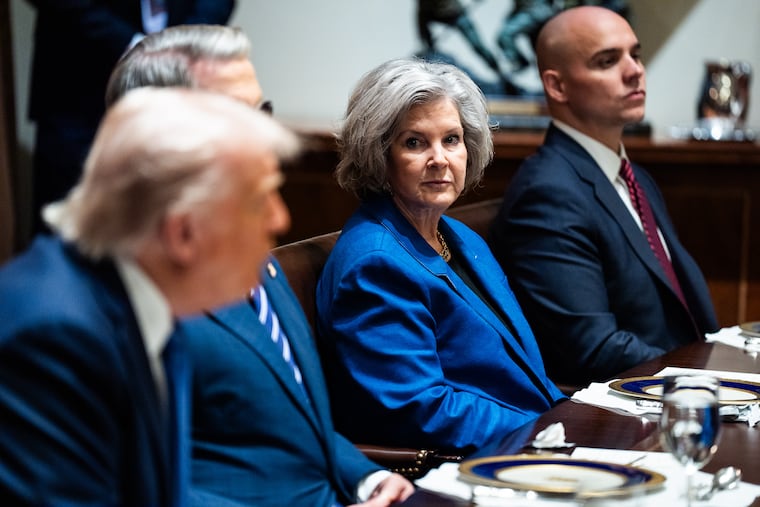
Susie Wiles, the White House chief of staff and a longtime confidant of President Donald Trump, has been diagnosed with breast cancer, the president announced Monday.
“Her prognosis is excellent,” Trump said in a statement about Wiles, 68. She will continue to work while she receives treatment, he said.
Wiles, a longtime Florida-based political strategist, helped Trump win the state in 2016, a key pickup in his successful bid for the White House that year. After Trump lost the 2020 election and seethed about his diminished political fortunes, Wiles managed his victorious 2024 presidential campaign and has served as his chief of staff since January 2025.
Wiles has described her role as empowering Trump’s agenda, rather than serving as a check on his impulses, a break from some past chiefs of staff who have said that their most important role was saying no to the nation’s leader.
She has also described Trump as having “an alcoholic’s personality,” saying he “operates [with] a view that there’s nothing he can’t do. Nothing, zero, nothing,” among several comments that were published in a pair of Vanity Fair articles that drew national attention last year.
White House officials quickly defended her, and Wiles said that the articles took her comments out of context. Trump said that she had done a “fantastic job” and would remain his chief of staff.
Beyond Trump, Wiles has advised or managed the political campaigns of other prominent Republicans, including Florida Gov. Ron DeSantis and Sen. Rick Scott of Florida.
She also served as a lobbyist at Ballard Partners, an influential firm that has represented many major corporations with business before the Trump administration. Wiles left Ballard Partners in 2019, citing health issues.
She is a daughter of Pat Summerall, a former football player and TV announcer.
Wiles’s announcement comes as some healthcare advocates have warned that the Trump administration’s efforts to tighten federal spending on healthcare, such as by declining to extend some Affordable Care Act subsidies last year, could harm access to preventive cancer screenings.
A bipartisan group of lawmakers last year introduced a bill to eliminate copays and out-of-pocket costs associated with breast cancer diagnostic tests. The legislation has been stalled in Congress.