Head of Pa.’s civil rights agency to resign as Gov. Shapiro launches inquiry into agency’s spending
The governor has asked Chad Dion Lassiter to resign, and four other senior officials have left the Pennsylvania Human Relations Commission in recent weeks.
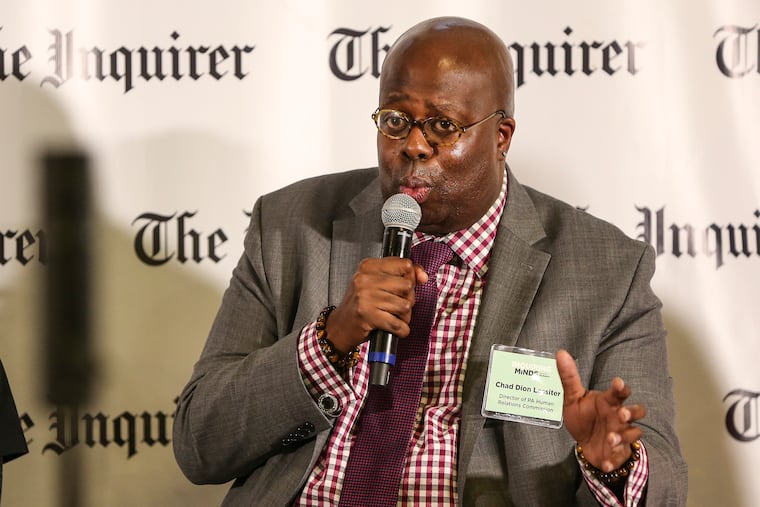
Gov. Josh Shapiro has asked the head of Pennsylvania’s civil rights enforcement agency to resign amid an investigation into how it has been spending tax dollars, The Inquirer has learned.
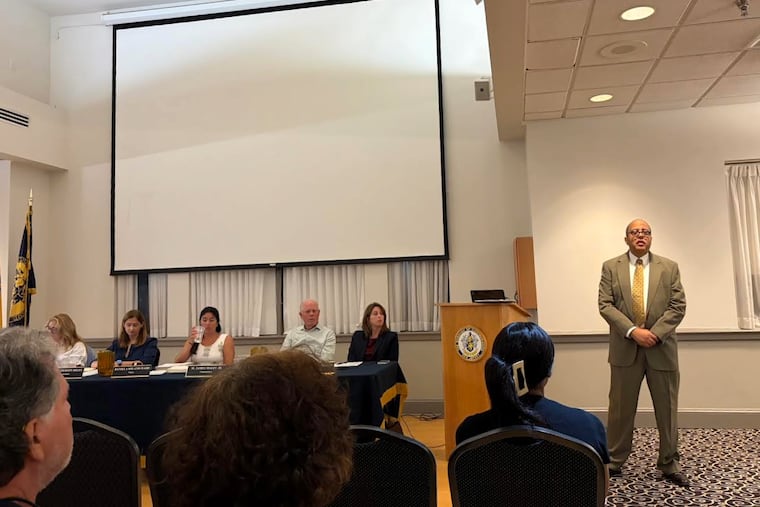
Chad Dion Lassiter, 53, who has led the Pennsylvania Human Relations Commission since 2018, submitted his resignation letter to Shapiro earlier this month and plans to leave the office by June 30, according to a copy of the letter obtained by the news organization.
Lassiter, in his letter to Shapiro dated April 7, said the governor’s Feb. 23 request for him to step down “without a conversation with me, or ‘due process’ left me deeply hurt.”
Rosie Lapowsky, a spokesperson for Shapiro, declined to comment on what prompted the governor to request Lassiter’s resignation.
Lapowsky said in a statement that the governor’s Office of Administration is reviewing the agency’s recent purchases. Some spending at the agency, including purchasing cards, has been suspended amid that inquiry, which remains ongoing, she said.
She declined to answer additional questions about the probe.
Lapowsky said the governor does not have the power to hire or fire PHRC leadership because it is an independent agency. Only its commissioners, who are appointed by the governor and confirmed by the state Senate, have the power to remove or replace the executive director, she said.
Shapiro’s administration, she said, “fully supports PHRC’s mission and the important work they do to enforce civil rights laws.”
Lassiter, in a phone interview Friday, said the resignation request came after concerns were reported to Shapiro about PHRC’s attempt to spend $20,000 on two tables at a Philadelphia NAACP awards ceremony in February. Lassiter was being honored by the organization with the President’s Award.
Purchasing tables at major events is a standard practice for his office, he said. After concerns were raised, he said, the payments to NAACP were not made.
Lassiter and his colleagues still attended the event.
“It was a hit job,” he said, of his ouster. “There has been a movement to remove me as executive director at the PHRC over the last two years.”
He said he plans to continue working until June 30 to ensure a smooth transition for the office.
Lassiter’s planned departure follows the resignations of four other senior officials at the agency in recent weeks. He said the timing was unrelated.
The commission’s chief of counsel and executive procurement officer resigned earlier this month, sources said. Then, last week, chairman Joel Bolstein stepped down after nearly three decades with the agency. Another long-tenured board member, Raquel Yiengst, who joined the commission in 1978, resigned on Tuesday.
News releases announcing the chair members’ departures did not give reasons for the resignations.
Amanda Brothman Jumper, a spokesperson for PHRC, said in a statement that she could not discuss personnel or operational matters, and referred questions to the governor’s office.
PHRC, founded in 1955, is responsible for investigating thousands of discrimination complaints filed in the state each year. It has subpoena power, and employs dozens of investigators and attorneys who investigate, mediate, and resolve potential civil rights violations in places of employment, housing, education, and accommodations.
The commissioners who oversee the agency are appointed by the governor. None of the remaining five could be reached for comment.
In a news release this week, the commission acknowledged that the resignations could pose immediate challenges. With six of 11 commissioner positions vacant, it would not have the required quorum for upcoming meetings.
“When the Commission cannot meet, Pennsylvanians seeking justice may face harmful delays,” Desireé Chang, a deputy director at PHRC, said in the release. “The risk of delayed or postponed decisions is real.”
Lassiter said he stood by his work, saying he turned around a troubled agency over the last eight years.
He was appointed to lead the commission in 2018, and since then, has expanded outreach efforts, promoted anti-racist programming, and launched a “listening tour” in 67 counties to address the rise of white nationalism, according to his government page.
A graduate of Olney High School, Lassiter obtained a master’s degree in social work from the University of Pennsylvania, where he co-founded what he described as the first Ivy League Black male group of social workers at the School of Social Policy & Practice. He is now a national commentator and public speaker on race and civil rights issues.
Former President Joe Biden tapped him to serve on a federal advisory commission for Black Americans in 2023.

The Inquirer’s journalism is supported, in part, by the Lenfest Institute for Journalism and readers like you. News and editorial content are created independently of The Inquirer’s donors. Gifts to support The Inquirer’s high-impact journalism can be made at inquirer.com/donate. A list of Lenfest Institute donors can be found at lenfestinstitute.org/supporters.