This Chesco neighborhood worries Villanova’s new campus could make their student renter issue worse
A cohort of student houses have caused residents headaches for years, and they want more action from Villanova University, Tredyffrin officials, and police.
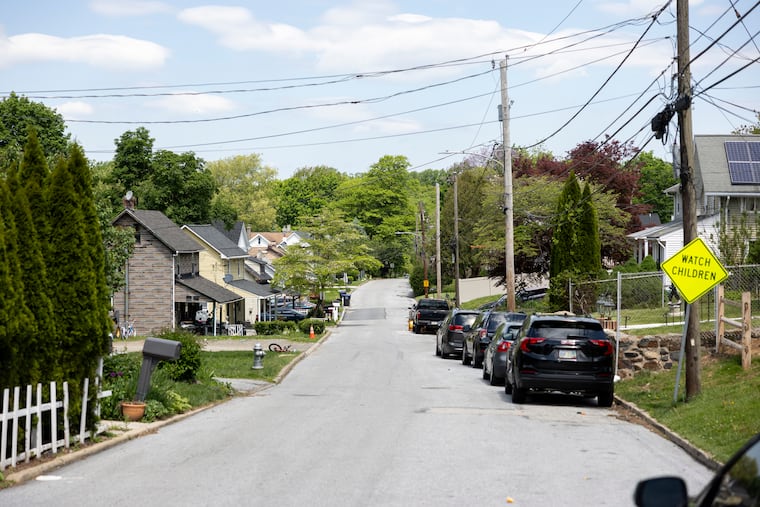
On a residential block in Tredyffrin Township, neighbors have walked out in the morning to find vomit on their cars, beer cans speckling their street and yards, and even a college student passed out on a porch.
It’s been a yearslong issue for the neighborhood on Mount Pleasant Avenue, home to young families, lifelong residents, and aging seniors — plus several households of rotating Villanova University college students who bring in dozens of other guests.
“When it comes time to party, there is no control,” said Tom Traun, 77, who has lived in the neighborhood for 50 years. Traun said students have also urinated outside in the yards and street, and there’s been loud noise and music stretching into the night. “How were they raised?”
A handful of neighbors who live up against the student houses have said the issue has been ongoing, ebbing and flowing depending on the students who come to live among them. Though there have been positive interactions — and residents say they understand being young and partying — the quality of life issues have begun to take their toll, coming up at recent municipal meetings and warranting police service calls.
They worry about grandkids playing in the street and rideshares whizzing through en route to parties that can start at noon and continue well into the night and early morning. When that happens, they say they’re kept awake by loud music, or drunk students mistakenly stumbling to their doors. In the mornings, assorted refuse remains.
It’s not an unfamiliar scene in communities where students live off-campus, playing out in neighborhoods across the country. In Pennsylvania, a number of municipalities have enacted limitations around student housing, and universities have sought to ease tensions with reminders to be “good neighbors,” particularly when it comes to loud noise and trash.
But with Villanova University opening its new 112-acre Cabrini campus off Upper Gulph Road this summer, residents are worried problems could get even worse. With the campus even closer to the neighborhood, now students will be in walking distance to the houses and parties, residents said.
They argue that it warrants a stronger hand from township officials, police, and the university. Those officials say they’re doing what they can to address issues when they learn of disruption. Township officials have met with the neighbors in recent months and say they are looking at how to strengthen their ordinance that imposes restrictions on renting to students.
“It’d be just nice to have an orderly life, and none of the neighbors really care about if the students are here, and want to have a relaxing time, party and stuff, but when it gets out of hand and it gets noisy and there’s beer cans everywhere, then the quality of life comes in,” Traun said. “We just want some quiet, some order, some respect.”
The historically Black neighborhood started to change about 20 years ago, when developers began purchasing available homes for rentals, Traun said. People who grew up on the block don’t recall many issues with the early student renters, but say it’s gotten worse over the years.
At least seven houses are rented to students, several along Mount Pleasant, a few on nearby Henry Avenue, township officials said. Another house where students live isn’t zoned properly, which the township has been trying to address, officials said.
Police Capt. Tyler Moyer, who has been on the force for about 21 years, said there were times where he was on the street every weekend. Last year, the department began sending an officer to the houses as the school year started, warning students preemptively that they could be cited for noise complaints or underage drinking if calls came in.
This year was quieter — officially. Since last August, police have responded to six service calls, Moyer said. They issued four noise violation citations.
But there’s more that goes unreported. Some of it is fatigue, after years of dealing with it, residents said. Several of the residents said they pressed their neighbors to report parties that loudly persist into the evenings, but say some hesitate to involve police. Moyer said he’ll learn of incidents at supervisor meetings that hadn’t been reported, and has urged the neighbors to call when incidents arise.
Tredyffrin adopted a student housing ordinance more than a decade ago in response to concerns. The measure limited household occupancy to three students and prohibited the houses from being too close together, though the properties along Mount Pleasant were grandfathered in. It gives the township some leverage for enforcement, said Bill Martin, Tredyffrin township manager.
It’s somewhat limited: The township can fine the owners of the homes but that holds little deterrence for students, Martin said. The township’s solicitor is working on language that could beef up the ordinance, but nothing is before supervisors yet, he said.
Right now, the most “teeth” comes from police enforcement, he said.
As the university prepares to open its new campus, there’s been active collaboration between the township and school, Martin said.
In a statement, a spokesperson for the university said that Villanova has been working closely to address concerns.
“Students are subject to the University’s Code of Student Conduct whether they are on- or off-campus, and the University follows up on all reports it receives from local municipalities,” the spokesperson said in a statement.
Some community members have tried to bridge the gap themselves.
Kevin Stroman, 70, grew up in the neighborhood. Though he no longer lives there, he runs a mentoring program at the historic Carr School/Mount Pleasant Chapel, across the street from one of the student houses. Each year, he said he knocks on the door, gathers the students up and reminds them it’s a residential neighborhood. He’s done the same for other “problem” houses, even putting together a meeting at the chapel one year.
“When the parents aren’t getting on them, the college is not getting on them, the police are not getting on them, and then you got the neighbors, and all we can do is make a little fuss, but there’s not a lot we can do,” he said.
Danielle Galloway, 52, wants to see the township impose more guardrails on the landlords.
She grew up on the street, with her extended family living in houses along the block. Her mother, 80, still lives in the neighborhood. She’s nervous for her 9-year-old grandson to play on the street, like she did when she was a little girl.
“The ordinance needs to be rewritten. It needs to be rewritten because the homeowners need to take responsibility of who they’re renting to,” she said. “It needs to say, ‘Oh, well, if you want to rent to students and there’s issues and citations, then you’re going to be suspended from renting.’ Take away this money and see how things work out for them.”
At an April township meeting, supervisor Carlotta Johnson-Pugh said she’d met with residents who felt they weren’t being treated the same as others in Tredyffrin.
“I don’t know what more can be done to stop — I’m just going to say — the madness of kids. Believe it or not, yeah, I was a college kid at one time," she said. “But they seem to just be out of hand.”

Want to get Inquirer Chester County straight to your inbox every week? Sign up here for our guide to the news, stories, and events shaping life in your community.
This suburban content is produced with support from the Leslie Miller and Richard Worley Foundation and The Lenfest Institute for Journalism. Editorial content is created independently of the project donors. Gifts to support The Inquirer’s high-impact journalism can be made at inquirer.com/donate. A list of Lenfest Institute donors can be found at lenfestinstitute.org/supporters.