Cumberland County skill game executive pleads guilty to money laundering, tax fraud
A Mechanicsburg man, who worked as a compliance officer for a skill games company, accepted hundreds of thousands of dollars from illegal gambling machine operators.
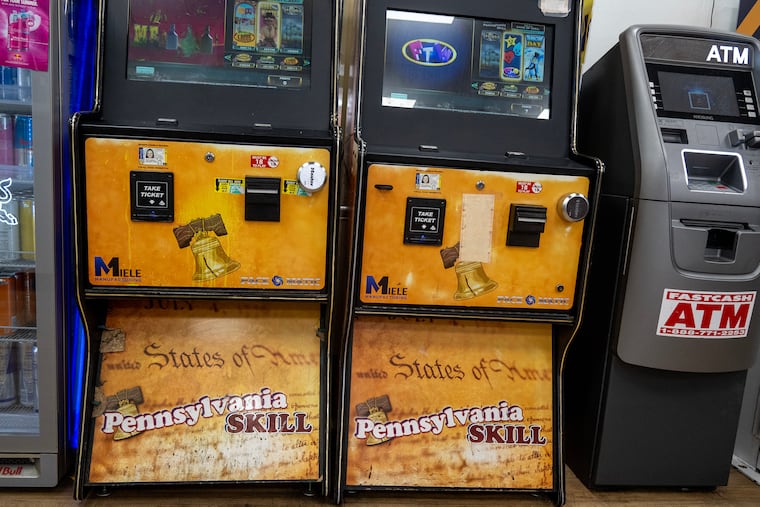
A skill game industry executive who took kickbacks from illegal gambling machine operators throughout Pennsylvania pleaded guilty this week in Cumberland County to money laundering.
Ricky Goodling, an ex-state police corporal and former national compliance director for Pace-O-Matic, contributed to the “disorganized and problematic” skill game market when he accepted hundreds of thousands of dollars in exchange for quashing complaints about illegal gaming machines, Attorney General Dave Sunday said in a statement.
Goodling, 59, of Mechanicsburg, also pleaded guilty in federal court to evading more than $100,000 in taxes after falsely claiming the proceeds of the scheme were business travel expenses, according to the U.S. Attorney’s Office in Harrisburg.
» READ MORE: Inside the escalating feud between the Pa. Senate GOP and a skill games company
An attorney listed for Goodling in court records declined to comment.
Pace-O-Matic said in a statement that it was “deeply troubled” by Goodling’s guilty plea. “We are also troubled to know that he violated our trust and intentionally harmed our business interests,” the statement reads.
According to Pace-O-Matic’s statement, law enforcement has assured the company that it is “not involved in or connected with any of the actions of Mr. Goodling, and they have characterized Pace-O-Matic as a victim of these crimes.” The company terminated Goodling’s employment in November 2023 when it learned of the investigation.
The powerful and controversial skill game industry has operated largely by its own rules in Pennsylvania for more than a decade, allowing the slot machinelike devices to proliferate in bars and gas stations across the commonwealth.
» READ MORE: As Pa. gets closer to regulating skill games, these lawmakers say they’re being subjected to an intimidation campaign
Skill games operate in a legal gray area: Courts have ruled that the so-called skill component distinguishes them from games of chance, like slot machines. The state Supreme Court is now weighing the machines’ lawfulness.
The biggest player in the skill games market, Georgia-based Pace-O-Matic, has claimed for years that its machines are the only “legal” skill games — and spent millions of dollars on campaigns and lobbying for favorable regulation and lower tax rates.
While some lawmakers want to ban the machines outright, arguing they attract crime and can be addictive, others see it as a potential new revenue stream. Last year, Gov. Josh Shapiro proposed taxing the machines at 52%, which the industry quickly rejected. In his latest budget, the governor said that regulating skill games, coupled with legalizing cannabis, could generate $2 billion annually.
» READ MORE: Taxing skill games could help fund SEPTA. Here’s what to know.
Illegal gambling enterprises have sought to commingle their machines with Pace-O-Matic’s legal games, in an attempt to give their products a veneer of legitimacy and deflect law enforcement scrutiny, according to an October 2024 state grand jury presentment. Goodling acted as their ally, facilitated straw purchases of Pace-O-Matic games, and laundered the money through a fictitious company, prosecutors said.
Goodling is scheduled to be sentenced April 28 in the state case.