A new regional EMS authority, funded by property owners, could be coming to some Delco towns
The Delco Emergency Services Authority or Delco ESA for short, would cover Media, Nether Providence, Upper Providence, Rose Valley, Rutledge, and Swarthmore.
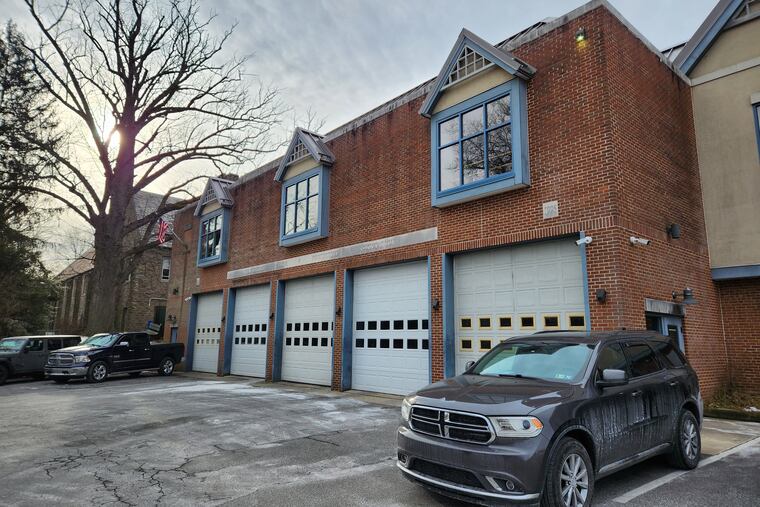
Six Delaware County towns are working together to create a regional EMS authority that would charge annual fees to property owners in hopes of creating financial stability for a service that provides advanced life-support care.
The proposal is expected to be presented to residents this month.
The Delco Emergency Services Authority, or Delco ESA for short, would cover Media, Nether Providence, Upper Providence, Rose Valley, Rutledge, and Swarthmore.
The authority is being heavily modeled on the Municipal Emergency Services Authority of Lancaster County, according to Max Cooper, a Nether Providence supervisor and former Crozer emergency department physician. Cooper is a member of the new authority’s working group.
While the specifics of Delco ESA’s fee structure are still being worked out, they could resemble that of MESA, which covers about 46,000 residents, compared with about 40,000 in the six Delaware County towns. MESA is charging a yearly fee of $87 per household in 2026, up from $85 in its first two years of operation. Fees go only to the property owners, so it is up to landlords whether to pass the fees on to tenants.
MESA also bills insurance carriers for ambulance rides, but residents are not expected to pay any residual fees unless they don’t have insurance. It is not yet clear if Delco ESA would have a similar agreement.
The municipalities that would be covered by Delco ESA have been left to fund EMS care on their own after Crozer-Chester Medical Center closed in May 2025, Cooper said. Nether Providence, Rose Valley, Rutledge, and Swarthmore partnered on an advanced life-support unit in August 2025.
“One of the key goals in creating this authority is to create more stable and predictable funding, while maintaining the same high level of service our residents have come to expect,” Cooper said.
The authority’s working group also hopes to decrease response times, Swarthmore Mayor and Fire Chief Conlen Booth said, though plans are not yet finalized.
Organizers plan to share more information at a series of public forums, with the first planned for the end of April. Delco ESA is planning to launch a website with basic information soon.

Inquirer Greater Media
What’s the difference between a fee and a tax?
Delco ESA would directly bill residents and other property owners, rather than municipalities funding the authority via taxes.
Because it’s a fee and not a tax, nonprofit organizations that are usually tax-exempt will be required to pay.
“Right now all the residents are paying for EMS via property taxes,” Cooper said. “The new mechanism will allow it to be paid over a broader number of people. And so it will cut their individual cost.”
In Lancaster County, Elizabethtown College pays MESA based on the number of resident students. Swarthmore College could face a similar agreement with Delco ESA.
With local taxes no longer funding emergency medical services, can residents expect to see a reduced tax burden?
“We need to increase taxes every year to keep up with inflationary pressures … to keep up with cost-of-living increases,” Cooper said of Nether Providence. “By shifting this money off the backs of the municipalities and onto an authority, we’ll probably be able to increase to a lesser degree. The specifics are really hard to say.”
Officials from Swarthmore, Upper Providence, Rose Valley, and Media also said it is too soon to say whether their residents could expect to see a tax cut when the authority begins operating.
Rutledge Council President Jody Roberts said officials have no plan to cut taxes once Delco ESA is up and running. He noted that the town did not have to raise taxes to fund the advanced life-support unit that started in August 2025.
The municipalities themselves will have to pay Delco ESA a fee based on the square mileage of their roads to cover the authority’s costs of responding to incidents such as traffic accidents, Cooper said.
Municipalities could also elect not to join the authority as the process continues.
How did the Delco ESA get started?
The idea for an EMS authority started even before Crozer-Chester Medical Center and Taylor Hospital closed.
“These are things that we were talking about broadly as Crozer was announcing bankruptcy and there was months of ‘Will they/won’t they close?’” Cooper said. “With all that instability, we were doing our due diligence and having conversations about ‘What if this?’ and ‘What if that?’ and laying the groundwork for multiple possible scenarios.”
Cooper was part of the effort to stand up the advanced life-support unit in the area in the wake of the hospitals’ closures in May 2025.
With that complete, conversations switched to creating a larger advanced life-support authority.
Media and Upper Providence were not part of the original conversation because of the short amount of time in which they had to create the original unit, Cooper said.
“We were keeping [Media and Upper Providence] in the loop and talking about how this is a moment to potentially work toward a broader regional coalition,” Cooper said. “After we had met that initial, very time-crunched deadline to stand up the ALS [advanced life-support] service, we really rapidly transitioned into a larger conversation about setting up an emergency services authority.”
Using MESA in Lancaster County as a model
MESA of Lancaster County was born out of the nonprofit Northwest EMS, which was facing deficits of up to half a million dollars a year, according to Debra Dupler, a MESA board member and Mount Joy Township supervisor. Officials knew they had to do something, she said.
“There’s a problem in the insurance industry,” Dupler said. “They cover a fraction of the cost of the [ambulance] call. So that difference has to be made up somewhere.”
Discussions started in 2018 on how to bridge the funding gap. Northwest EMS asked the municipalities they served if they could increase their funding over the next three years, but not all of them were able to commit. So they had to look for a new solution.
“A core group of township managers or supervisors gathered together to say, ‘Hey, what can we do?’” Dupler said. “Northwest EMS was the driver behind this, saying we don’t want this to go away.”
That group did some research and came up with the idea of forming a regional authority. The result was MESA, which was founded in 2023 and began operations in February 2024. It runs 24-7, 365 days a year, covering about 46,000 residents and 8 square miles. About 90% of its budget goes to paying its 64 team members, Dupler said.
“We knew at first we were going to get some pushback from the community,” Dupler said about instituting a fee structure. “And there’s always a handful who are louder than others on Facebook.”
Some residents have come around, according to Dupler.
“That has significantly, significantly reduced in these two years,” Dupler said.
Not only has the authority won over some residents, but like Delaware County, others in the state and around the country are taking notice.
MESA representatives have talked to officials in Butler and Westmoreland Counties and fielded a call from as far away as Washington state.
“If we had to do it again, we would do it again,” Dupler said. “It’s not a choice, it’s not, ‘Should we or should we not do this?’ We need this service.”