In response to RFK Jr.’s ‘autism registry,’ Gov. Josh Shapiro won’t let Pa. share disability data with the federal government
Shapiro signed three executive orders Wednesday to increase data protections for people with intellectual disabilities and create a new commission focused on Pennsylvanians with disabilities.
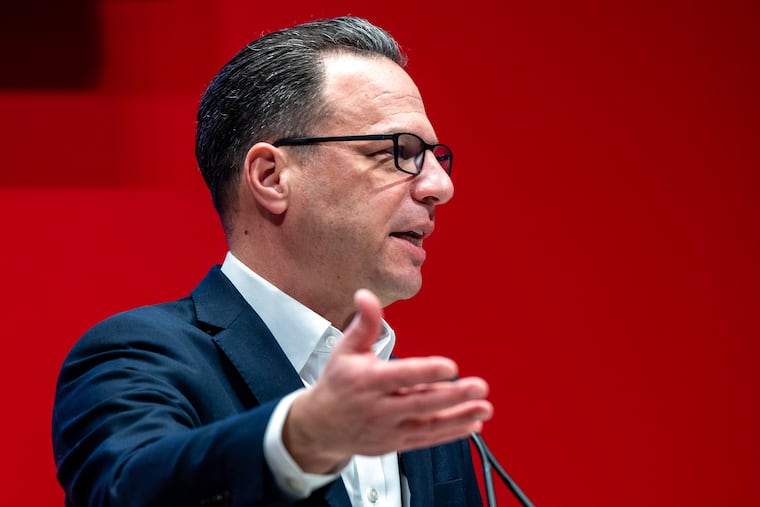
HARRISBURG — Pennsylvania will not share disability data with the federal government under an executive order signed Wednesday by Gov. Josh Shapiro.
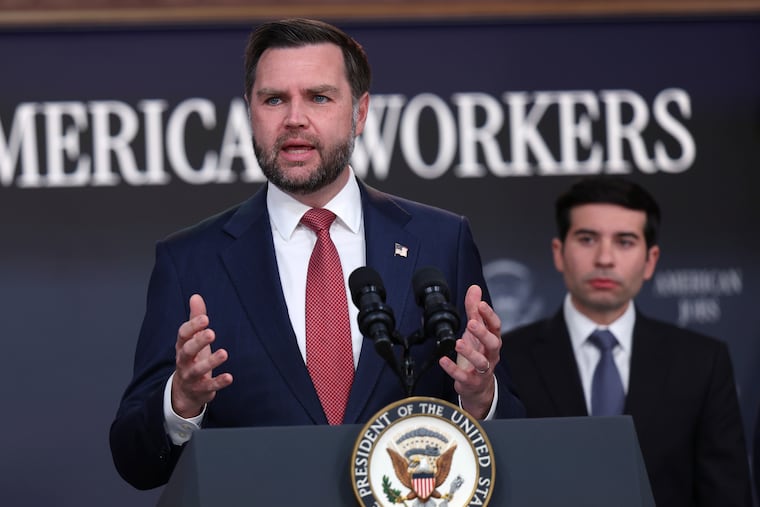
Citing Health and Human Services Secretary Robert F. Kennedy Jr.’s effort to use Medicaid and Medicare data to determine the cause of autism, Shapiro directed Pennsylvania not to participate unless required under federal law.
Kennedy’s so-called autism registry announced last year sent shock waves through the autism and intellectual disability community with fears that it would stigmatize, marginalize, or track people with autism with the intention of eliminating the disorder.
Kennedy announced the database as a pilot program between the National Institutes of Health and Centers for Medicare and Medicaid Services to use insurance claims, medical records, and data from smartwatches to find the “root causes” of the disorder, with plans to expand the data tracking to other chronic disorders.
Shapiro’s executive order — which was one of three signed Wednesday — adds data privacy protections for people with intellectual disabilities and autism and prohibits state agencies from sharing data not required by federal law.
“Sadly, right now in our nation’s capital, we have a president and a secretary of health and human services who openly disregard and disrespect and mock people with disabilities,” Shapiro said in a news conference ahead of the executive order signing. “We’re different here in Pennsylvania. … We believe in building a government that is compassionate, thoughtful, and creates safe and loving spaces for all.”
Shapiro said the Department of Health and Human Services requested the data from the state last year and Pennsylvania did not comply. The order formalizes that policy.
Kennedy has a history of anti-vaccine rhetoric, and he sparked criticism from medical professionals last year when he ordered the Centers for Disease Control and Prevention to drop its long-standing position that vaccines do not cause autism, the New York Times reported in November.
“The whole thing about ‘vaccines have been tested and there’s been this determination made’ is just a lie,” Kennedy claimed at the time. “The phrase ‘Vaccines do not cause autism’ is not supported by science.”
Shapiro joined a multistate lawsuit against President Donald Trump’s administration earlier this year after the CDC removed its childhood vaccine recommendations for a slew of illnesses.
A spokesperson for HHS rebuffed Shapiro’s executive order in a statement, adding that the National Institutes of Health initiative is intended to “advance our understanding of autism.” The data used by NIH researchers is de-identified, and the spokesperson compared its tracking efforts to those of a national cancer registry that dates back to the 1970s.
“These efforts are not about tracking individuals whatsoever,” said Emily Hilliard, the press secretary for HHS. “All NIH-managed databases follow the highest standards of security and privacy, with the protection of personal health information as a top priority.”
New Jersey keeps its own state-level registry of children diagnosed with autism spectrum disorder, which requires healthcare providers to register anyone under the age of 22 that they diagnose to be able to access critical resources.
New Jersey parents can choose to have their child listed anonymously, even if they were originally reported by name, and the registry will not share identifiable data with federal agencies, according to the New Jersey Department of Health.
Shapiro also created a new Governor’s Advisory Commission on People with Disabilities, which will advise him and his administration on policies related to people with disabilities, including those with intellectual disabilities, developmental disabilities, and autism.
The third executive order codifies changes already made at the federal level in the Intellectual Disabilities Council, which is created and funded by the federal government but operated by the Pennsylvania Department of Health and Human Services.
Shapiro was lauded by intellectual disability and autism advocates Wednesday, who cited their fears of federal overreach and increased surveillance of their communities that are already marginalized and misunderstood.
“I worry about being openly autistic in these times. I worry a lot that people may not understand me or they might judge me because of the fact that I’m autistic,” said Tom Bak, 26, a musician who graduated from West Chester University last year. “It’s very important to me that people with autism are treated equally.”
Sherri Landis, the executive director of the Arc of Pennsylvania, said the governor’s new advisory commission will help identify gaps in accessibility and “shift perspective from viewing disability as a limitation to recognizing it as a natural and valuable part of human diversity.” It is the seventh advisory commission operated by the state, all of which are made up of volunteer members and paid staff.
Improving government services for people with intellectual disabilities and autism has become a priority for Shapiro and his wife, Pennsylvania first lady Lori Shapiro. Shapiro has boasted a 31% decrease in the emergency waiting list for services for adults with intellectual disabilities and autism, down from 4,600 people to 3,191, according to Shapiro’s office.
He also helped raise rates for direct-support professionals, who often are paid low wages for the physically demanding roles of caring for people with significant intellectual disabilities.
But people with intellectual disabilities and autism still face an uphill battle to obtain resources in Pennsylvania, said Mark Davis, the president and CEO of the Pennsylvania Advocates and Resources for Autism and Intellectual Disabilities (PAR), as rates require annual increases to attract and retain quality care professionals.
A study conducted by PAR and other disability advocacy groups released this month found that direct-support professionals serving these communities have a 41% turnover rate and an 18.2% vacancy rate.
“If you don’t make regular investments, then you’re always fighting uphill,” Davis said. “When we have manageable turnover and we have zero vacancies, then we’ll know we’ve reached homeostasis in the market.”