30 miniature horses are for sale in Gettysburg this weekend. Here’s what’s involved in owning one.
Everything at Land of Little Horses animal theme park must go as the 55-year-old park closes.
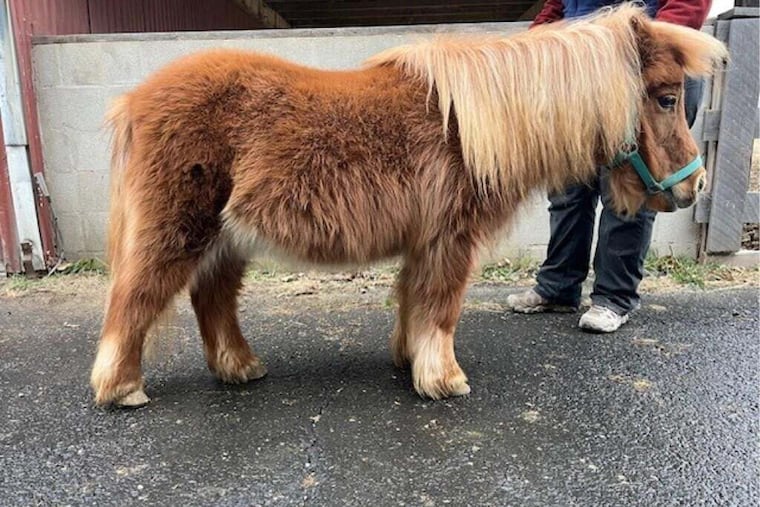
Everything at Land of Little Horses animal theme park in Gettysburg must go this weekend. That means tractors, picnic tables, porta potties, and about 30 miniature horses.
Sparkle, Pumpernickel, Russel’s Majestic Princess Gingerbread, Summer Wish, Shortcake, and the others will head for greener pastures at the Saturday morning auction, which will mark the end of the 55-year-old park.
In December, the park owners announced on social media that they’d decided to retire and close the facility, which hosted horse shows, trail rides, and grooming activities. They declined to be interviewed for this story.
Selling horses, let alone miniature horses, is a first for auctioneer Larry Swartz.
“We have had strong interest from really across the nation, even a breeder from Hawaii has reached out,” Swartz said.
(If you’re wondering if a mini horse can be transported on an airplane, it can, Swartz said.)
Swartz predicts one particular miniature horse, an 11-year-old chocolate mare with a bald face, to fetch the highest price.
“Cameo was the star of their show here,” Swartz said. “We expect her probably to be the high seller.”
Not only does she have distinctive markings, she can wave, smile, untie, lay down, and sit.
As of Wednesday afternoon, she was already going for $3,550 in the online prebidding which started Feb. 14 and ends when the live auction starts Saturday at 10 a.m. at the Gettysburg farm at 125 Glenwood Dr. The auction will also be available to view on livestream. Swartz expects each miniature horse to sell for around $2,000 to $3,000.
The origins of miniature horses in the United States may date back to the 1800s, according to the American Miniature Horse Association, a Texas-based nonprofit that sets regulations and compiles registries of miniature horses around the country and world.
The horses were originally brought over from Britain to assist in the mining industry for hauling wagons of coal, said Valerie Shingledecker, the association’s operations manager. The United States now has around 100,000 of them, according to the association’s registry.
Texas, California, and Florida have the largest number of association-registered miniature horses in the country as of this month. States along the Appalachian Mountain range, where much 19th-century coal mining activity was concentrated, have the next-highest number. Pennsylvania has the fifth-largest population of association-registered miniature horses at about 3,800.
Can you own a miniature horse?
In recent decades, miniature horses are more commonly seen at petting zoos and in horse shows performing tricks, like pulling people in wagons.
They can also be kept as pets. In Philadelphia, residents can apply for a license to own a horse if they have a stable or one quarter acre of land per horse, according to a 2013 law. If residents have neither, they can still keep one so long as they have fewer than three horses in the same space and submit an equine veterinarian-approved exercise plan for the horses.
Most importantly manure must be disposed of every 24 hours.
Under the Americans with Disabilities Act, a miniature horse can function as a service animal for people with disabilities. Facilities covered by the ADA are required to adopt policies detailing where and when service miniature horses are permitted. Facilities may elect to not allow them inside if they’re not housebroken.
If you’re interested in owning one, get ready for a long-haul commitment, Shingledecker said. These horses “cannot exceed 34 inches in height at the withers as measured from the last hairs of the mane,” according to the American Miniature Horse Association. They’re about a quarter the size of a regular horse and can live for over 30 years. However, they’re “easy keepers,” she said, meaning they don’t require a lot of food — about $2 of hay a day or $730 a year.
They also need vaccines and have to have their feet trimmed every six weeks by a farrier, but they don’t need horseshoes.
All in all, Shingledecker estimates one miniature horse costs about $1,500 a year to take care of.
Though they’re generally well-behaved, it’s important to remember they’re still animals with their own set of defense mechanisms.
“It is a horse, it’s not a dog,” she said. ”They can kick and they can bite if they were not socialized well. Don’t put them in the house.”
If they become afraid, they’ll either run, kick, or bite, Shingledecker said. “On the whole, they’re very friendly, very easy to work with.”