Narberth has become one of Montco’s priciest housing markets. Local officials hope to bring down the heat.
Narberth’s borough council is slated to consider a handful of zoning changes aimed at spurring affordable housing development and revitalizing downtown.
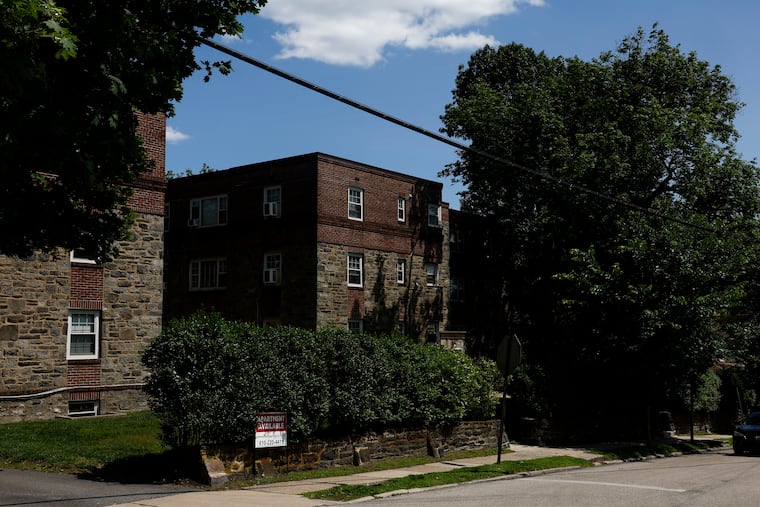
How do you make Narberth more affordable?
That’s the question at the heart of an ongoing zoning discussion in the small borough, which has become one of the most expensive places to buy a home in Montgomery County in recent years.
Narberth’s borough council is set to consider a handful of zoning changes in May aimed at spurring affordable housing development and downtown revitalization. The proposed changes, drafted by the borough’s planning commission at the council’s request, range from shifting residential lot size requirements to allowing developers to build taller apartments if they include affordable units. The proposed changes are restricted to two areas in Narberth — a strip of Montgomery Avenue and a ring around the downtown core.
Proponents say the changes, designed to increase the number and type of housing units available, would bring down market costs and make Narberth a viable home for a more diverse set of residents — not just high earners and longtime homeowners. Yet the proposals may face pushback from residents, some of whom are wary of zoning changes in their town.
What are the proposed zoning changes?
Narberth’s planning commission has recommended a handful of code amendments in two zoning districts: 4a, the higher-density residential area that surrounds the downtown core, and 5b, the commercial mixed-use corridor along Montgomery Avenue.
The 4a district is made up of a mix of residential properties, including single-family homes, twin homes, and apartments.
Currently, a developer looking to put an apartment building in the area would need to get a conditional-use permit and conform to a specific set of rules, including building one parking space per residential unit (plus visitor parking) and capping a building’s height at 35 feet, or three stories.
Under the proposed changes, developers would be able to build apartments, cottages, and rowhouses in the 4a zone without a conditional-use permit. The commission recommends allowing all housing types to have at least two units (a two-family townhome on a single lot, for example) and permitting developers to build up to 45 feet (or four stories) if they set aside 10% of units as affordable. Those units would be reserved for any household making 80% or less of the county’s area median income ($95,500 per year for a four-person household).
The commission has also suggested easing parking rules, reducing the requirement for apartments and multifamily houses from one spot per unit to 0.7 spots per unit, so long as the building participates in SEPTA’s residential pass program. Recommendations also include eliminating visitor parking requirements for apartments and allowing developers to provide parking on another lot within 900 feet of the building.
Reducing parking requirements is not a “one-size-fits-all approach,” said Adam Krom, the planning commission’s chair.
Krom emphasized that the requirements would be minimums and said they would open the door for developers who may want to build but feel hamstrung by the current, more stringent parking rules. Renters generally own fewer cars than homeowners do, Krom said, and some apartment-style dwellings, like senior housing, might not need a one-space-per-unit lot.
“We’re just trying to have the law provide the flexibility,” Krom said at a recent planning commission meeting.
The 5b district, the second district under consideration for zoning revisions, encompasses a small strip of residential and commercial buildings along Montgomery Avenue. Currently, developers there can build mixed-use buildings with housing over commercial space, and buildings can rise up to 45 feet with three stories.
The planning commission recommends allowing a mix of housing and commercial space on a building’s ground floor (currently, only commercial space is allowed on the ground floor), and allowing four stories within the 45-foot height limit. The commission also recommends allowing developers to add a fifth story if 10% of the units are reserved for affordable housing.
Similarly to 4a, the commission recommends reducing the base parking requirement to 0.7 spots per unit.
Krom said the planning commission started with the two higher-density districts in hopes of finding opportunities for growth in places where apartments and mixed-use buildings are already allowed. The commission may study some of the borough’s other zoning districts going forward.
The full list of zoning change recommendations can be found here.
Why amend the zoning code?
Borough leaders emphasized housing affordability.
“Narberth used to be relatively affordable, and that’s no longer the case,” Fred Bush, president of the Narberth Borough Council, said.
The median sales price of a home in Narberth rose from $569,750 in 2014 to $751,000 in 2023, a 32% increase. Sales prices increased by only 5% in Lower Merion and 19% in Montgomery County in the same time period. The borough’s median sales price dropped to $595,000 in 2024.
Average monthly rents in Narberth rose from $1,134 in 2000 to $2,028 in 2023, according to the borough.
The vitality of Narberth’s downtown is also at stake, proponents say.
The borough’s downtown does not have the same regional pull as neighboring Ardmore, whose Suburban Square and Lancaster Avenue stores draw in shoppers and diners from across the Philadelphia area.
Increasing the number of people who live within walking distance of downtown Narberth will create a larger customer base for the borough’s businesses, keeping Narberth economically viable, proponents said.
Growing Narberth’s housing stock would also grow the borough’s tax base, distributing the tax burden across a larger number of residents. Advocates say this would help keep taxes stable for existing residents while making it easier for the borough to pay for public services.
What comes next?
The council is set to consider the recommendations at its May 21 meeting, but the proposed changes may face an uphill battle.
At a planning commission meeting last week, residents raised concerns about the proposed changes to parking requirements, among other issues. During a feedback exercise at an open house last month, some attendees scrawled “NO MORE DENSITY” on Post-it notes.
“Many, many people feel like it’s unclear how [the 0.7-space-per-unit parking minimum] relates to a little borough like Narberth that’s fully built out and doesn’t have a lot of street parking available,” borough council member Joe Straton said at the planning commission meeting.
It would be different if people could easily access their jobs on foot, Straton said.
“But that’s kind of not how Narberth is set up,” he added.
Some have expressed concern that SEPTA’s shaky outlook makes it unreasonable to build units around transit. (Krom contends that a full SEPTA collapse would wreak havoc on the Main Line that would stretch far beyond the construction of transit-oriented apartments.)
The borough is taking public feedback through a housing affordability survey, open until March 22.

Inquirer Lower Merion
This suburban content is produced with support from the Leslie Miller and Richard Worley Foundation and The Lenfest Institute for Journalism. Editorial content is created independently of the project donors. Gifts to support The Inquirer’s high-impact journalism can be made at inquirer.com/donate. A list of Lenfest Institute donors can be found at lenfestinstitute.org/supporters.