Penn Vet is eyeing a composting facility for dead animals in West Marlborough
The New Bolton Center Hospital is in the preliminary stages of a proposed composting facility to sustainably dispose of its deceased patients.
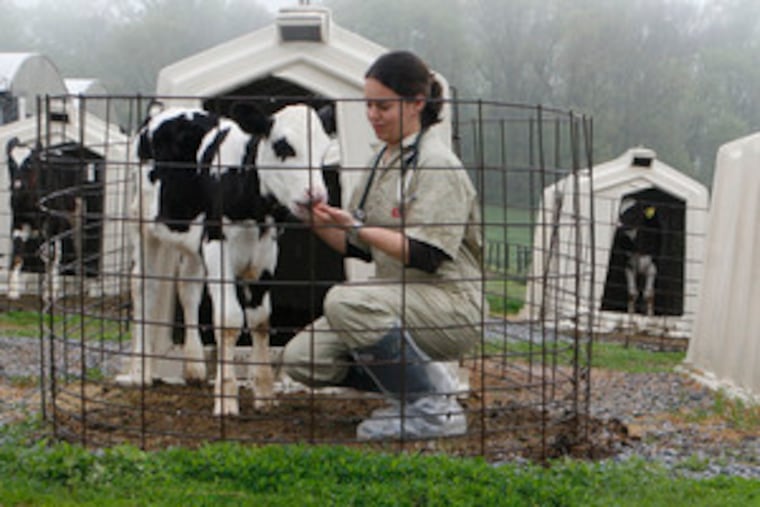
Where there are live animals, there are eventually dead animals. It is a situation with which New Bolton Center Hospital, the animal hospital at University of Pennsylvania’s School of Veterinary Medicine and one of the largest teaching vet clinics in the country, is acutely familiar.
And as the clinic’s caseload grows for large animals — and thereby, the fatalities it must grapple with — the safe disposal of the bodies has become essential. With somewhat limited options and an eye for sustainability, the animal hospital, which sees more than 6,000 patients a year, is now looking to build a composting facility on its 700-acre property in Chester County.
“If I had my magic wand and could just make it so that animals go poof and disappear, that would be fantastic,” said Aliza Simeone, assistant professor of clinical infectious diseases and biosecurity at the New Bolton Center. “But unfortunately, we have to actually deal with the realities of it.”
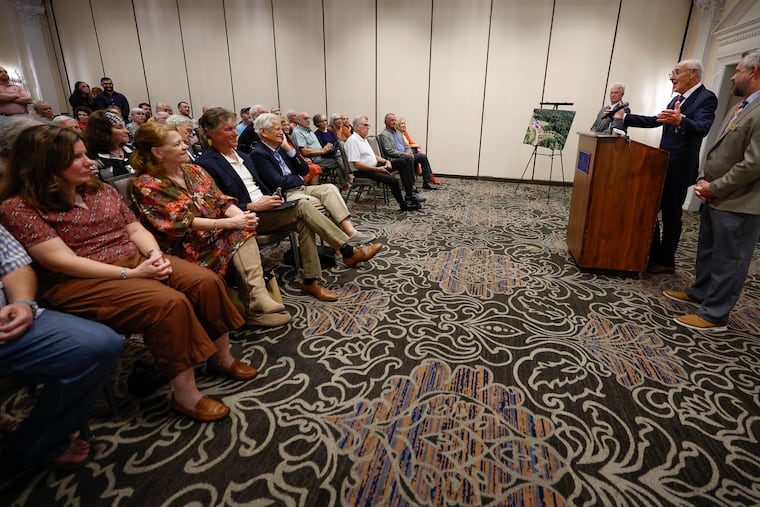
Conversations are still preliminary, as the center hasn’t yet submitted a conditional use application to build in West Marlborough Township. But it began discussions with the municipality’s leadership earlier this year and held a forum for residents last week to broach the concept.
Residents have had a mixed response to the proposal, officials said, with concerns ranging from smells to disease transmission to land contaminants. Some people who live nearby are vets, so there’s a “high degree of knowledge” about the center, said Bill Wylie, the chairman of the municipality’s board of supervisors.
“Our township is largely agricultural. It’s very rural, and we understand that there’s a need for this kind of thing, and the location they’re proposing would be about as remote as it could be,” Wylie said. “We really don’t believe that there’s going to be much in the way of noise, excessive light, or smell. It’s all a very clean operation.”
The facility would be located in an airport district, near a small private airport in New Garden, which affects things like building height and electronic devices, and warrants the conditional use application, Wylie said. It would be on land that is currently agricultural.
Simeone said the center is penning a Hazard Analysis and Critical Control Points plan to address critical areas. But this process isn’t new or unusual: Mortality composting is a recommended way of livestock disposal in the state, and is regulated.
“We are trying to deal with an existing problem in the best way that we can. We’ve been good stewards of this land for a long time, and we want to continue being able to do that and being good stewards of the land, being good neighbors as well,” Simeone said.
“This is going to be spread on land that contains our own wells and the wells that our own livestock drink from. So we really want to make sure that we’re doing it properly,” Simeone said.
The plan is not an outdoor pile with whole animals degrading over time. Rather, the center would build a 6,900-square-foot facility — with a concrete floor, walls, and a roof — where it will break down the remains of its deceased patients, which spans horses, cows, sheep, goats, alpacas, llamas, pigs, and the occasional camel.
Eventually the composted material would become fertilizer the center would use on its own acreage.
The first two phases of the process would take roughly 30 days apiece, and the resulting product wouldn’t be used on the campus for at least six months, alternating 50% of the fields each year.
Staff would be able to control the airflow and moisture levels, limiting odor. A majority of pathogens would be killed through use of heat. Specific temperatures would have to be reached, monitored, and recorded each day, along with specific pH and moisture levels for the composting process to continue.
Animals with certain diseases, such as prion or transmissible spongiform encephalopathies, that couldn’t be neutralized in the composting process would be disposed of through incineration, as they currently are, and wouldn’t be composted.
The animal hospital won’t be making any profit from the enterprise. It’s just a better way of dealing with the fatalities, Simeone said.
“Even though it’s the most natural thing that’s been going on forever, we are going to really push the science of it to optimize the process,” she said. “We’re going to try and work with our microbes to give them the appropriate amounts of nutrients and moisture and air to do the best job possible.”
The New Bolton Center first began considering such a facility six years ago, but took it up more seriously in the past year, Simeone said.
As it stands right now, New Bolton has two options: dispose of the remains in a landfill or use a for-profit biomass recycling facility nearby. A majority of the carcasses are transported to that facility, but the center lacks control over that process, said Simeone, who previously worked at the Pennsylvania Department of Agriculture inspecting and managing licensing and approval for domestic animal mortality-disposal operations.
Relying on another facility comes with the risk that they could lose that disposal route if it were to close, Simeone said.
With that in mind, they thought, “We could do it here, and we have all of these sustainability specialists here who wanted to put their money where their mouth was, so to speak, and make a really state-of-the-art composting facility,” she said.
It comes as the center’s caseload has grown in tandem with the vet shortage for large animals. They’re seeing more and more cases come to them for primary care needs, she said. And though they hopefully can send most of those animals home alive, that’s not always possible, she said.
And the center deals with just about everything, she said. They see pet, show, miniature, and Amish working horses. They see pet, beef, and dairy cows. They see camels used for milk, or circus and zoo animals. Many come from Pennsylvania, but their location in Chester County also brings in people from around the region, including Maryland, New Jersey, Delaware, and New York. Some specialty cases come from further, Simeone said.
(Perhaps the most notable patient there was 2006 Kentucky Derby winner Barbaro. The racehorse suffered multiple leg fractures at the Preakness Stakes two weeks later and underwent several surgeries over several months, ultimately being euthanized.)
New Bolton also employs board-certified pathologists who run a diagnostic lab that takes in already dead animals to examine what happened. It’s part of protecting animals across the state and the food supply, Simeone said.
Last year, the center saw 437 animals die in their care and about 320 animals that came in for postmortem examination that also required removal. Between 10% and 20% of animals are privately cremated, but a vast majority falls to the center.
As they’ve begun introducing the concept more broadly to the community, Simeone said they’ve brought a bucket of fertilizer along to demonstrate the end result.
“If people can get beyond the kind of yuck factor of it, it’s just a really neat, natural way of recycling these animals, many of whom were loved by people, into something useful,” she said. “It doesn’t have to be something that we’re afraid of.”

Want to get Inquirer Chester County straight to your inbox every week? Sign up here for our guide to the news, stories, and events shaping life in your community.
This suburban content is produced with support from the Leslie Miller and Richard Worley Foundation and The Lenfest Institute for Journalism. Editorial content is created independently of the project donors. Gifts to support The Inquirer’s high-impact journalism can be made at inquirer.com/donate. A list of Lenfest Institute donors can be found at lenfestinstitute.org/supporters.