Belt tightening is under way for libraries, foster care, and more in Pa. as the budget sits unfinished
The budget is more than seven weeks late and there’s no sign of a deal in Harrisburg. That’s starting to mean cuts for funding recipients.
Spotlight PA is an independent, nonpartisan, and nonprofit newsroom producing investigative and public-service journalism that holds power to account and drives positive change in Pennsylvania. Sign up for our free newsletters.
HARRISBURG — With Pennsylvania’s budget more than seven weeks late, foster-care agencies, libraries, and many other state-funded services are making hard financial decisions.
On the ground, this has meant everything from a county’s libraries cutting online access to graphic novels and comics to foster-care agencies considering borrowing money.
The state budget doesn’t just lay out how much money Pennsylvania is going to spend on various programs — it authorizes that spending. While some payments must continue without a budget, like checks for state workers and the state’s share of federal programs like Medicaid, others go on hold until a deal is reached.
Budget impasses are not new. In 2023, it took lawmakers until mid-December to finalize a deal. But that year, members were at least able to agree on a plan in early August that laid out how much they would spend, and authorized most disbursals.
This year is different. It’s mid-August and there is still no sign of a deal as lawmakers remain divided on basic spending numbers.
Late last month, state Secretary of the Budget Uri Monson estimated in letters to affected service providers that Pennsylvania would have to delay at least $2.5 billion in planned payments in August and early September.
The majority of this is money for schools.
In July and August, Monson wrote, the Pennsylvania Department of Education did not send about $1.4 billion in basic education funding to K-12 schools, along with $255 million in special education funding and around $99 million in “federal subgrant payments.”
Career and technical institutions also missed out on payments, as did state-related universities, community colleges, and Pennsylvania State System of Higher Education schools. Early childhood education is also affected, thanks to payments not going to Head Start programs and delayed Pre-K Counts contracts.
Aaron Chapin, who heads the Pennsylvania Education Association, a union, said in a statement that these institutions “cannot afford to stand by waiting as kids head back to school.”
The education department’s missed payments affect libraries as well as schools.
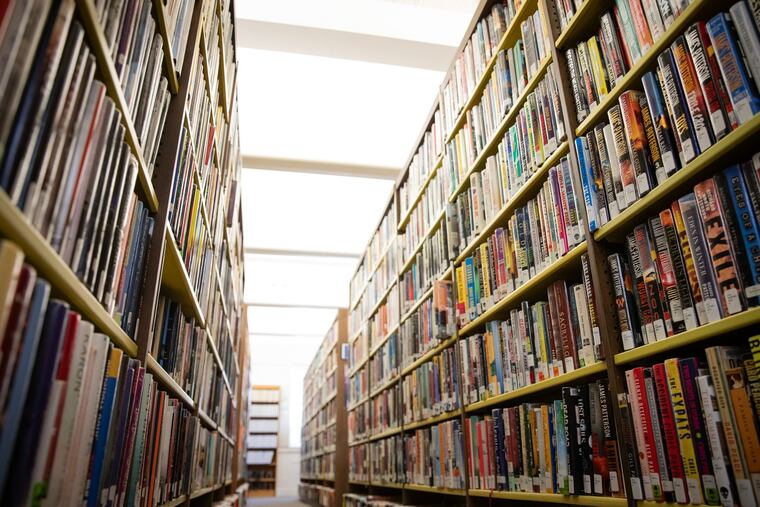
The roughly $14 million in library funding that has been delayed was specifically supposed to flow to Pennsylvania’s 29 library districts. Districts, in turn, pay for a lot of services that are used across networks of individual libraries. These include databases, which give people access to online books and other resources, and cataloging systems, which libraries use to track all their print and digital material.
Libraries may not be missing as much money as schools, but the delay really hurts, said Christi Buker, head of the Pennsylvania Library Association.
“Eighty-five percent of our public libraries in Pennsylvania are 501(c)(3) nonprofits,” she told Spotlight PA. “An accountant will tell you: A good nonprofit shouldn’t have too much in reserves, because you want to use the money in the mission. Even if they wanted to generate that amount of funding, you’ll find most public libraries run extremely lean.”
This means libraries cannot operate for very long while they are missing payments without making cuts.
Joe Sherwood, who heads the Chester County Library System, is already tightening the budget for the 18 facilities his district serves. The first two services he plans to not renew, he said, are a business database for library users called Morningstar and a database for customers to read comics and graphic novels.
He will have to pull money out of reserve to pay for other services whose renewal dates have already passed, including a language-learning program and a New York Times subscription.
He is also planning for worse cuts down the line.
Libraries typically receive two more big state payments toward the end of the year, and Sherwood has asked all the Chester County libraries to make a triage list of “what’s the most important to them. And if we have to cut things, well, we’ll start cutting from the bottom up.”
Sherwood noted his county is “hugely supportive” of its libraries — it pays for salaries, for instance. That’s not the case everywhere.
“The libraries know that it’s so unpredictable as to when [the budget will pass] that they can’t take risks,” Buker said. “They will start doing proactive cuts or reductions. They will wait to purchase new books. They will wait to purchase additional copies of materials. They will reduce programming … and they will not fill positions, if they have open positions.”
Many of the other programs waiting for state money are administered by counties.
These include Area Agencies on Aging, which connect older people with services; emergency medical services; homeless assistance; and county child welfare programs, which are missing a particularly high $390 million.
Foster-care services are within the affected programs. Terry L. Clark, president and CEO of the Pennsylvania Council of Children, Youth and Family Services (PCCYFS), said that the delay is already forcing agencies to decide whether to take out lines of credit or loans, and that it could be devastating for foster programs.
These agencies have contracts with counties to help place children with foster families. They also recruit families into the foster-care system, help them obtain clearances, train them on how to care for children in the system, and guide them in retrofitting their homes to host a child.
Once children are placed, the agencies are also responsible for monitoring foster families for any problems, and helping to coordinate mental health and other services a child may need.
The last time there was a protracted budget impasse — the nine-month budget standoff from 2015 to 2016 under Democratic Gov. Tom Wolf — the roughly 100 foster-care agencies PCCYFS represents borrowed $172 million to keep their doors open. They never recouped the interest they had to pay on those loans, since the state did not reimburse them for that money after the impasse ended.
Those that could not afford loans had to lay off staff or shutter their operations altogether.
This time around, the foster-care agencies’ financial situation is more precarious. Many are still recovering from the strain the pandemic put on their coffers. They are also dealing with skyrocketing liability insurance costs in the wake of high-profile child sexual abuse scandals in other, unrelated fields around the country, Clark said.
By the next missed payment at the start of September, smaller agencies with fewer reserves will likely have to borrow money or make difficult cuts.
“We are telling them, ‘Don’t wait until it gets worse. Research your options now,’” Clark said.
The nightmare scenario, should the impasse drag for months, would be foster-care agencies servicing fewer children, which would in turn balloon waiting lists for foster placements.
Clark said agencies will do everything to avoid that scenario. His organization has lobbied lawmakers in recent years to designate certain child services as essential so that providers can continue to receive funding for their work even during a budget stalemate.
So far, that has not happened. And there is little sign of a budget breakthrough.
Talks publicly broke down last week, with Republicans, who control the state Senate, passing a key transit funding plan and Democrats, who hold the House and governorship, summarily rejecting it.
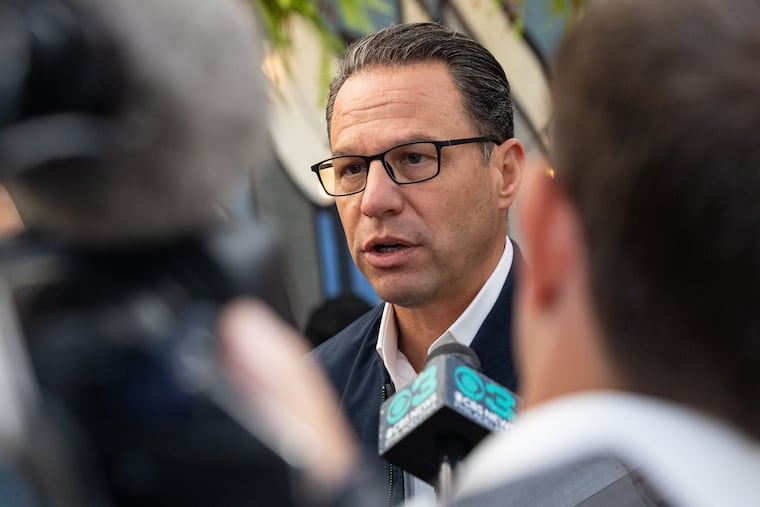
The deal was due June 30. Gov. Josh Shapiro says negotiations are continuing, but neither chamber is due back in Harrisburg this month.
BEFORE YOU GO … If you learned something from this article, pay it forward and contribute to Spotlight PA at spotlightpa.org/donate. Spotlight PA is funded by foundations and readers like you who are committed to accountability journalism that gets results.