Shapiro leaves Board of Pardons seat empty after concerns over member’s ‘inappropriate’ questioning
Outgoing member John Williams faced criticism from advocates after asking sexual questions and consistently voting no against pardons and commutations.

Spotlight PA is an independent, nonpartisan, and nonprofit newsroom producing investigative and public-service journalism that holds power to account and drives positive change in Pennsylvania. Sign up for our free newsletters.
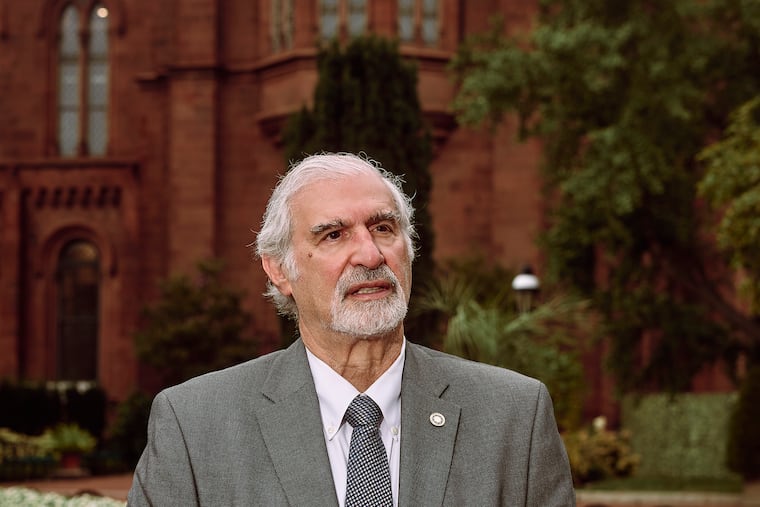
HARRISBURG — Gov. Josh Shapiro has not reappointed a longtime member of the Board of Pardons, a psychiatrist whom advocates have opposed for his votes against clemency applicants, lack of experience in criminal justice, and lines of questioning they find inappropriate.
John Williams, a child psychiatrist practicing in Montgomery County, has served on the board since former Gov. Tom Corbett appointed him in 2013. He was reappointed in 2019, under former Gov. Tom Wolf. His second six-year term expired in November, leaving a vacancy on the five-member body.
Williams did not return an email from Spotlight PA requesting comment.
A representative for Shapiro’s office said the governor is working with state Senate leadership to “restore the board to its full complement.”
Shapiro’s office would not confirm whether the governor may still nominate Williams. Spokesperson Kayla Anderson said, “No final decision regarding a nominee has been made at this time.”
The Board of Pardons makes the ultimate decision on both commutation and pardon applications from people who are seeking to either shorten a prison sentence or wipe clean a criminal history.
The board comprises two elected officials, the attorney general, and lieutenant governor, and three political appointees — a corrections expert; a medical doctor, psychiatrist, or psychologist; and a victim advocate.
Applications the board deems “meritorious” are given a public hearing, after which the body votes to either deny the application or approve it for the governor’s consideration.
While pardons are recommended by the board in a majority vote, life sentence commutations, which allow a person to get out of prison, require unanimous approval — just one no vote dooms an application.
Earlier this year, a coalition of pro-clemency groups organized the Commutation Now campaign to pressure Shapiro to replace Williams, who frequently voted against both commutations and pardons.
In a report released in June, the group criticized Williams for routinely asking “inappropriate questions reflecting ‘lurid curiosity.’”
During a public commutations hearing in September 2024, Williams asked a victim speaking against the applicant to give increasingly specific details about the sexual abuse he endured as a child. When the man wasn’t sufficiently specific, Williams pushed for additional details. After the questioning, he acknowledged the man’s discomfort.
There was no reason for the line of questioning, said Etta Cetera, a longtime board watchdog and member of the Commutation Now campaign. Williams’ single no vote would have been sufficient to deny the commutation, Cetera said, negating the need to put a victim through an invasive line of questioning.
“When you come into these cases, any of these cases for people with life sentences are extremely sensitive. Somebody lost their life, and in other situations, there was other abuse and even sexual violence involved,” Cetera said.
“And it’s irresponsible to not take seriously the trauma that comes up for people when these hearings happen. And the way that the psychiatrist questioned the victims is totally not trauma-informed.”
After a public pardons hearing in 2021, a viewer wrote to then-Lt. Gov. John Fetterman to complain about Williams’ conduct. The letter, which was also reviewed by Spotlight PA, expressed concern that “Williams questioned a pardon applicant about which sex positions he used during the commission of a decades-old sexual offense,” according to the report.
Williams then asked the applicant’s wife about her sex life with the applicant, including which sexual positions they used, the letter alleges.
Commutations interviews are not public, but attorneys interviewed for the Commutations Now study reported Williams consistently asked about an applicant’s sexual abuse “in excruciating detail,” and pursued invasive and humiliating questions.
Commutations Now hand-delivered the report to legislative leaders, including the state Senate Republicans who will have to confirm Shapiro’s new appointee.
The nomination must undergo two committee votes before the full chamber weighs in, said Kate Flessner, a spokesperson for state Senate Majority Leader Joe Pittman (R., Indiana).
Tobey Oxholm, who works with pardons applicants statewide, said in recent years the number of applications exploded, but the board held only nine days of hearings in 2025. The backlog of potential pardons keeps people with nonviolent felonies from working in roles the state needs, he said, such as home health, elder, and childcare.
“The crushing numbers really requires somebody who is a systems thinker as well as somebody who has experience with the populations that are coming before the board,” Oxholm said of the position.
The advocate community wrote a letter to Shapiro in October recommending David DeMatteo, an attorney and forensic psychologist teaching at Drexel University. State Sen. Maria Collett (D., Montgomery) wrote to the governor endorsing him as well.
In the meantime, the board will be able to proceed with four people, as four still constitutes a quorum for all votes.
But Oxholm questioned why the position was allowed to lapse.
When there are only four people on the board, a person seeking a pardon has a narrower chance to have their application receive the three votes they need to move on from their felony conviction, which can keep them from jobs and housing opportunities.
“This indicates that there isn’t a full appreciation by the governor and the senate about the importance of this position to individuals, families, and their communities,” he said.
BEFORE YOU GO … If you learned something from this article, pay it forward and contribute to Spotlight PA at spotlightpa.org/donate. Spotlight PA is funded by foundations and readers like you who are committed to accountability journalism that gets results.