A West Chester student's mural may be painted over, after the new owner requested its removal
The 2022 mural on the former Friends Association building is at the center of the question: Who owns public art?
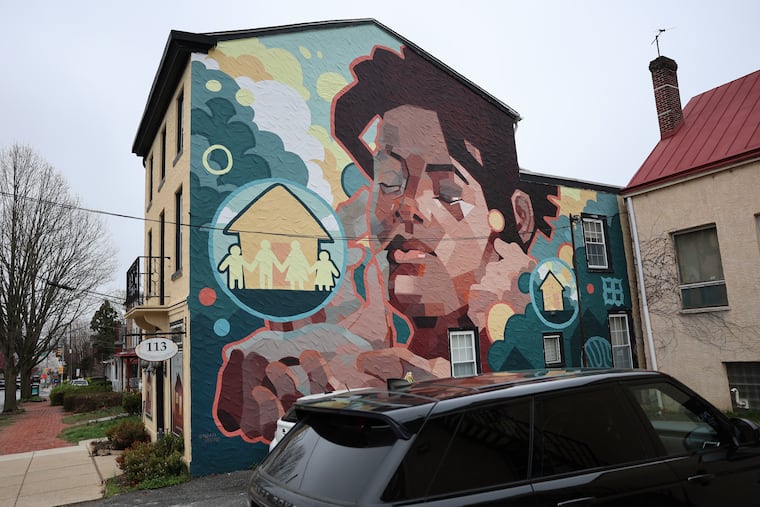
When Joyce Chester drives down Chestnut Street, as she does every day, she’s nervous, wondering: Is it still there? Has it been painted over yet?
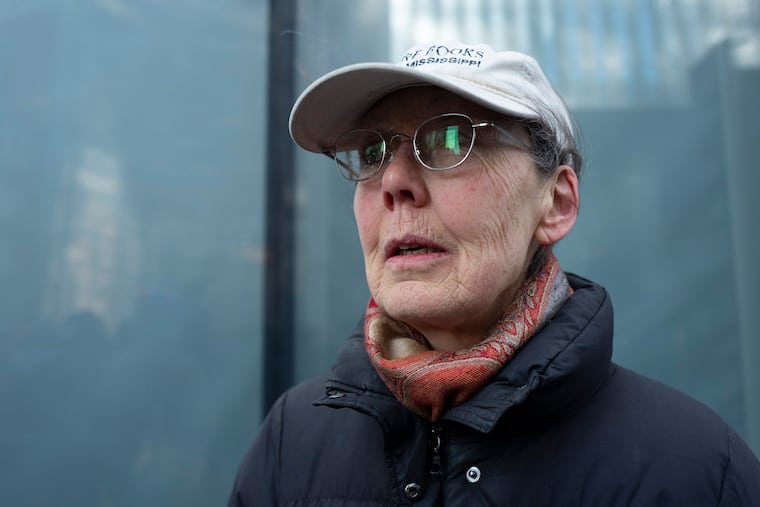
Chester, the Friends Association’s chief executive officer, is thinking about the vibrant mural that overlooks the street, as it has since 2022 after it was commissioned by the homelessness prevention organization. But Friends Association opened a new location earlier this year. And the old building’s new occupant is looking to have the mural, painted by West Chester University student Noah Burns, removed.
Chester said she has talked to the mayor and the borough council. Though there aren’t any imminent plans for its removal, the building’s new owner is exploring removing the mural, according to Hello, West Chester. There’s no ordinance protecting the artwork. It could be the first time the borough has ever dealt with a situation quite like this.
But as a private property, there’s little any public official would be able to do to preserve it if the new occupants decide they truly want it gone. (The mayor and borough’s Public Arts Commission did not respond to a request for comment. The new occupants could not be reached.)
It makes Chester sick.
“I really feel heartbroken about it,” she said. “The day they paint over it, I may be brought to tears, quite frankly.”

Want to get Inquirer Chester County straight to your inbox every week? Sign up here for our guide to the news, stories, and events shaping life in your community.
When the Friends Association moved, Chester worried that something like this could happen. But she felt there was no reason to paint over the vibrant rendering of a person’s peaceful face with an outstretched hand, framed by depictions of homes, that has looked over Chestnut Street for years.
“Once something goes up on a building like that in a community, it kind of belongs to the community,” she said.
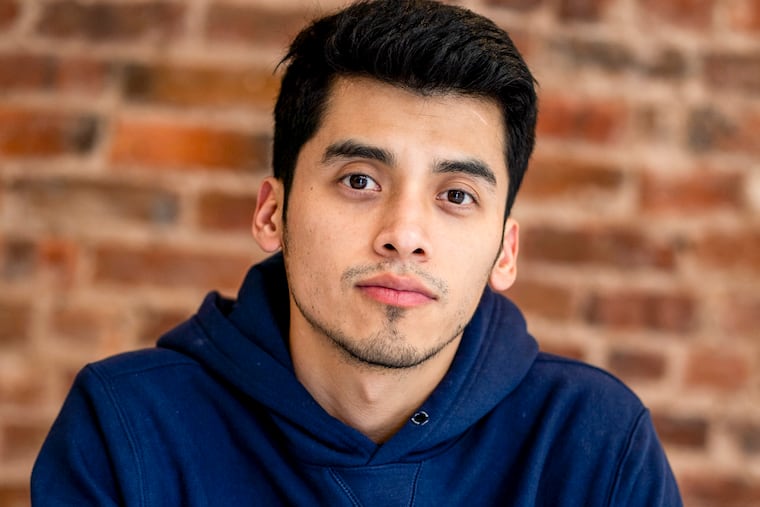
The Friends Association commissioned Burns ahead of his freshman year to paint the mural. Burns, who is now 23 and will graduate this year after studying art and design, grew up in the area. His high school teacher forwarded him the Friends Association’s call for art, and he decided to go for it.
The Friends Association was open to his artistic interpretation of the concepts of housing, compassion, and inclusivity. He spent one hot summer bringing the final design to life, something he found to be a more physical experience than sitting down and painting a canvas or working digitally.
The work was supported by the borough’s Public Arts Commission, helping with the call for artists and the application process. Its members, fellow artists, helped paint it that summer, too. It features on their website, and on West Chester University’s art department page.
It was cool and “definitely different” to do something on such a scale, and to see that work publicly displayed, Burns said. He moved to Philadelphia as he finished up his degree, and heard about the potential removal through his ties still in the community — his friends and family — and circulating social media posts.
“I’ve already gone through my stages of grief. I’m somewhere between denial and acceptance,” he said. “I want to try to fight for it, but I’m also semi-removed. I’ve been joking, it’s kind of serendipitous, I’ve removed myself from the space physically, and then any remnants of myself have been torn down.”
When the mural was first unveiled, Burns recalls saying in his remarks that a lot of young people in the area need to be seen and heard. He felt like the mural was the start of something like that.
“It’s less about the mural itself, more about what it means to the space. The mural can get taken down, as long as they put something up that carries that value in the space — I could agree with that," he said. “But just to paint over it, to give it the landlord treatment, I think that’d be something of a loss.”
This suburban content is produced with support from the Leslie Miller and Richard Worley Foundation and The Lenfest Institute for Journalism. Editorial content is created independently of the project donors. Gifts to support The Inquirer’s high-impact journalism can be made at inquirer.com/donate. A list of Lenfest Institute donors can be found at lenfestinstitute.org/supporters.