Critics of FDR Park’s renovation to appeal court decision after a blow to their case
Notably, the judge knocked down key points raised by residents. Points their attorney was to raise again in April with the same judge.
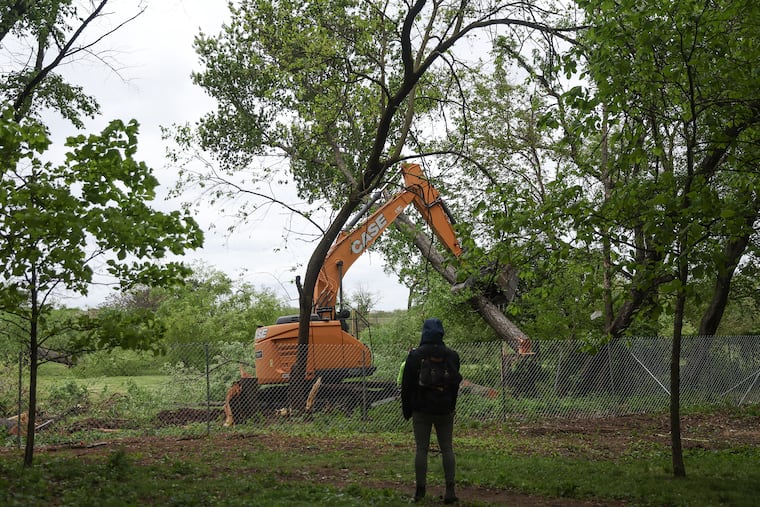
After a prolonged legal back and forth, South Philadelphia residents critical of a $250 million overhaul of their neighborhood’s FDR Park were finally scheduled to get their day in Orphans’ Court in April.
Here, they would finally be able to argue how they see the installation of 12 artificial athletic fields and the cutting of dozens of heritage trees as radical changes to the 348-acre South Philadelphia park, violating several state regulations. They’d hoped to sway a judge to permanently stop construction.
But the result of a recent hearing offered a major blow to residents as they geared up for trial. Orphans’ Court judge Sheila Woods-Skipper denied the group’s request to temporarily stop work on the park as the trial played out.
Notably, Woods-Skipper knocked down key points raised by residents, including their claim that the city was violating people’s rights to clean air, water, and the “preservation of the natural, scenic, historic and aesthetic values of the environment,” as detailed in Pennsylvania’s Environmental Rights Amendment.
Sam Stretton, the attorney representing the South Philly residents, planned to raise these points in April with the very same judge. He read the tea leaves in the opinion and did not like what he saw.
Stretton plans to appeal the decision this week, even if it pushes back his day in court and as the very construction his clients are fighting continues. Had the opinion gone slightly differently, with the judge siding with at least one of his arguments, Stretton said he might’ve gone straight to trial. But now, the lawyer said, there’s no reason to rush back to Woods-Skipper.
“Based on that decision, I think I have no choice,” he said. “She ruled against me on every major issue.”
Stretton plans to appeal the decision in Commonwealth Court, the latest twist in a lawsuit filed in March 2024. He has said he would appeal the case to the Pennsylvania Supreme Court if he has to.
Even so, he acknowledged that a drawn-out legal fight could result in much of the proposed work he’s opposing being completed by the time he gets his desired outcome, should he get it. But he’s looking for something bigger. He wants to prevent municipalities in Pennsylvania from moving forward with similar redevelopment plans without running them by Orphans’ Court first.
“Even though there might be just twigs out in FDR by the time we’re done, at least we’ll establish a precedent and then I’ll go back and order [the city] to replace the trees, dig up their artificial turf and everything else,” said Stretton.
Parks and Recreation, for its part, said Monday it was pleased with the court order.
“While the FDR Park litigation remains pending, the City is confident that the Master Plan is the best way forward for the Park’s ecological resilience and functionality,” said the department in a statement.
What makes a park?
From the start, Stretton has argued the city should have gone to City Council and Orphans’ Court to get approval for the proposed changes to the park. The plan includes an already completed playground and welcome center, along with six planned baseball fields, tennis and basketball courts, and various nature trails.
» READ MORE: FDR Park is about to unveil a reimagined entrance, but renovation challenges persist
At the heart of the legal battle is the controversial addition of 12 artificial turf fields in the footprint of a former golf course.
That golf course permanently closed in 2019 due to frequent flooding and because it couldn’t turn a profit. The closure came on the heels of the FDR Park renovation plan unveiling and framed the park overhaul as a much-needed intervention.
Parks and Recreation said average rainfall left sections of the park unusable for days because of frequent flooding and that flooding would only worsen because of climate change.
At the time, the plan was largely well-received.
Yet as the golf course returned to a wild state during the pandemic, the space grew in popularity with dog owners, hikers, and bird watchers. Soon, they nicknamed the space “the Meadows.” As it became clear the space was destined for athletic fields and other amenities that would require cutting down 48 ecologically significant trees, local opposition grew.
Stretton says the FDR Park plan radically changes the nature of the space, violating several state regulations. One of those is the Donated or Dedicated Property Act, which requires lands to be used how they were originally intended when donated or for the trustee to go to Orphans’ Court for “appropriate relief.”
Woods-Skipper disagreed.
“However, even though the project deviates from their wishes, there has been no evidence presented to show that the project deviates from the original dedicated purpose of the Park,” she wrote in her opinion.
Critics also worry the city can’t guarantee the athletic fields it plans to install will remain free of PFAS, also known as “forever chemicals,” which have been linked to cancer and potentially contaminate runoff water from storms. What’s more, some experts say company guarantees of PFAS-free turf are exaggerated.
Stretton put several expert witnesses on the stand who testified to the negative impacts the renovations would have on wildlife and the watershed.
» READ MORE: Amid a battle over turf plans for FDR Park, experts say claims of PFAS-free fake grass are misleading
But the judge made note of the local youth sports organizations supportive of the park overhaul amid what witnesses described as a field shortage.
John Maher, former president of the Philadelphia Dragons Sports Association, spoke to why the artificial fields were welcome.
“I think we would have a significant positive impact on reducing rainouts and those sorts of things we deal with, because those fields are going to be properly elevated,” he said in court. “They are going to be, in part, artificial turf, which dries quicker and becomes more accessible quickly.”
Anthony Meadows, president of the South Philly Sigma Sharks, said that the new athletic fields “would allow more teams, more kids, to be able to actually have that structured, organized activity in one space.”
Ultimately, one of the reasons Woods-Skipper didn’t grant a preliminary injunction was because the court found it would “adversely affect the public interest.”
Where the park renovations stand
As the FDR Park plan was fought over in court, construction continued. The more significant tree clearing has already taken place, according to the Fairmount Park Conservancy, which is managing and fundraising for the project on the city’s behalf.
The city selected Seravalli as the contractor to build the fields and courts, said Allison Schapker, chief projects officer for the Conservancy.
At the time of her testimony, Schapker said the company was a quarter of the way through a 12-month contract and the area for the fields was rough graded, essentially shaped for their final use.
A new connection to permanent power was being built, as were several stormwater basins, she said.
In all, the city has spent close to $31 million on the overhaul with $24.1 under contract, said Leigh Ann Campbell, Parks and Recreation’s deputy commissioner for planning, property, and strategic engagement.
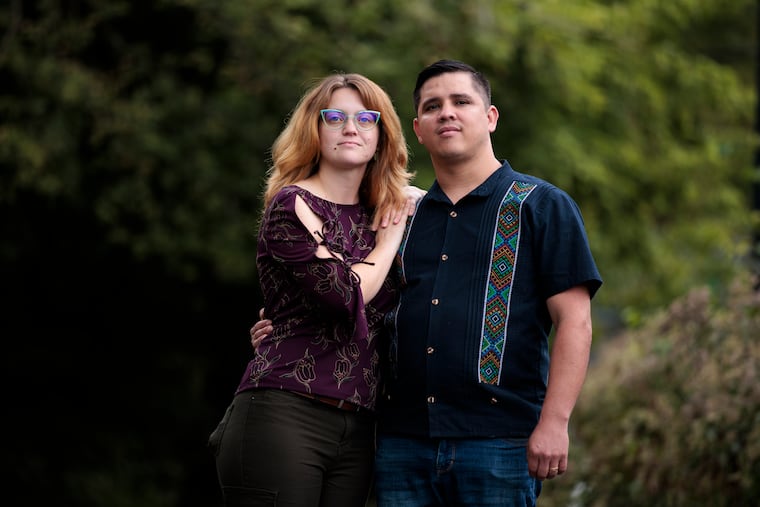
Richard Garella, one of the residents suing, said the group felt frustrated by the whole ordeal. They remain hopeful Commonwealth Court will share the group’s interpretation of the various laws at play.
Still, the loss is a bit of whiplash. It was only last month that the residents emerged victorious from a separate hearing in which the city’s attorneys argued they had waited too long to file their suit. Woods-Skipper did not think so, allowing the case to move ahead.
“We’re trying to save the last piece of nature in South Philadelphia,” he said. “The citizens of the city should not have to fight this hard to protect the environment and to get the city to follow its own laws.”