A Philly nonprofit lost $426,000 meant for small neighborhood organizations, an audit showed
Dozens of groups under the Federation of Neighborhood Centers umbrella are seeking relief for funds owed to them.
A nonprofit that was supposed to help community groups manage grants and offer other support lost more than $426,000 belonging to 24 neighborhood organizations, according to a third-party audit.
The Federation of Neighborhood Centers officially shut down its grant management program, referred to as fiscal sponsorship in the nonprofit world, at the end of December. But the nonprofit had frozen outgoing payments for dozens of groups by late summer, leaving groups wondering what happened to funds and when, or if, they were going to get them.
Despite the new details regarding how much the Federation of Neighborhood Centers lost, it’s unclear how likely it is for groups to ever be made whole.
Demir Moore, who took over as the imploding nonprofit’s CEO in August, said it was establishing a relief fund that would be administered by a third party. The goal, he said, was to provide funds to affected groups “where possible.”
“Throughout this process, we have remained in communication with the Pennsylvania Attorney General’s Office and other stakeholders as we work through the appropriate path forward,” wrote Moore in an email.
Social Impact Commons, an organization that supports fiscal sponsors, issued its report in early February to the Greater Philanthropy Network Philadelphia, as part of an effort to reconcile the Federation of Neighborhood Centers’ bookkeeping.
The findings offer little comfort to groups that broke ties with the nonprofit just in time and those left in the lurch, seeking accountability, and wondering how the nonprofit could have lost hundreds of thousands of dollars without notice.
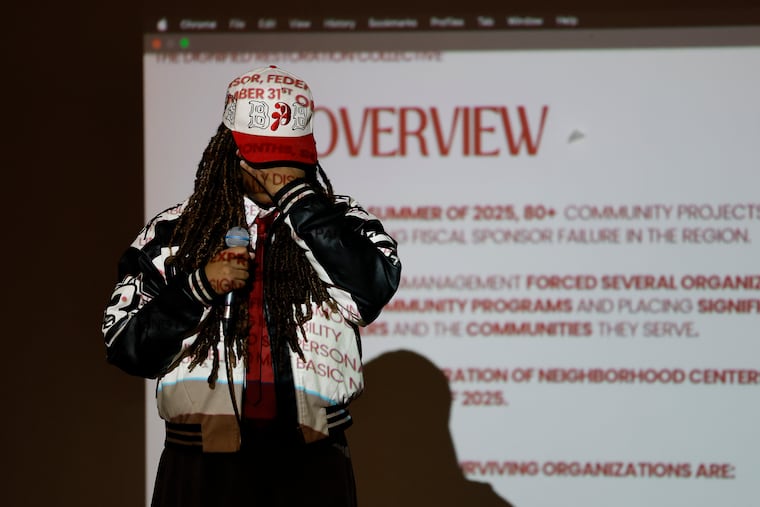
“We’re talking about emotional and psychological impacts, not just not having the money,” said Keyssh Datts, who contracted with FNC with her group Decolonize Philly, which aims to build community and promote sustainability. “A lot of people had to move, sell their cars, or been laid off.”
Warning signs
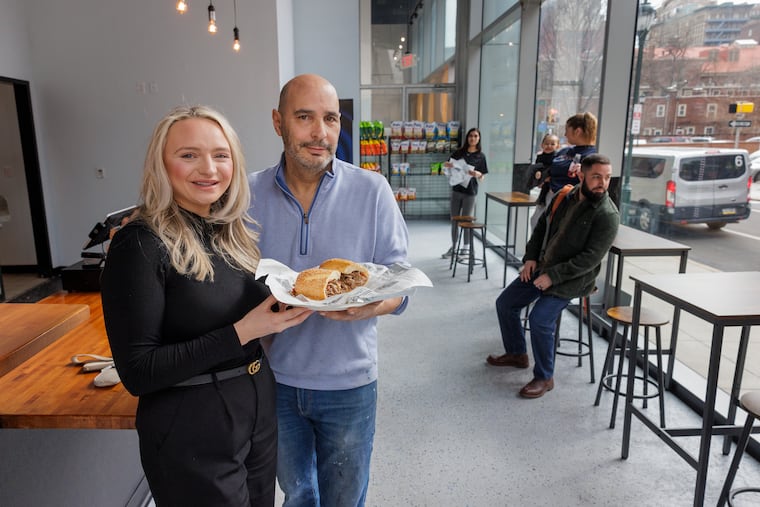
Bryan Belknap, executive director of Philly Bridge & Jawn, aka PB&J, which supports struggling teens through cooking programs, wanted to expand on an idea that had been well-received during a pilot run. He’d hoped contracting with the Federation of Neighborhood Centers in November 2023 could help the program flourish by providing back-office support.
That’s because fiscal sponsors are registered 501(c)(3)s paid to provide bookkeeping, human resources, and legal support. Contracting with one can be a strategic business decision for neighborhood groups that lack tax-exempt status.
In hindsight, there were red flags from the jump, said Belknap and two members of PB&J’s board of directors. There was no orientation or manual for how the partnership was supposed to work.
As time went on, it became harder to know what exactly the group was paying for, they said.
When a quarterly report was due for a grant requirement, Belknap was the one piecing everything together.
“I was asking them for backing documents, and they would send me something, and I would be like, this is really incomplete,” he said. “Then 10 minutes later, they would send me something completely different. These are financial records, they shouldn’t vary the way that they’re varying.”
PB&J officially ended its contract with the Federation of Neighborhood Centers in January 2025. Belknap said his group did not lose any funds in the process, but its money wasn’t returned until May.
FNC froze operations late summer and underwent a financial review led by the nonprofit Social Impact Commons to help projects transition to new fiscal sponsors and determine how much it owed its projects.
By November, more than 100 groups contracting with FNC learned their fiscal sponsor was unable to pay what was owed to many of them, after years of spending itself into a deficit and poor record-keeping.
» READ MORE: A nonprofit thought it had $170,000 in the bank. Then the payroll didn’t clear.
Some of the groups contracted with FNC that had no funds were allowed to cash checks backed by the groups that did, said Thaddeus Squire of Social Impact Commons.
“One batch of projects basically loaned the other projects money,” he said. “There’s no kind of record of whose money was spent on whom.”
Ending ties and seeking financial relief
Of the 104 projects under the Federation of Neighborhood Centers umbrella late last year, Social Impact Commons found 34 projects had gone to new fiscal sponsors or independent nonprofits, and 39 were closed or defunct. That leaves 31 active projects that have yet to transition.
Squire said these projects may be searching for a new home or could have contracts that require them to remain with the Federation of Neighborhood Centers until a later date.
Separate from the $426,000 loss, some Philly groups lost a combined $84,489 from fundraising hosted on the donations platform FlipCause. The California-based organization received a cease-and-desist letter from the state’s Attorney General in November after several nonprofits accused it of withholding funds, and is now subject to a federal class-action lawsuit.
Social Impact Commons recommended that the Federation of Neighborhood Centers follow a resolution process similar to one that took place after the collapse of a major fiscal sponsor in San Francisco. There, the local philanthropic community raised millions of dollars for the affected groups that were to be distributed by a newly created third-party fund.
The Federation of Neighborhood Centers and the Pennsylvania Attorney General’s Office supported the San Francisco model, according to Squire. Under this structure, projects that lost money would receive relief funds equal to or proportional to the amount they lost.
The Attorney General’s Office declined to comment.
But Datts is leading a coalition of about 30 former FNC groups that disagree with this approach.
The collective believes all projects ought to be eligible for relief, even ones that did not lose money in the collapse. In a February town hall, some affected groups said relief should come through an adjudicated process governed by a committee.
The groups have raised concerns about certain provisions in paperwork they’ve been asked to sign to be eligible for relief and officially end ties with the Federation of Neighborhood Centers, including a non-disparagement clause. Datts said groups don’t fully understand what they’re agreeing to.
“Their funding model puts us in compromising positions where we have to settle, and we won’t be able to actually get retribution for what they’ve done to us,” said Datts.
Still, Squire noted Philadelphia is not relatively philanthropically rich, and its community is waiting for the Federation of Neighborhood Centers and its projects to choose an approach before handing over their money. The longer that takes, the more FNC’s plight will fade as a priority for philanthropy.
“I think this is a hard raise on a good day,” Squire said. “Crises have an arc, and at a certain point, people just move on.”