The Philadelphia ‘Furniture Bank’ is closing, ending an essential resource for people in need
The Philadelphia Furniture Bank, a program operated by Pathways to Housing PA, gave people free beds, tables, and other items for more than a decade.
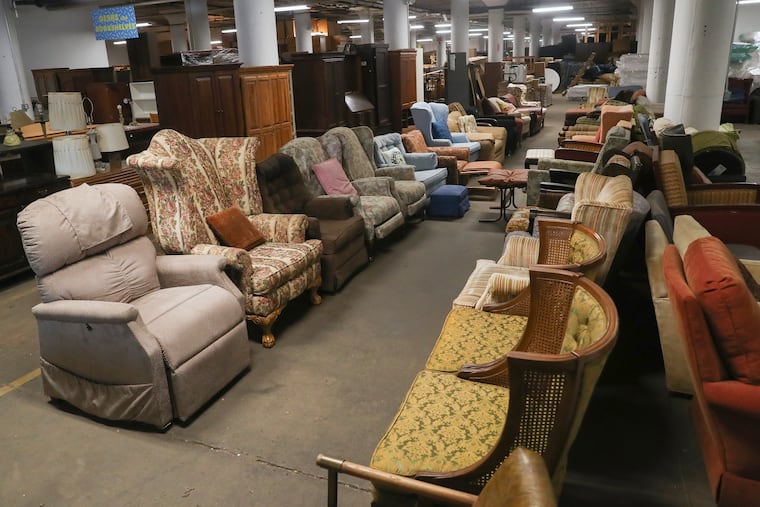
An essential resource for Philadelphia’s homeless and low-income residents plans to close at the end of June.
The Philadelphia Furniture Bank, a program operated by the Pathways to Housing PA nonprofit, announced it will cease operations on June 30.
It has provided free furniture, mattresses, and other home essentials to more than 10,000 households with people at risk of homelessness or otherwise in need for the past 12 years.
“While this chapter is coming to an end, we are deeply grateful to the partners, supporters, and staff who made this work possible. We’re working hard over the next six weeks to get as much remaining furniture out to those in need. Together, we helped thousands of families turn empty spaces into homes,” Valerie Johnson, vice president of operations for Pathways to Housing PA, said in a statement.
The Furniture Bank’s entire inventory of mattresses, tables, chairs, artwork, and other items comes from donations, and is located in a 25,000-square-foot warehouse on I Street off Erie Avenue in Kensington. The Furniture Bank is also available for domestic violence survivors, victims of fires and floods, refugees, and other people in need of its services.
Similar models have emerged in cities like Pittsburgh, Albany, and Chicago, where the Philadelphia Furniture Bank helped start a version.
» READ MORE: This ‘furniture bank’ gives away beds, tables, and sofas to Philadelphians leaving homelessness
The Furniture Bank’s announcement said one factor in its closure was the ending of the federal Emergency Housing Voucher program. The voucher program was created in 2021 and gave assistance to service providers like Pathways for Housing, housing authorities, and continuums of care to rapidly help people at risk of or experiencing homelessness. The program was meant to last at least until 2030, but President Donald Trump‘s administration cut its funding and set the program to end this year.
It is unclear what other issues may have lead to the Furniture Bank’s shutdown and what will happen to any remaining inventory or its warehouse after the closure. Pathways to Housing declined to comment further.
“Funding cuts in Washington are making it harder than ever for organizations like Pathways to Housing PA to help our neighbors. It’s just plain wrong that there’s always money for overseas wars but never enough for families in need here at home,” said U.S. Rep. Brendan Boyle (D., Pa.) in a statement.
The end of the Furniture Bank will be devastating to nonprofits and other organizations in the region whose clients have relied upon the program, providers said. Having furniture is an essential part of making someone feel comfortable and have ownership of their new space.
“If you don’t, basically they’re in an abandoned house,” said LaMar Yorkman, a housing case manager for the Veterans Multi-Service Center, a nonprofit offering housing, legal, and other services for military veterans.
Yorkman said he’s seen clients so happy they tear up once they’re in furnished living quarters, while others light up with pride when they show him their new homes.
Furniture and other personal touches serve as tangible proof for people that they are on the right path, he said. If their home is bare because they cannot afford a bed frame or couch, there isn’t much difference from the living situations they may have come from.
“You feel like you made a step up. Who in their own life doesn’t do better when they see progress?” Yorkman said.
He said he hopes philanthropy or another fundraiser can rescue the Furniture Bank, and isn’t sure what his clients will do without it.
“It’s gonna hurt,” he said.
Naomi Wildflower, a former housing case management coordinator at Prevention Point Philadelphia, said furniture can help people in recovery by helping them build stability, and motivate them to maintain their home.
“They may not be as invested to stay housed if they haven’t had the chance to make it their own,” she said.
Items like a bed frame or couch are commonly taken for granted, but Wildflower said they are critical to a person’s sense of self.
“Furniture is just another way that we can show someone that they have dignity and they’re worthy of respect,” she said.
To Wildflower, the closure is especially heartbreaking because Philadelphians will still have excess furniture. Now, that furniture won’t have a such a direct and efficient manner to make it to people who need it most.
“It just leaves a gap. There’s nothing else. This is it,” she said.