Incomes have sharply risen in parts of South Philly. But not everyone is thriving.
Data from the U.S. Census Bureau showed the median household income in some neighborhoods has shot up over the last 10 years.
Incomes have increased nearly everywhere across Philadelphia over the last decade. But in some pockets of the city, they have skyrocketed.
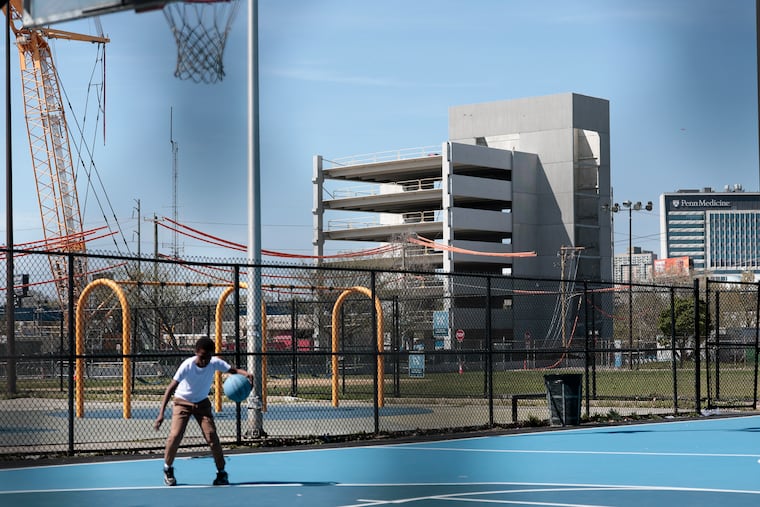
In the South Philadelphia cluster of Graduate Hospital, Grays Ferry, and Point Breeze neighborhoods, the median household income more than doubled. In that area, it rose from $47,800 across 2010-14 to $96,900 from 2020-24, according to the most recent data from the U.S. Census Bureau’s American Community Survey, which was adjusted for inflation.
Meanwhile, citywide, median household income increased less dramatically over the same period, rising to roughly $62,000 from $49,600, adjusting for inflation.
Those studying economic trends in Philadelphia are not surprised by the way these neighborhoods have changed, particularly as the city has continued to invest in the healthcare and education fields despite recent challenges.
“Those are places where there are a lot of people in professional fields where incomes are going up. … And those jobs bring in people who are highly trained, highly educated, and highly compensated,” said Emily Dowdall, president of policy solutions at the Reinvestment Fund, an equal-access-focused financial institution based in Philadelphia.
Just over the Schuylkill from University City’s growing eds and meds campuses, the South Philly cluster experienced the most dramatic change. But in the grouping of Northern Liberties, Fishtown, and Kensington, the median household income jumped from $71,700 to $116,900 over the same time period, a 63% increase. The only area that did not experience at least a slight income increase was Southwest Philly, where the median household income declined by 3%.
Longtime residents of neighborhoods with dramatically rising incomes say those changes have come at a cost. While there are some benefits to outside investment and more attention toward the places they call home, the influx of higher-income earners also brings higher taxes and housing costs, meaning some lower-income residents have gotten priced out.
“Some of the older ones don’t want change. … They watched their friends lose their house. They can’t keep up with the rent or property taxes. So they’ve got anger,” said Charles Reeves Jr., a Grays Ferry resident who has lived in the neighborhood for 60 years.
He and his wife met here when they were just children. About eight years ago, the uncle whose Grays Ferry home they were living in died, and his children asked them to leave, Reeves said, so they could sell and take advantage of the growing real estate market.
Now 67 and retired, Reeves is renting another home in the neighborhood. But he considers himself one of the lucky few who found a way to stay.
“All of it’s changing. The whole area is changing,” he said.
Flowing like water
The gentrification of this chunk of South Philly began in the early 2000s, as developers took advantage of the proportion of renters in the Graduate Hospital area, Dowdall said. Once that neighborhood began to shift, the effects began moving toward Grays Ferry and Point Breeze.
“Real estate prices, gentrification, it really does flow across a city like water,” she said.
And now, many of those South Philly residents are at some of the greatest risk of involuntary displacement in the city, the Reinvestment Fund determined in a calculation of displacement pressure on long-term residents based on their income and housing prices.
While changes to median income are just one metric to measure gentrification, home sales follow the same trend. From 2000 to 2021, Graduate Hospital had the highest home sale activity of any neighborhood — there were more than 150 transactions for every 100 residential parcels, meaning there were more sales than there were homes, according to a 2024 report by Pew Charitable Trusts noting the decline of housing affordability in Philadelphia.
The city does have programs designed to help lower-income earners and older residents buy or keep their homes, like tax relief programs, the First Home grant, or free and low-cost repair programs. But most of the city’s relief initiatives are aimed at homeowners, not renters who remain vulnerable to rising costs.
» READ MORE: Confused by Philly’s property tax relief programs? Use this new tool to see which you’re eligible for.
Earlier in May, Mayor Cherelle L. Parker signed into law two bills that provide protections for renters, including against landlord retaliation and toward rent relief under landlords who do not have valid rental licenses or fix code violations in a reasonable time frame. Still, renters remain subject to increasing rents and taxes.
“What we found in our research was that the highest local tax burden is among low-income renters,” said Katie Martin, project director for Pew.
An ‘ongoing battle’
The description of the Point Breeze neighborhood on Google Maps reads like an AI chatbot prompted to characterize a gentrifying area.
“Anchored by edgy coffee shops and dive bars, this up-and-coming, culturally diverse neighborhood draws a laid-back crowd of locals,” it says. The gentrification shows up in reality, too — a developer recently purchased a historic Point Breeze church with plans to transform it into a brewery.
The coffee shops and brewery may excite visitors and potential homebuyers, but changes like these can frustrate people who have been living in the area for decades and watched their neighbors leave.
“Rent has gone through the roof, and the cost of living is terrible,” said Claudia Sherrod, a member of the Point Breeze Community Network Plus neighborhood group and a resident for about 65 years. She owns her home, but lives sparingly to make sure her expenses don’t become overwhelming.
“It makes it very difficult for people who’ve lived here most of their lives. They can’t afford to pay any more than what they were paying prior to, because if you’re on a fixed income, where’s the additional dollars coming from?” she said.
For the most part, she doesn’t hold the fact that the area is changing against her new neighbors — just the ones who do not follow good community etiquette or those who attempted rebranding Point Breeze as “Newbold” years ago. And she said investments in the community have come with noticeable benefits, like cleaner streets and fewer vacant lots.
She is more concerned about developers. Sherrod and Al Williams, another Point Breeze Community Network Plus member, have spoken to local developers about including units that are actually affordable for current residents in their plans. But they have not received commitments, Williams said.
“We’ve gotten pushback from some of them, some of the major developers, but it’s an ongoing battle,” he said.
Preparing the youth
Like the Point Breeze residents, Reeves said he does see positives in the transformation of Grays Ferry.
“I don’t think it’s a bad thing,” he said.
He cares deeply for the neighborhood youth, and operates a small nonprofit to take them on trips to Wildwood, Washington, and elsewhere. Reeves believes it is important for them to be exposed to a more racially and socioeconomically diverse group of people than he was growing up. Becoming a Black doctor may feel more realistic for these kids, he said, because one might live on their block.
“Our kids need to see new stuff, too,” he said.
Reeves has a more optimistic view than most other longtime residents he has heard from about the changes. That includes people like those who protested Children’s Hospital of Philadelphia’s under-construction Grays Ferry parking garage, which collapsed in April.
Still, he said, the city needs to do more to protect longtime residents and alleviate tax burdens, like inheritance taxes that make it difficult for Grays Ferry parents to pass their homes to their children.
Even though they are far off from potentially becoming homeowners, Reeves talks to the neighborhood kids about gentrification, taxes, and development in ways that they can understand. He said it is important to make them aware of why the neighborhood is changing and to prepare them for what they are up against.
“Making sure they’re ready and they know how to protect their homes,” he said.