Why Pa. lawmakers almost tore down Independence Hall in the 1800s
In the 19th century, Pennsylvania lawmakers considered demolishing Independence Hall and selling off the salvage and parcels to the highest bidder. Then, Philadelphia stepped in.
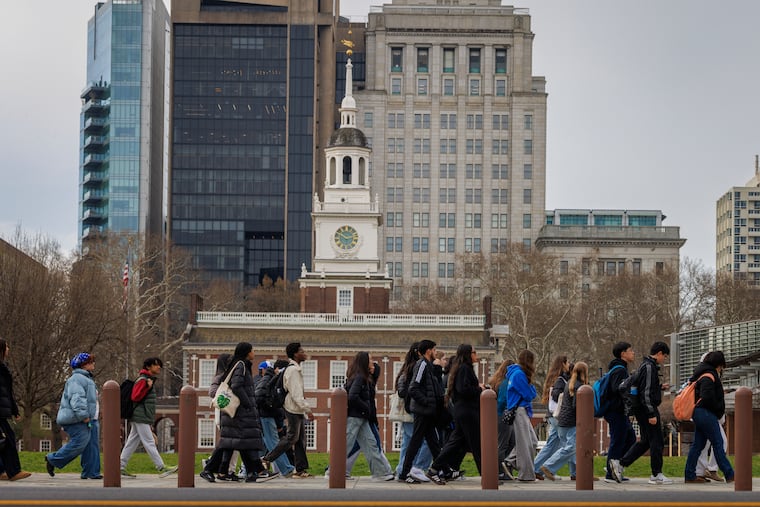
While all eyes are on Independence Hall this week, something almost unfathomable happened more than 200 years ago: It was nearly demolished.
Between the 18th and 19th centuries, Pennsylvania’s capital had moved to Harrisburg from Philadelphia, by way of Lancaster, and lawmakers wanted a new statehouse. The obsolete building then known as the Old State House in Philadelphia, on Chestnut between Fifth and Sixth Streets, was on prime real estate, according to Villanova University professor and historian Whitney Martinko.
So, they contemplated demolishing the building and selling off the salvage and parcels of land to the highest bidders to fund the grand statehouse. But Philadelphians mounted a campaign to save what’s now called Independence Hall — the Georgian-style building where the Declaration of Independence and U.S. Constitution were debated and drafted. Today, Independence Hall stands as a testament to the Founding Fathers’ ideals as the country prepares for its 250th birthday this Saturday.
“People looked to Independence Hall — already in the 1810s — as an important building and historic site," said Martinko, who studies historic preservation in the early U.S. “Some of those people were residents of Philadelphia who didn’t want to lose a local landmark ... but other people were really tourists who came to Philadelphia to see the site.”
The state initially wouldn’t budge on its $150,000 price tag for the building, according to Martinko’s research, but after its yearslong campaign, the city ultimately purchased the plot for $70,000, or less than $2 million today. The deal, which was finalized in 1818, cemented Independence Hall’s legacy as a monument to the great American experiment.
Government offices occupied the building, while the State House yard remained public green space. What’s now Independence National Historical Park was once a maze of industry, mixed-use buildings, and alleyways.
By the mid-20th century, those blocks were razed, with some giving way to Independence Mall, in a push to beautify and boost civic pride.
“Preservation and stewardship of historic sites is an ongoing decision — it’s very easy to take for granted buildings that are preserved today are going to be there tomorrow,“ Martinko said, ”but there’s no guarantee that any building will be here tomorrow or in 50 or 100 years.
“History needs stewards and we all need to think of ourselves as people who should be engaged with saving places.”