Haverford professor and peers launch petition to move major math conference out of Philly
An assistant math professor at Haverford is rallying mathematicians worldwide to boycott this year's International Congress of Mathematicians if it is not moved out of Philadelphia.
In late July, some of the world’s most ingenious mathematical brains are set to descend upon Philadelphia for the International Congress of Mathematicians — one of the world’s largest math conferences, which occurs every four years and is the venue for the distribution of the Fields Medal, the world’s most prestigious award in the discipline.
Tarik Aougab, an associate professor of mathematics and statistics at Haverford College, wants to stop that from happening.
And more than 2,200 mathematicians have signed onto his petition to boycott the nearly 130-year-old conference this year if it is not moved out of the United States.
Aougab and Ila Varma, an associate professor in the University of Toronto’s math department, launched the petition in March, Aougab said. The idea came about when they started hearing rumblings from international colleagues who were concerned they would be unable to get visas to enter the United States due to a policy of President Donald Trump’s administration of mostly suspending entry for citizens of dozens of countries.
That was not the only set of concerns raised, Aougab said. Some were worried about possible interactions with U.S. Immigration and Customs Enforcement while others were unwilling to travel to the United States at a time when the nation is embroiled in a war in the Middle East.
It quickly became clear to Aougab and Varma that large swaths of the world would not be represented at the conference due to U.S. foreign policy decisions. That did not sit right with them, Aougab said.
“Ila and myself view access to mathematical knowledge as a fundamental human right,” he said. “From a moral point of view, this is something that should not be gatekept.”
The International Mathematical Union, which oversees the conference, did not respond to a request for comment. But, in late March, it put out a statement addressing mathematicians’ hesitations and limitations related to traveling to the United States.
“We understand the concerns about entering the United States, as well as about feeling safe and welcome in Philadelphia and at the Congress,” the union’s executive committee wrote in a statement March 30. “The Local Organizing Committee is fully committed to providing a safe and welcoming environment for all participants and has recently made additional arrangements to help mitigate risk.”
The statement did not enumerate those protections.
Those who do attend the conference, Aougab said, will get a less enriching experience with such a large group of mathematicians missing because they have either been forced out or chosen to boycott the event in solidarity.
He cited Iran as one example of a country from which the United States has heavily restricted visitors that has also cultivated some of the most consequential mathematical talent in recent decades. In 2014, Maryam Mirzakhani, who hailed from Tehran, became the first woman to win a Fields Medal.
“There are so many incredibly talented people who are not going to have a chance to share their knowledge with us in the future if we don’t make every effort we can to be as accessible as possible,” Aougab said. “It’s bad for math.”
Aougab conceded that asking the conference organizers to move the event elsewhere only months before it is scheduled to take place is a big ask logistically.
But, he argued, it has been done before.
In 2022, the conference was moved from St. Petersburg, Russia, to online with a few awards and associated events held in Helsinki, Finland. The union’s executive committee characterized the decision, which was made a few months before the conference, as an effort to support the Ukrainian people and to publicly condemn the violence Russia was inflicting upon them.
“All of the criteria that they used to make that decision have been triggered in the U.S. in 2026,” Aougab said.
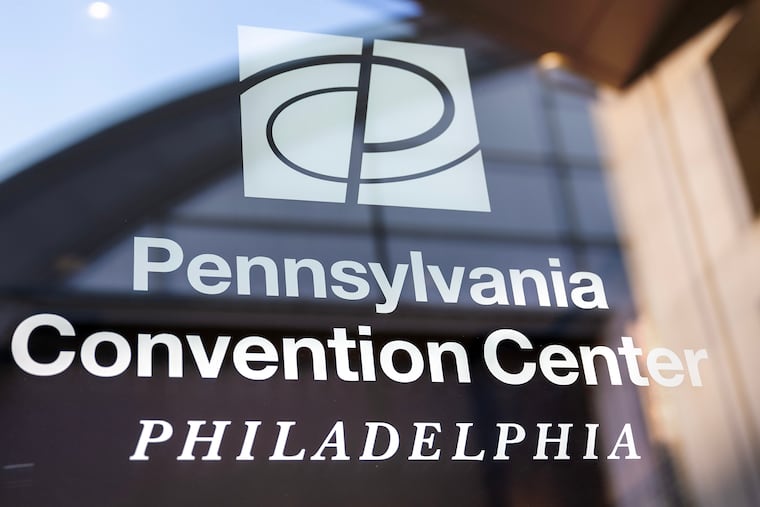
If the conference is not moved it will take place at the Convention Center in Center City from July 23 to 30.