Mantua is getting younger as the rest of the city ages. It’s also getting less affordable.
Mantua's median age has decreased as Philly as gotten older overall, driven by an influx of Drexel University students searching for off-campus housing.
When Drexel graduate Ibrahim Kamara, 24, met his new housemate — a Mantua resident in her 70s — she prodded him about his credit score.
The 70-something-year-old woman vowed to make sure he got a place to himself, Kamara said, once he moved out of the second floor of her duplex on 40th Street.
Kamara moved in with his housemate in late January through the Second Story Collective, a pilot of Drexel University’s Writers Room that matches Mantua homeowners with a Drexel student or recent graduate looking for housing. Kamara pays his housemate $700 a month on a yearlong lease in exchange for helping around the house.
The living situation is the first of its kind in Mantua as demographics shift in the West Philadelphia neighborhood that borders Drexel University and has become one of the youngest in the city.
“It’s like this middle ground where I can still respect my adulthood and live alone,” said Kamara, a freelance film editor and videographer who graduated from Drexel in 2023.
While Philadelphia overall has been aging alongside the millennials who make up the largest portion of city residents, Mantua has been getting younger.
The median age of a Mantua resident was 29.9 years old in 2023, more than two years younger than in 2010, according to data from the U.S. Census Bureau’s most recent American Community Survey. It is one of the sharpest declines in age among any neighborhood and occurred during a period when the city’s median age rose 1.4 years, to 35.1.
» READ MORE: Philly is in its millennial era: People born between 1981 and 1996 make up the largest portion of city residents
The area is undergoing what Emily Dowdall, president of policy solutions at the Reinvestment Fund, a community development nonprofit, called “studentification,” or when the age of a neighborhood drops as a nearby university’s presence sprawls beyond its campus.
The fund calculates housing affordability by comparing the median sales price of homes in a neighborhood with the median income of long-term residents, which they extrapolate from earlier census data. From 2023 through the third quarter of 2024 — the latest period for which data were available — the typical home purchased in Mantua cost about $160,000, nearly triple what it did a decade earlier. This cost is about 50% more than what would be considered affordable on the $35,000 annual income of the typical long-term Mantua household.
Those figures make Mantua Philly’s sixth-most-unaffordable neighborhood for long-term residents, according to an Inquirer analysis of Reinvestment Fund data, even as community groups push for more affordable housing and Drexel faces decreased enrollment, lessening the burden on nearby neighborhoods where students might look for housing.
“The community can actually feel like a sandwich” as anchoring institutions close in, said Mantua Civic Association president De’Wayne Drummond.
» READ MORE: Drexel is cutting staff and benefits as it faces a $63 million operating loss and 15% fewer first-year students
From vacant lots to pizza boxes and red Solo cups
Drummond, 44, has spent his entire life in Mantua. He remembers playing in the streets as a child and going to the supermarket, something the neighborhood has not had for years.
“Your neighbors were your family,” Drummond said.
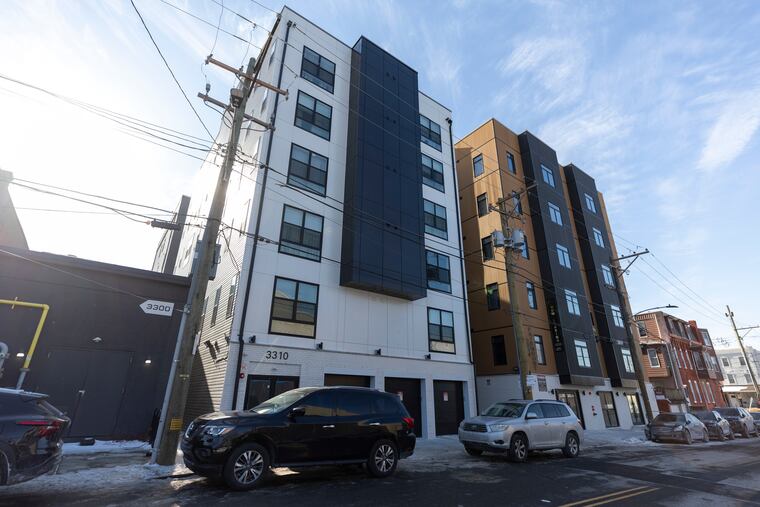
That feeling lessened gradually, he said. Family homes were replaced by vacant lots that were eventually filled with apartment units targeted to students. With them came red Solo cups and pizza boxes that stick around on the street after trash day, illegally parked U-Hauls during move-in, and leftover furniture that clogs the sidewalk well after move-out.
“I feel like I need to come up with a brochure that says how to be a good neighbor in this community,” Drummond said.
Drexel’s enrollment boomed under former university presidents John Fry and Constantine N. Papadakis, growing from just over 13,000 students at the start of the millennium to consistently hover over 20,000 since 2010. Around that time, Drexel began expanding its footprint.
The university partnered with Brandywine Realty Trust to develop the Schuylkill Yards complex, worked with the Philadelphia School District to open elementary and middle school campuses in University City, and started offering $15,000 forgivable loans to faculty and staff to purchase homes in Powelton Village and Mantua. Drexel also opened the Dornsife Center for Neighborhood Partnerships at 35th and Spring Garden Streets in 2014 to host educational, health, and legal assistance programs for Mantua residents.
Drexel’s expansion created a perfect storm for real estate developers in Mantua to invest in housing for college students. Drexel requires only freshmen and sophomores to live on campus, a university spokesperson said.
» READ MORE: Opinion | Ingra Saffron: How SEPTA and Amtrak improvements could help turn 30th Street into a neighborhood
Haverford Square Properties president German Yakubov and his brother bought their first property, at 3918 Haverford Ave., in 2008. The company now manages around 320 units in Mantua, Yakubov said, shifting from student housing to a mix of subsidized and market-rate units geared toward young professionals working at Drexel or the University of Pennsylvania and its hospital systems.
Students made for high-turnover renters, Yakubov said, and their properties were being undercut by newer builds. The average rent in Mantua is now close to $2,800 per month, according to apartment search website RentCafe, which lists the citywide average as about $1,950.
“Drexel’s commitment to civic engagement means a commitment to a shared, equitable future with our fellow Philadelphians, particularly the neighbors closest to the University,” a Drexel University spokesperson said in a written statement. “While it is difficult, if not impossible, to control market forces, Drexel has listened and worked closely with its community partners to ensure they have the resources and support they need to benefit from a rising tide and are not swept away by it.”
A town-gown split
Trusting the university’s commitment is easier said than done, said Drummond, who regularly hears from residents about affordability concerns. Some are old enough to remember when Drexel, Penn, and the University of the Sciences teamed up to raze the Black Bottom — a working-class Black neighborhood that stretched from 32nd to 40th Streets along Lancaster and University Avenues — to build what is now the University City Science Center.
» READ MORE: From 2022: How The Inquirer covered the clearing of West Philadelphia’s Black Bottom
“There is this town-gown sort of split. I think that these folks are often pitted against each other, when in reality what we can make together is so much better,” said Rachel Wenrick, founder of the Second Story Collective and director of the Writers Room storytelling group.
Wenrick got the idea for the Second Story Collective in 2015 when Writers Room member Carol McCullough told her that she was being displaced from her Mantua apartment by a developer that bought the building to create student housing. The goal of the home-sharing program is to slow displacement by helping long-term Mantua residents age in place.
Second Story Collective has funding to do up to $25,000 in repairs for six Mantua homes, Wenrick said, and the collective is constructing 18 multigenerational housing units in the neighborhood to create more pairings like that of Kamara and his new housemate.
Beyond supporting Wenrick’s work, Drexel staff meet monthly with the Mantua Civic Association to discuss issues and programs, the university spokesperson said.
Still, market-rate development outpaces affordable housing. Property assessments continue to spike, jumping 29% in Mantua in 2024 to fall in line with the fate of other neighborhoods on the edge of high-gentrification zones.
“Longtime Mantua residents are feeling pressure — that could be on rents, that could be on property taxes that are rising,” said Dowdall with the Reinvestment Fund. “It’s going to be very difficult for a lot of those older, long-term residents to hang on.”
» READ MORE: From 2023: A Mantua community center was a ‘safe haven’ for kids. Now it’s falling apart and could become apartments.
Growing beyond the Promise Zone
Developers and experts say Mantua has been slow to completely “studentify” because of its community groups: The civic association successfully lobbied City Councilmember Jamie Gauthier to secure a mixed-income neighborhood zoning overlay, which requires at least 20% of units in new residential developments to be designated as affordable housing.
Other groups benefited from Mantua’s stint as part of the West Philadelphia Promise Zone, a decadelong designation from President Barack Obama’s administration in 2014 that gave organizations a special preference when applying for federal grants to improve housing, public safety, employment, and education outcomes in West Philly.
The Promise Zone received $81.8 million in federal, state, local, and private funding opportunities, according to data provided by the City of Philadelphia’s Office of Community Empowerment and Opportunity. Data from the office show 293 housing units were rehabilitated or created through the program, while preliminary research suggests the Promise Zone’s public safety initiatives led to a drop in Mantua’s violent crime rate.
To some, Mantua feels wholly transformed.
“It’s maturing to a point where it’s a neighborhood that people want to live in who aren’t just students,” said Gary Jonas, managing partner of the How Group, which owns 29 units in Mantua. “Young professionals are moving in, and they want to live side-by-side with residents who have been there forever.”