Local vets learn about the making of Philadelphia Vietnam Veterans Memorial from the reporter who documented its creation
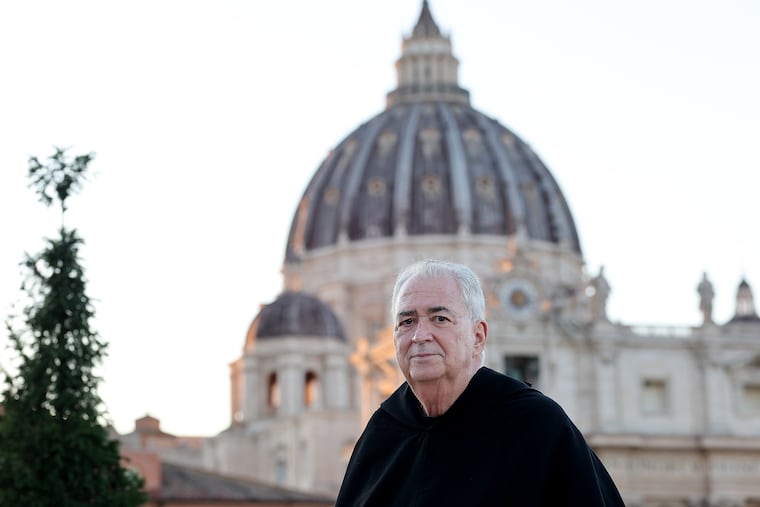
Frank Dougherty, who wrote about the men who died for the Daily News, gave the keynote address.
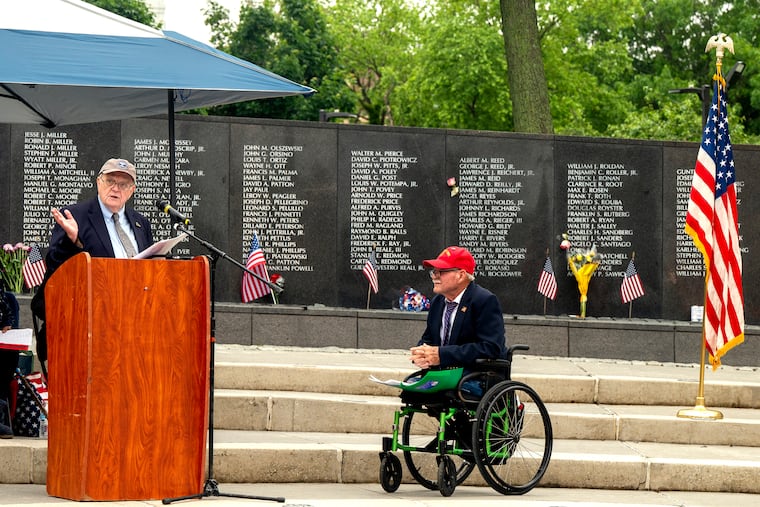
Frank Dougherty, a 84-year-old Army veteran in an oversized navy jacket, khaki pants, and a baseball hat, understood the magnitude of the honor he was carrying out on an overcast Memorial Day afternoon.
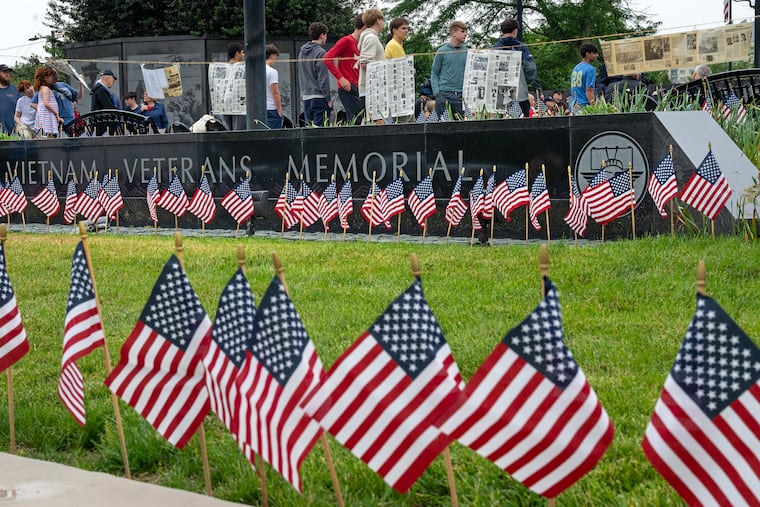
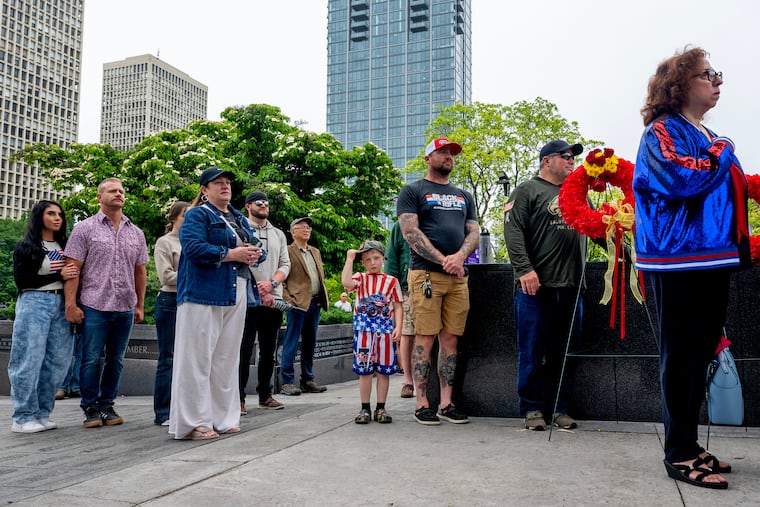
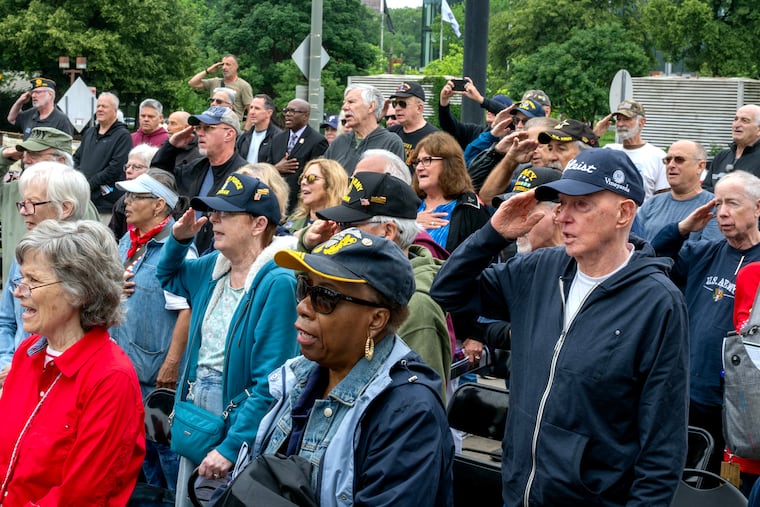
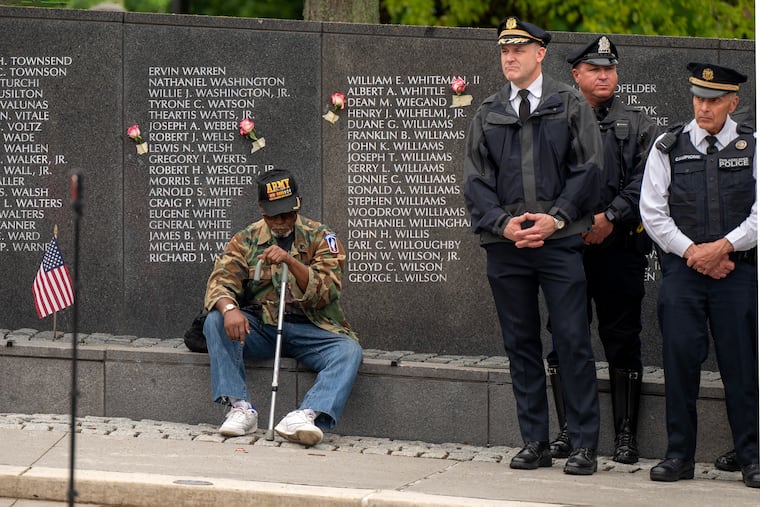
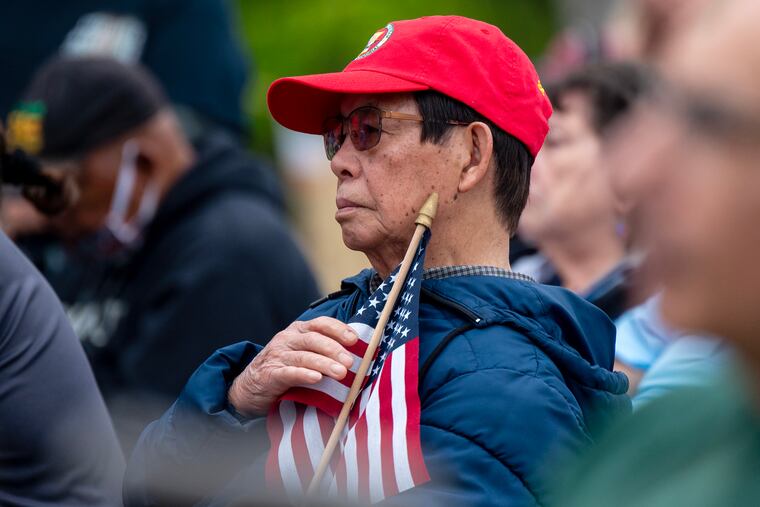
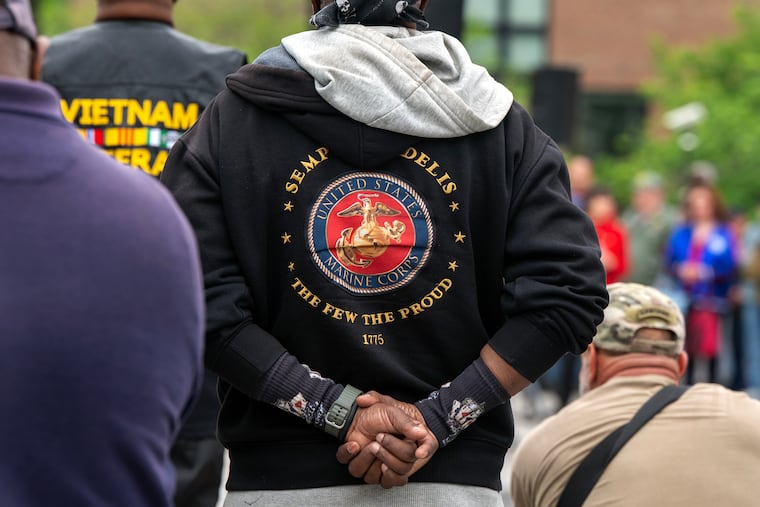
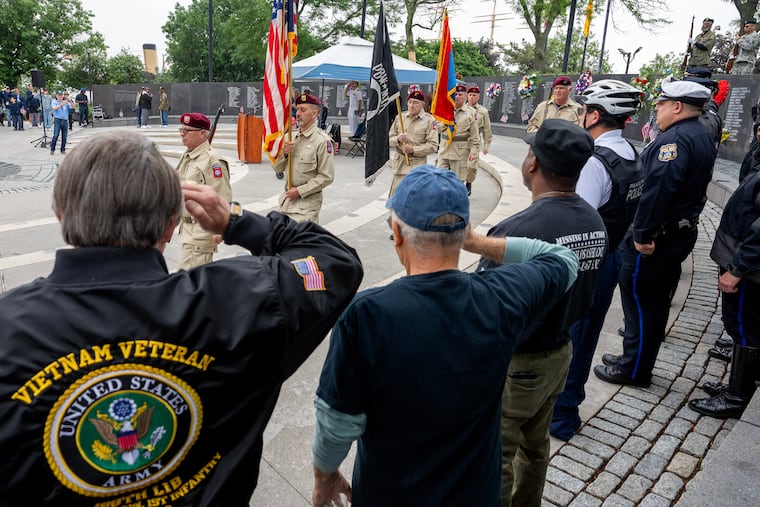
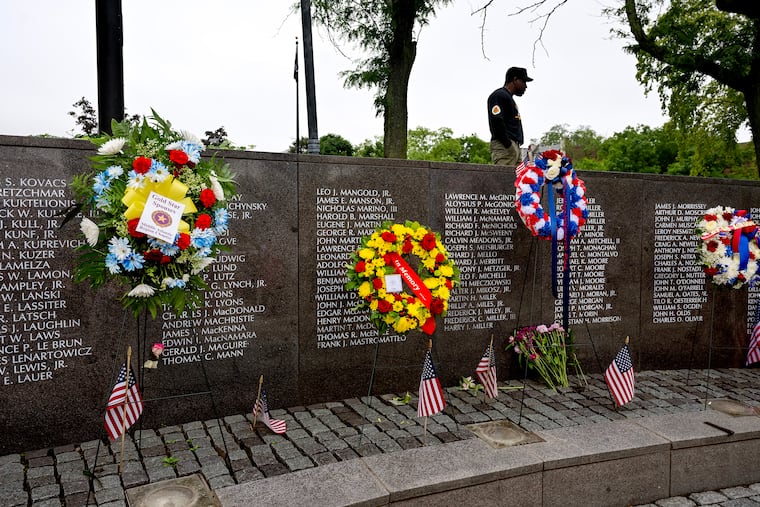
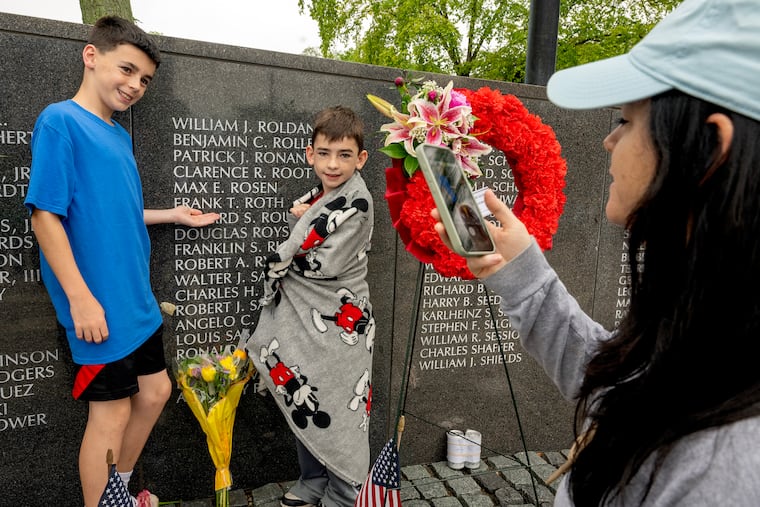
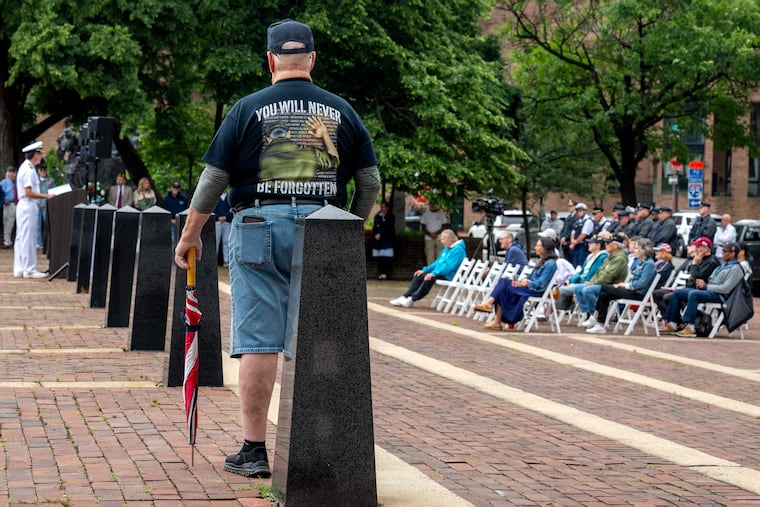
In front of him sat and stood dozens of Vietnam veterans and their friends and family. Behind him lay a sprawling series of granite panels bearing the names of 648 men from Philadelphia who died during the Vietnam War.
About 40 years ago, when Dougherty was a reporter for the Philadelphia Daily News, he was tasked with documenting the lives of each of the 630 local men then known to have died in Southeast Asia during the war. He was stationed at Fort Hood from 1964 to 1966 but was never deployed to Vietnam.
Monday on Spruce Street at the Philadelphia Vietnam Veterans Memorial, his job was to remind everyone why their sacrifice and, in many cases, brief lives still mattered.
“Nobody wanted to talk to them. Nobody wanted to listen to them. Nobody wanted to write about them except the Philadelphia Daily News,” Dougherty said, before he turned a page on his speech and appeared to momentarily lose his place. The confidence quickly slipped out of his expression.
He leveled with the audience.
“Excuse me,” he said. ”I’m very nervous.”
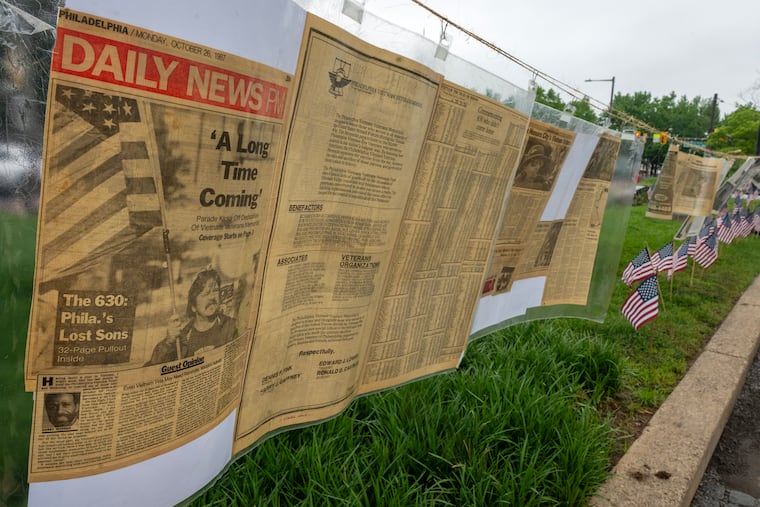
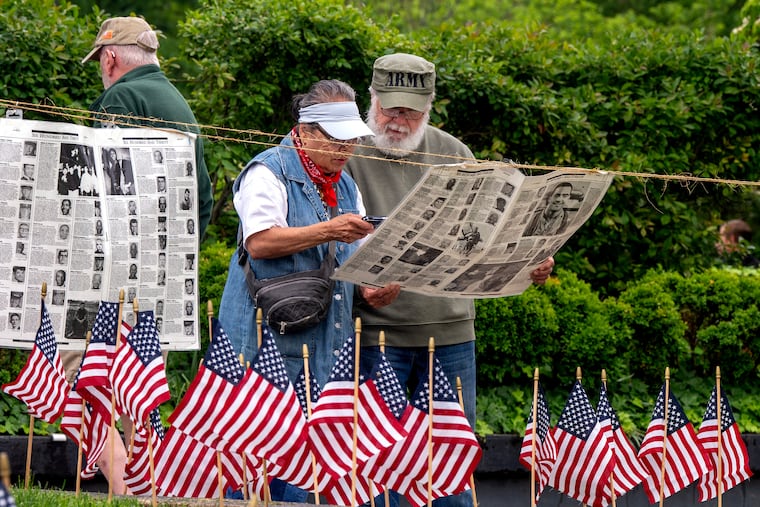
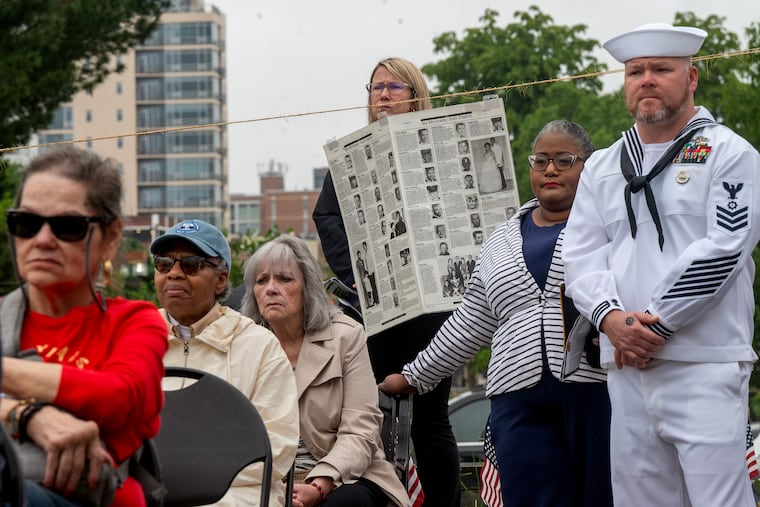
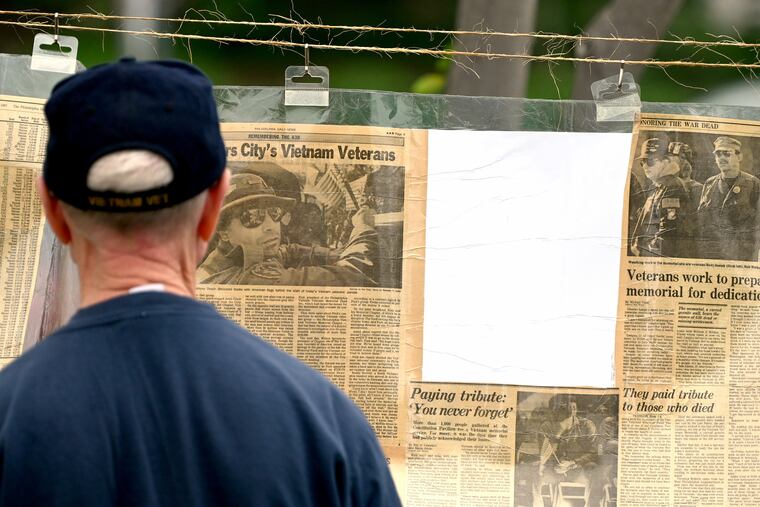
But Dougherty isn’t unaccustomed to daunting tasks. That was evident in the many pages of newsprint fastened to a clothesline along the back of the memorial Monday. Most of them were the pages he wrote memorializing each local Vietnam veteran who died overseas. His final story, which also documented the construction of the memorial, was published on Oct. 26, 1987.
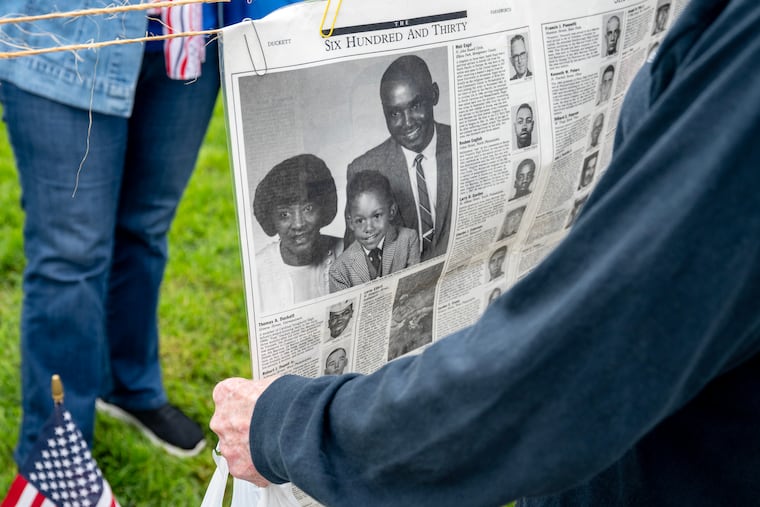
To carry out the assignment, Dougherty searched through archives at local high schools, including North Philly’s Thomas Alva Edison High School, which lost 64 students in the war. It had the highest casualty rate in the war of any public high school in the United States.
He also met with former friends and girlfriends of the fallen over beers, cheesecake, and wartime tunes like Creedence Clearwater Revival’s “Fortunate Son.” He visited family homes in working-class neighborhoods from which young Philadelphians were plucked and sent to their deaths.
The idea for the story came, in part, from a French Foreign Ministry policy paper that reflected on the approximately 1.4 million Frenchmen killed during World War I.
“It included a quote: ‘The death of one man is a tragedy. The death of a million is a statistic,’” he said. “It implies that we respond to the loss of a lone individual with compassion, sorrow, but, when confronted with a towering loss of life, we become desensitized. … With this in mind, we resolved, at the Daily News, it would not come to pass.”
The newspaper strayed from commenting on the history or politics behind the war. It focused the story on those who enlivened the streets of Philadelphia neighborhoods before they died so young.
“These were the kids who played half ball on your block and they used a broom handle for a bat,” Dougherty said. “They sang doo-wop on the corners down in South Philadelphia. These kids tossed their worn-out sneakers over the telephone wire. They delivered The Evening Bulletin to your front porch.”
Dougherty also spoke of the transition he witnessed among the surviving veterans during the period he worked on the story.
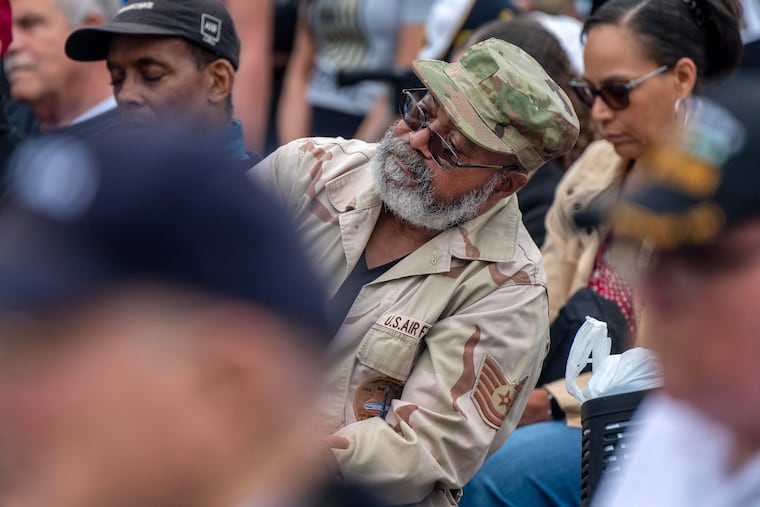
Many, he said, were still wearing camouflage as their street clothing.
“That’s how they were coping,” he said.
As construction of the memorial began, and local veterans were starting to get more wholesale recognition for their service, they began ditching the camo and dressing in baseball caps, T-shirts, and boat shoes.
That change in clothing not only mirrored the veterans becoming more comfortable in their city again. It also reflected a growing appreciation for what they‘d been through. The veterans finally started, winning “what I call the second battle for hearts and minds,” Dougherty said.
The dollars rolled in, the granite went up and, in the subsequent years, 18 names were added as more information was gleaned about those who died during the war.
As Dougherty completed his speech and returned to his seat, Dennis Best, vice president of the Philadelphia Vietnam Veterans Memorial, informed him the site still wasn’t quite complete. One more piece is to be installed on Veterans Day — a paver honoring Dougherty and all the work he did.
“Because you’re such a wonderful writer, we’re giving you the opportunity to decide what we engrave on it,” Best told him.
As Dougherty returned to the podium to accept a document detailing his forthcoming paver, he had one more thing to say.
“I have to apologize for some of my nervousness when I was delivering this address. But, to have an honor like this — I’m an 84-year-old Army warhorse and, at this age, you just don’t have things like this happen to you," Dougherty said. “Thank you very much to the veterans and the people who came out to listen to me.”
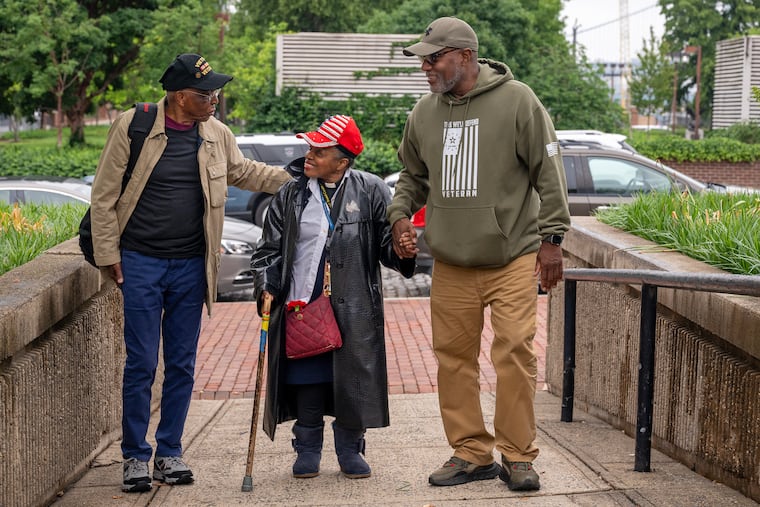
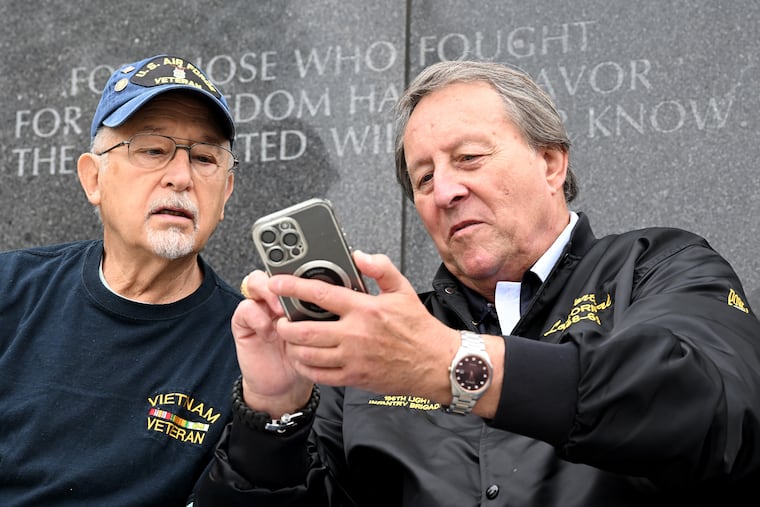
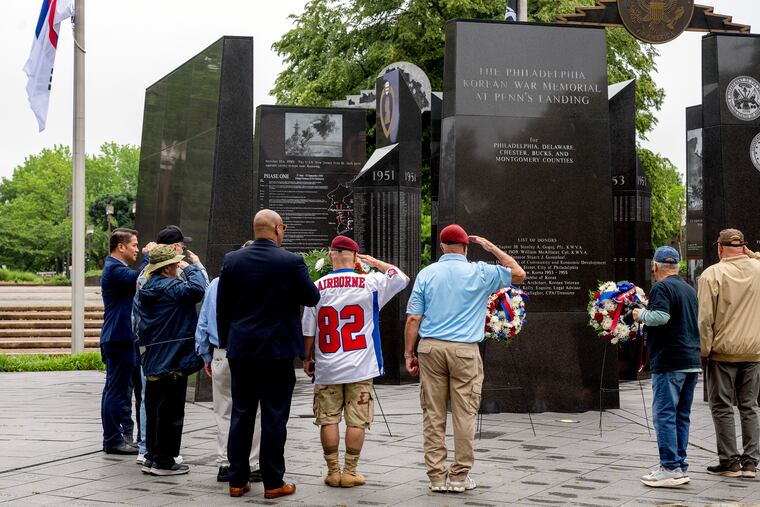
With 12 red, white, blue, and yellow wreaths draped with ribbons placed along the panels and six sets of rifle shots, the fallen were honored and veterans and other audience members filed to the back of the memorial to take a look at Dougherty’s 39-year-old words, still as on target today as back then.