Anti-Irish riots in Kensington, described as ‘among the darkest chapters in Philadelphia,’ are finally recognized
The historical marker tells the history of three days of violence committed against Irish Catholics in Kensington — and the community's grit and determination in the aftermath.
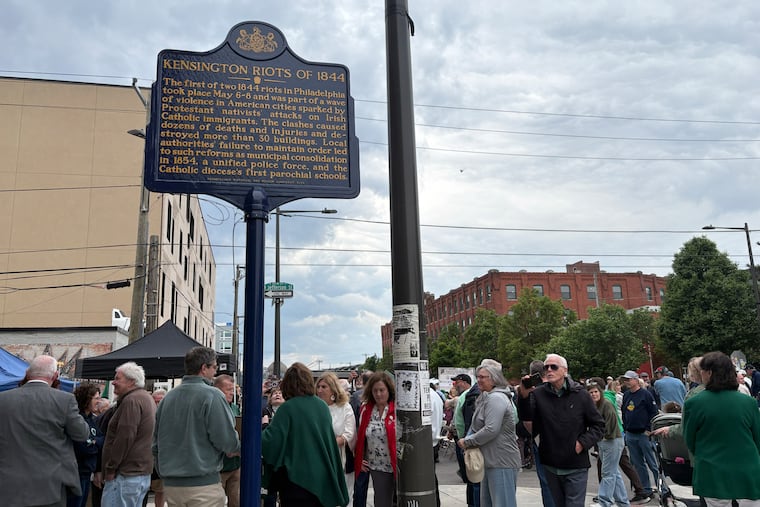
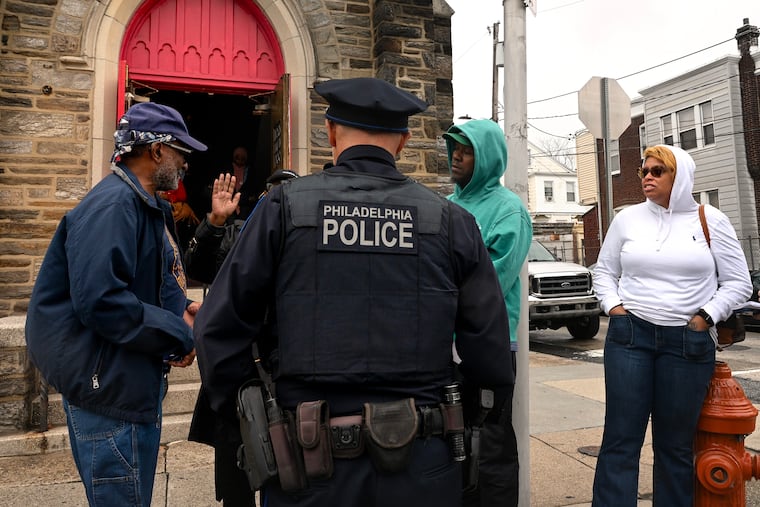
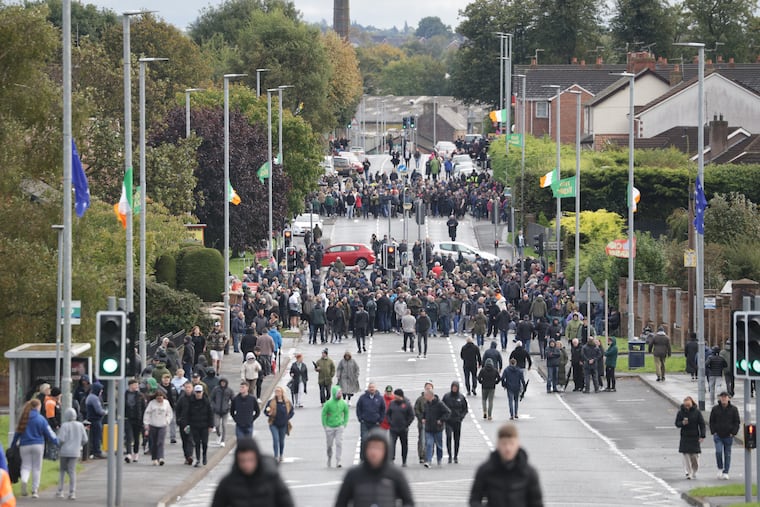
A spate of violence against Irish-Catholic immigrants in Philadelphia was commemorated Saturday, more than 180 years after three days of riots devastated and fractured the community.
The Kensington Riots of 1844 — a dramatic eruption of simmering tensions and deeply entrenched discrimination by nativists against the majority Irish neighborhood — was memorialized with a cast-aluminum marker at the corner of American and Jefferson Streets. The riots destroyed as many as 30 homes and the original St. Michael’s Church, displaced hundreds, and killed and injured dozens.
The bloodshed remains “among the darkest chapters in Philadelphia,” Kevin Brett told a crowd of hundreds, including local, state, and international officials, like an Irish deputy consul general. Brett, who applied for the historical marker, described the area’s history as one of grit and determination.
“Despite the destruction, despite the intense prejudice, the Irish community not only rebuilt their neighborhood, but in time, Irish immigrants and their descendants became deeply woven into the civic, cultural, political, and religious fabric of Philadelphia itself,” he said. “This is a story of resilience.”
At the time, nativist leaders espoused anti-immigrant and anti-Catholic beliefs, Brett said. Beginning May 6, a nativist rally near a local market, named the Nanny Goat Market, devolved into violence. The unrest continued for days, a part of a wave of brutality perpetrated by nativists of the era against Irish Catholics nationwide, Brett said.
The Philadelphia Public Ledger wrote at the time that “we have never heard of a transaction in our city in which so much savage feeling and brutal ferocity were displayed.”
The marker is “an act of remembrance, a public statement that what happened here matters,” said Ken Weinstein, member of the Pennsylvania Historical and Museum Commission, which approved the plaque. “The people connected to this place matter and their story deserves to be preserved, shared, and passed forward.”
In addition to the unveiling, the history was honored with an inaugural street festival, aptly named the Nanny Goat Fest, which included vendors and Irish dancing and tunes throughout the afternoon and scheduled to run into the evening.
“We have a beautiful opportunity before us,” Brett said, “to take a story that has been underrepresented and over forgotten, and turn it into a blessing for our own time.”